OpenSource Risk Experts
Map your blast radius

HASHICORP AND TERRAFORM

HashiCorp BSL Frequently Misunderstood Terms

By OpenSource Risk Experts  ·  May 17, 2026

HashiCorp BSL frequently misunderstood terms are the source of most of the panic and most of the false comfort around the relicensing. When HashiCorp moved Terraform, Vault, Consul, Nomad, and Packer to the Business Source License as of August 2023, the announcement traveled faster than the understanding. Teams either assumed all use was now banned, which is wrong, or assumed nothing had changed, which is also wrong. The truth sits in three terms that are routinely misread: competitive use, the change date, and source available. This article corrects each one.

We write from the buyer side, as an independent advisory paid only by the buyer. This is not legal advice. For interpretation of the Business Source License, we point you to your own counsel. The aim is to replace rumor with a clear reading so your response is proportionate to your actual exposure.
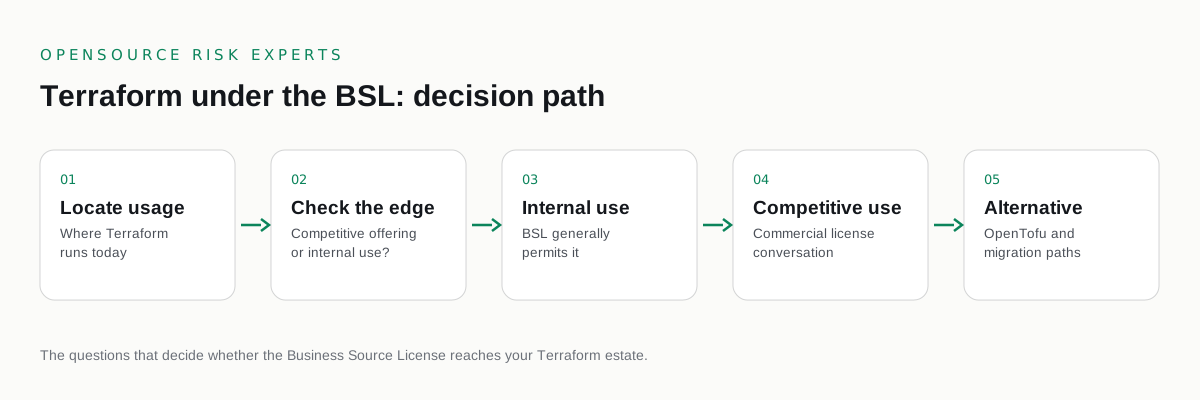
Competitive use is narrower than many fear

The most damaging misreading is that the Business Source License bans commercial use. It does not. The license restricts competitive production use, which is a far narrower category. A company can use Terraform or Vault commercially to run its own business, manage its own infrastructure, and secure its own systems. The restriction targets using the software to offer a product or service that competes with the licensor, HashiCorp, now part of IBM. The word that carries the weight is competitive, not commercial. Reading commercial where the license says competitive turns a manageable situation into a phantom emergency.

This matters because it determines whether you have exposure at all. Most internal enterprise use is not competitive. The teams that genuinely need to act are those offering a competing product or managed service. Whether your specific use crosses that line is treated in detail in is your Terraform use competitive under the BSL, and the base mechanics in HashiCorp BSL what changed and what it means.

The change date is a feature, not a deadline

The second misunderstood term is the change date. The Business Source License is time limited. Each version of the software converts from the Business Source License to an open license after a delay, commonly four years from that version's release. This is the change date. It is frequently misread as a deadline by which you must act, when it is closer to the opposite. It is the date on which a given version becomes open, releasing the restriction. Each version has its own change date, so older versions become open while newer ones remain under the Business Source License.

The practical consequence is that staying on an older version moves you closer to the date it converts to open, while upgrading to a newer version resets the clock. This is a planning input, not an alarm. The mechanics of the delay and how to read it are covered in the four year delay in the BSL explained. Misreading the change date as a deadline drives rushed migrations that the license never required.

COMPETITIVE USE

Restricts offering a competing product or service, not commercial use of the software to run your own business.

CHANGE DATE

When a version converts to an open license, commonly four years out. A release, not a deadline.

SOURCE AVAILABLE

The code stays public and readable. Not OSI open source, but not closed source either.

Source available is not closed source

The third misread term is source available. Some teams hear that Terraform is no longer open source and conclude it has gone closed, locking the code away. That is not what happened. Source available means the source code stays public and readable, and often usable for purposes that are not competitive. The Business Source License is not open source by the Open Source Initiative definition, because it restricts fields of use, but it is also not proprietary in the way closed software is. The code remains visible, auditable, and modifiable for permitted uses. That is a meaningful difference from a locked binary.

Holding this distinction matters for risk decisions. A source available component carries different obligations and different remediation options than a closed one. You can still read and audit the code, which helps with security and with planning a migration to a fork like OpenTofu. The general principle that source available is its own category sits in source available is not open source and why it matters.

Why getting the terms right saves money

Each of these misreadings has a cost. Reading competitive as commercial drives a needless migration or a needless commercial license purchase. Reading the change date as a deadline drives a rushed timeline. Reading source available as closed source forecloses options that remain open. The pattern is the same. A misunderstood term produces an action that the license never required, and that action has a price. Getting the terms right is the cheapest risk reduction available, because it stops you from spending against a phantom. The obligations that do attach to real exposure are set out in HashiCorp BSL compliance obligations.

The full HashiCorp landscape sits in the HashiCorp and Terraform pillar. When you want a clear reading of how the Business Source License applies to your specific use, with the myths stripped out and the real exposure sized, our relicensing exposure review gives you the grounded picture to act on.

COMMON QUESTIONS

Questions buyers ask.

What are the most misunderstood terms in the HashiCorp BSL?

The most misunderstood are competitive use, which is narrower than many fear and targets offering a competing product or service, the change date, which converts each version to an open license after a delay commonly four years, and source available, which means the code stays public and readable rather than closed. Misreading any of these creates either false panic or false comfort.

Does the HashiCorp BSL ban all commercial use?

No. The Business Source License restricts competitive production use, not commercial use in general. A company can use Terraform or Vault commercially to run its own business. The restriction targets using the software to offer a product or service that competes with HashiCorp, now part of IBM.

What is the change date in the HashiCorp BSL?

The change date is the point at which a given version of the software converts from the Business Source License to an open license, commonly four years after that version's release. Each version has its own change date, so older versions become open while newer ones remain under the BSL.

Is source available the same as closed source?

No. Source available means the source code stays public and readable, and often usable for non-competing purposes. It is not open source by the OSI definition because it restricts fields of use, but it is also not closed. The code remains visible, which is a meaningful difference from proprietary software.

Is this legal advice?

No. We provide commercial and licensing risk advisory, not legal advice. For interpretation of the Business Source License and compliance questions, we recommend your own counsel.

CONTAINMENT

Replace the rumors with a clear reading.

A confidential relicensing exposure review. Independent, buyer side, paid only by you.

Not ready to talk? Read the free open source license risk guides first.

Review your exposure