ARTICLE . UPDATED JUNE 2026
When You Must License HashiCorp Commercially
BY FREDRIK FILIPSSON · REVIEWED BY MORTEN ANDERSEN
Knowing when you must license HashiCorp commercially saves you from two mistakes: paying for a license you do not need, and missing a requirement you do. Under the Business Source License, a commercial license is generally required when your use is competitive or when you need paid only features. Most internal infrastructure use needs neither. This article sets out the triggers, the common exceptions, and a method to test your own deployment.
After the license change, many teams assumed a paid agreement was now unavoidable. For most, it is not. The Business Source License was written to permit broad use and to restrict a narrow competitive slice, which means the question of whether you must license commercially has a clear, testable answer for any given deployment. Getting that answer right is the difference between a justified purchase and an unnecessary one. As of August 2023, HashiCorp moved Terraform, Vault, Consul, Nomad, and Packer to the Business Source License 1.1, with IBM later acquiring HashiCorp. The background sits on the HashiCorp and Terraform pillar.
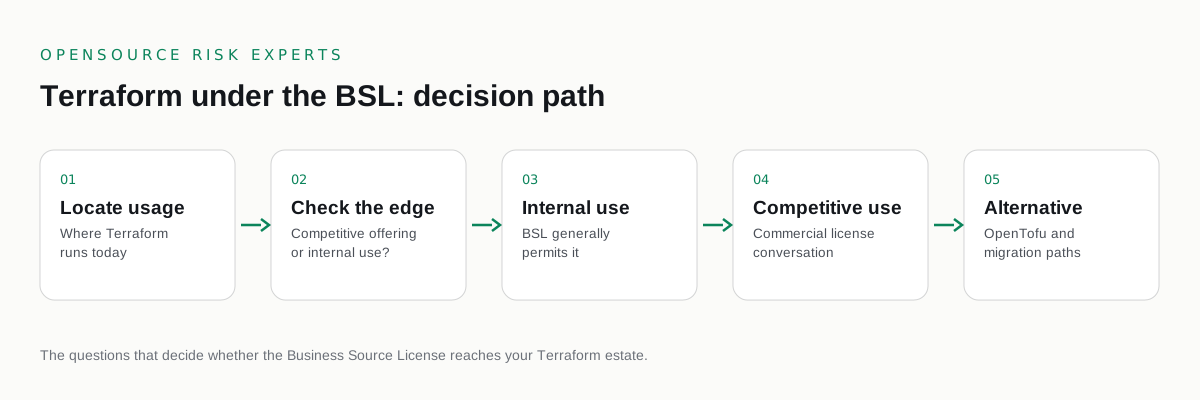
When you must license HashiCorp commercially
There are two main reasons a commercial license becomes necessary. The first is the competitive restriction in the Business Source License. If you offer a product or service that competes with HashiCorp's commercial offerings using its software, you fall outside the permitted use and a commercial agreement is required. The second is feature need. The paid tiers include capabilities that the freely licensed tooling does not, and if your operations depend on those capabilities you need the paid agreement regardless of the competitive question. Everything else, which for most enterprises is the bulk of their use, generally does not require a commercial license. The narrow competitive test is examined in is your Terraform use competitive under the BSL.
Why most internal use does not trigger the requirement
An enterprise that uses these tools to run its own infrastructure is doing exactly what the license permits. Provisioning your own systems, managing secrets for your own applications, and operating your own platform are internal uses that do not meet the competitive trigger. For the large majority of HashiCorp users this is the whole answer, and the appropriate response to the license change is to confirm the posture rather than to assume a purchase is due. Treating all use as requiring a license leads to spending that buys no risk reduction. The general assessment of exposure across a deployment is covered in Terraform BSL exposure and assessing your risk.
The competitive patterns that do require a license
The requirement concentrates in a few patterns. A vendor that embeds a HashiCorp tool inside a product it sells, a platform that operates the software as a managed service for its customers, and a service that resells the functionality are the cases most likely to need a commercial license. Managed service providers face this most directly because their business model is operating tooling on behalf of others. The provider angle is covered in HashiCorp BSL and managed service providers, and the broader compliance obligations are set out in HashiCorp BSL compliance obligations. In each case the test is what you offer to external parties, not the mere presence of the software.
When a fork removes the requirement
For Terraform, a commercial license is not the only way to resolve a competitive use question. The OpenTofu fork continues Terraform under an open source license, so adopting it for the use cases it covers can remove the competitive trigger entirely. Whether the fork fits depends on the features and providers you rely on and the cost of migrating, and it does not extend to Vault or the other products, so the answer differs by tool. Where OpenTofu fits, it can turn a question of how much to pay into a question of whether to pay at all. The fork is examined in the OpenTofu and Valkey fork story, and where a commercial agreement is the right path, the approach is set out in HashiCorp enterprise license negotiation.
How to test your own deployment
The test is direct. Inventory each HashiCorp product and version you run, classify each use as internal, embedded in a product you ship, or offered to others as a service, and test the offered patterns against the competitive restriction. Confirm separately whether you depend on any paid only features, since that creates a requirement on its own. Flag the ambiguous cases for your counsel rather than resolving them by intuition. The result is a clear statement of where a commercial license is required, where a fork removes the question, and where no action is needed at all. A relicensing exposure review produces this analysis and sizes the options. This is commercial and licensing risk advisory, not legal advice. For interpretation of the Business Source License and whether your use requires a commercial license, engage your own counsel.
COMMON QUESTIONS
Questions buyers ask.
When must you license HashiCorp commercially?
You generally must license HashiCorp commercially when your use falls inside the Business Source License competitive restriction or when you need features available only in the paid tier. The competitive trigger applies when you offer a product or service that competes with HashiCorp using its software. Most internal infrastructure use does not require a commercial license, so the requirement is the exception rather than the rule.
Does internal infrastructure use require a commercial license?
For most enterprises, using Terraform, Vault, or the other affected tools to manage their own infrastructure does not require a commercial license. The Business Source License permits broad internal use. A commercial license becomes necessary when you cross into competitive use or when you adopt paid only capabilities, not simply because you run the software.
What counts as competitive use under the BSL?
Competitive use generally means offering a product or service that competes with HashiCorp's commercial offerings using its software. Embedding the software in a product you sell, operating it as a managed service for customers, or reselling its functionality are the patterns most likely to trigger the requirement. The test is what you offer to others, not that the software is present in your stack.
Can we avoid a commercial license by using OpenTofu?
For Terraform, the OpenTofu fork continues under an open source license and can remove the competitive use question for use cases it covers. Whether it fits depends on your features, providers, and the cost of migrating. OpenTofu does not replace Vault or the other tools, so the answer differs by product, and the migration should be sized before you rely on it.
How do we test whether we must license commercially?
Inventory each HashiCorp product and version you run, classify each use as internal, embedded in a product, or offered as a service, and test the offered patterns against the competitive restriction. Confirm whether you depend on paid only features. Flag ambiguous cases for your counsel. A relicensing exposure review produces this analysis and sizes the options.
Is this legal advice?
No. This is commercial and licensing risk advisory, not legal advice. For interpretation of the Business Source License and whether your use requires a commercial license, engage your own counsel.
CONTAINMENT
Know whether you must license HashiCorp commercially.
A confidential relicensing exposure review. Independent, buyer side, paid only by you.
Not ready to talk? Read the free open source license risk guides first.
One email when a major project relicenses. No marketing, unsubscribe any time.
MORE IN THIS CLUSTER