ARTICLE . UPDATED JUNE 2026
Open Source License Risk and AI Model Tooling
BY FREDRIK FILIPSSON · REVIEWED BY MORTEN ANDERSEN
Open source license risk and AI model tooling now travel together. A modern AI stack pulls in inference engines, vector stores, orchestration libraries, and model artifacts at a pace that outruns most license inventories. Several of those components have already moved from open source licenses to source available terms, and the obligation can reach software you are already running in production. This article maps where the exposure sits and how to size it calmly.
AI teams move quickly, and that speed is the point. The cost shows up later, when a component adopted as open source turns out to carry terms that were never reviewed. The pattern is familiar from the wider relicensing wave, and AI stacks are unusually exposed because they assemble many dependencies from many vendors, often through a handful of convenience libraries that hide what sits underneath. The work here is the same discipline that governs the rest of your estate, applied to a layer that changes faster than the rest. The starting point is the open source license risk pillar, which sets out the mechanics this article applies to AI tooling.
Why open source license risk and AI model tooling collide
An AI service is rarely one piece of software. It is a model, a runtime that serves it, a store that holds embeddings, a framework that orchestrates calls, and a layer of data infrastructure that feeds the whole thing. Each of those parts has its own license, its own maintainer, and its own commercial incentive. When a vendor behind one of those parts has a managed product to protect, a license change becomes a live possibility. The components nearest to a paid offering are the ones most likely to move, and AI retrieval stacks sit very close to several such products. That is why the relicensing question lands harder here than in a stable, slow moving codebase.
The components most likely to carry exposure
Vector and search infrastructure is the clearest example. Redis is a common cache and a common vector store, and it moved to a Redis Source Available License and the Server Side Public License as of March 2024, with the Valkey fork emerging as the open continuation. Elasticsearch and Kibana, frequently used for retrieval and observability in AI systems, moved to the Server Side Public License and the Elastic License as of 2021, with OpenSearch as the fork. Both changes can reach an AI service that depends on these engines for storage or search. The general analysis of these database moves lives on the redis and elastic cluster, and the broad principle that source available is not open source is covered in source available is not open source and why it matters.
Orchestration and data libraries deserve the same scrutiny. Several tools in the AI data pipeline ship under the GNU AGPL, which extends copyleft obligations to software made available over a network. If such a component sits inside a service you expose to users, the reach of the obligation can be wider than a casual read suggests. The boundary is a question for your counsel, but the mapping is yours to do first, and it is where most teams discover exposure they did not know they carried.
Model weights are a separate license question
The code that runs a model and the license on the model weights are two different things, and they need two different answers. Many widely used model releases ship under custom community licenses rather than recognized open source licenses. Those licenses can include acceptable use clauses, restrictions tied to the size of your user base, and limits on certain fields of use. A model that is free to download is not automatically free to use however you like. Treat the weight license as its own line item in your inventory, record which model versions you run, and confirm the terms against your intended deployment with your counsel. The same care that you apply to a relicensed engine applies to a model artifact governed by a bespoke license.
How transitive dependencies hide AI exposure
The convenience of a single install command is also the source of the blind spot. A framework you adopt for its developer experience can pull in dozens of packages you never named, and one of those can carry terms that govern your whole service. This is the transitive problem that affects every dependency tree, and AI tooling makes it worse by changing often and by bundling generously. The discipline is to see the full tree rather than the top layer, which is the subject of transitive dependencies and hidden license risk. Without that depth, an AI license review reports on the packages you chose and stays silent on the packages that chose you.
How to map and size AI tooling exposure
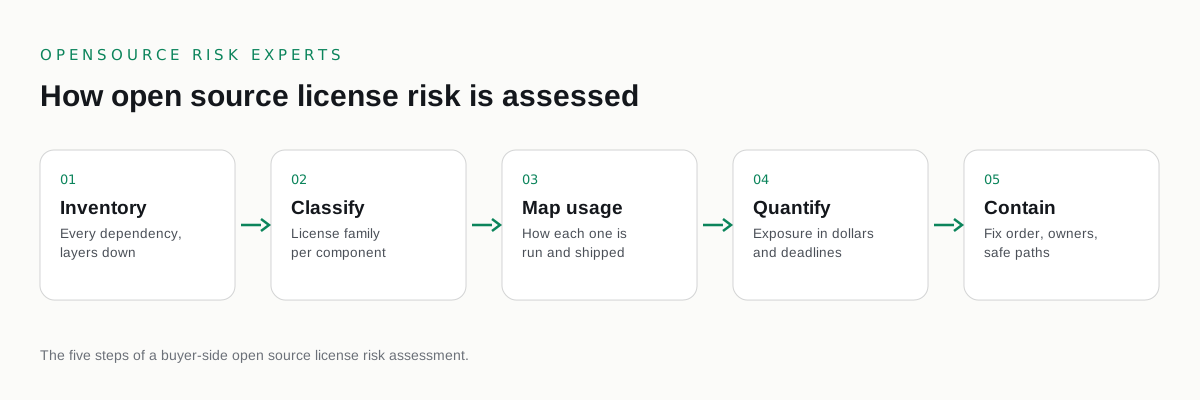
The method is steady and repeatable. Build a current software bill of materials that captures direct and transitive dependencies across every AI service, then record the license state and the version for each component, including model weights. Flag every item whose terms have changed since you adopted it, classify each use as internal or offered to others, and size the cost to cure where a change creates real exposure. The output is a ranked list you can take to engineering and to your board, not a vague worry. The mechanics of building that picture are set out in how to map your open source blast radius, and the financial framing is covered in quantifying open source license exposure.
We are independent and buyer side. We take no vendor fees and resell no software, so our read of your AI tooling reflects your exposure and nothing else, including when the finding is that a component is fine as you use it. This is commercial and licensing risk advisory, not legal advice. For interpretation of any license that governs your AI tooling or model artifacts, engage your own counsel.
COMMON QUESTIONS
Questions buyers ask.
What is open source license risk in AI model tooling?
Open source license risk in AI model tooling is the exposure created when an inference engine, vector store, orchestration library, or model artifact carries terms that restrict your production use. The risk grows because AI stacks pull in many fast moving dependencies, some of which have already moved from open source licenses to source available terms such as the Business Source License or the Server Side Public License.
Do model weights carry license risk?
Yes. Model weights and the licenses attached to them are separate from the code that runs them. Some popular model releases use custom community licenses with acceptable use clauses and scale or field of use limits rather than recognized open source licenses. Treat the weight license and the tooling license as two distinct questions and map both.
Which AI dependencies are most likely to be relicensed?
Vector databases, search and analytics engines, and data infrastructure that sit near a commercial product are the most likely to relicense, because the vendor has a managed offering to protect. Redis moved to a Redis Source Available License and the Server Side Public License as of March 2024, and Elasticsearch and Kibana moved to the Server Side Public License and the Elastic License as of 2021. Both are common in AI retrieval stacks.
How do we find AI license exposure in production?
Build a current software bill of materials that captures direct and transitive dependencies, then record the license state of each one and the version you run. Flag every component whose terms have changed since adoption, classify your use as internal or offered to others, and size the cost to cure. A risk assessment produces this picture and routes interpretation questions to your counsel.
Is the AGPL a concern for AI tooling?
It can be. Several AI adjacent libraries and data tools ship under the GNU AGPL, which extends copyleft to software offered over a network. If an AGPL component sits in a service you expose to users, the obligation can reach code you did not expect. Map where AGPL components live and confirm the boundary with your own counsel.
Is this legal advice?
No. This is commercial and licensing risk advisory, not legal advice. For interpretation of any license that governs your AI tooling and model artifacts, engage your own counsel.
CONTAINMENT
Map the license exposure in your AI stack.
A confidential open source license risk assessment. Independent, buyer side, paid only by you.
Not ready to talk? Read the free open source license risk guides first.
One email when a major project relicenses. No marketing, unsubscribe any time.
MORE IN THIS CLUSTER