RELICENSING
Relicensing and license compatibility conflicts.
BY FREDRIK FILIPSSON · REVIEWED BY MORTEN ANDERSEN
A relicense does not only change one component. It can put that component at odds with the licenses around it. Relicensing and license compatibility conflicts is about spotting that clash before it spreads.
Commercial and licensing risk advisory, not legal advice.
Relicensing and license compatibility conflicts are a quieter problem than the headline restriction in a source available license, but they can be just as costly. When a component changes license, the new terms do not arrive in isolation. The component sits inside a larger work, linked to and combined with code under other licenses, and the question becomes whether the new terms can coexist with the terms already present. Sometimes they cannot. A combination that was perfectly compatible last year becomes a conflict the moment one part relicenses, even though no line of your own code changed. Spotting that conflict early is the difference between a planned adjustment and a discovery made under pressure.
This article sits on the pillar for open source relicensing, and connects to the wider obligations covered in relicensing and your compliance obligations.
What a compatibility conflict actually is
A license compatibility conflict exists when two licenses in the same combined work impose terms that cannot both be satisfied at once. The classic example involves copyleft. A strong copyleft license may require that the entire combined work be made available under its terms, while another license in the same work forbids exactly that, or imposes a condition the copyleft license will not accept. You cannot honor both, so the combination is non compliant. Before the relicensing wave, most enterprises managed compatibility by sticking to permissive licenses that combine freely. The wave changed the picture, because a source available license such as the Business Source License or the Server Side Public License introduces restrictions that permissive licenses never carried, and those restrictions can collide with the obligations around them.
The foundational distinctions between license families, and why they combine differently, are set out in source available is not open source and why it matters.
How a relicense triggers a new conflict
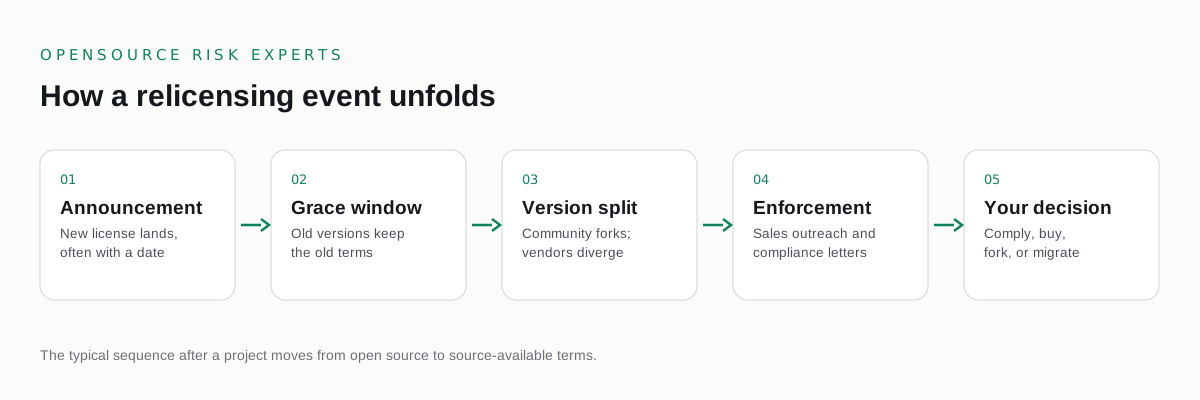
The mechanism is straightforward. You build a service that combines several components, all compatible under their original licenses. One of those components relicenses to a source available license. When you next adopt a version under the new license, the combined work now contains terms it did not contain before. If the surrounding code carries a copyleft obligation, the new restriction may be impossible to reconcile with it. If you redistribute the combined work, the new terms may impose obligations the other licenses forbid. The Server Side Public License is a particular concern here, because its copyleft style reach extends to the surrounding service stack, which is a much larger surface than a single library. A component that combined cleanly under a permissive license can, after moving to the Server Side Public License, place obligations on everything it touches in a deployed service.
The conflict is sharpest when you redistribute, because distribution is where most license obligations attach. The redistribution dimension is examined in relicensing and internal versus external use.
Detecting the conflict before it bites
You cannot check for a conflict you cannot see, so detection starts with a complete license map of the combined work. With every component's license recorded, you locate the relicensed component, identify everything it combines with, and check each pairing for terms that cannot both be met. A maintained license inventory makes this a routine query rather than a forensic exercise. Pay particular attention to copyleft licenses anywhere in the work, to the boundaries of what counts as a combined or derivative work, and to whether you distribute the result. Where the analysis flags a possible conflict, treat it as a question for your own counsel rather than a conclusion, because compatibility is a legal judgment that turns on how the licenses interact in your specific build.
Detection is also a reason to act quickly once a vendor announces a change. The first weeks after an announcement are when the map is most valuable, as covered in how to respond in the first 30 days of a relicense.
Resolving the conflict
Once a conflict is confirmed, the resolution options mirror the broader relicensing playbook. You can replace the relicensed component with an openly licensed fork or alternative that restores compatibility, which is often the cleanest fix when a mature fork exists. You can restructure the combined work so the conflicting licenses no longer meet in a way that triggers the clash, though this is delicate and should be validated with counsel. Or you can obtain a commercial license that grants terms compatible with the rest of the work. Whichever path you take, document the conflict, the analysis, and the resolution, because a compatibility position is exactly the kind of thing an auditor or an acquirer will probe. Relicensing and license compatibility conflicts are manageable when you hold a current map and act before redistribution forces the question.
This article is commercial and licensing risk advisory, not legal advice. License compatibility is a legal question, so for a binding conclusion on any specific combination, your own counsel is the right place to turn.
COMMON QUESTIONS
Questions buyers ask.
What is a license compatibility conflict?
A license compatibility conflict arises when two licenses in the same combined work impose terms that cannot both be satisfied. A relicense can create one where none existed before, because a component that was permissively licensed may move to a source available license whose restrictions clash with the obligations of the code around it.
How can relicensing create a compatibility conflict?
When a dependency moves from an open license to a source available one such as the Business Source License or the Server Side Public License, its new restrictions may be incompatible with a copyleft license elsewhere in the build or with how you redistribute the combined work. The conflict appears the moment you adopt a version under the new license.
Why is the Server Side Public License a compatibility concern?
The Server Side Public License carries strong copyleft style obligations that reach the surrounding service stack. Combining it with code under other licenses, or distributing the result, can create obligations that conflict with those other licenses, which is why compatibility analysis matters after a relicense.
How do you detect a compatibility conflict after a relicense?
Map the licenses across the whole combined work, identify where the relicensed component sits, and check each pairing of licenses for terms that cannot both be met. A current license inventory makes this routine; without one, conflicts surface only when someone asks the hard question.
Is this legal advice?
No. This article is commercial and licensing risk advisory, not legal advice. License compatibility is a legal question, so for a binding conclusion we recommend your own counsel.
SEE YOUR EXPOSURE
Find the clash before it spreads.
A confidential relicensing exposure review. Independent, buyer side, paid only by you.
Not ready to talk? Read the free open source license risk guides first.
One email when a major project relicenses. No marketing, unsubscribe any time.
MORE IN THIS CLUSTER