ARTICLE . UPDATED JUNE 2026
Relicensing Risk in Your Vendor Stack
BY MORTEN ANDERSEN · REVIEWED BY FREDRIK FILIPSSON
Relicensing risk in your vendor stack is the exposure you inherit through the commercial software you buy, not the open source you adopt directly. When a product you license embeds a component that has changed terms, the vendor's problem can become yours through a price increase, a forced product change, or a gap in your indemnity. You never chose the underlying component, yet you can carry the consequence. Finding that risk takes a procurement habit, not just a code scan.
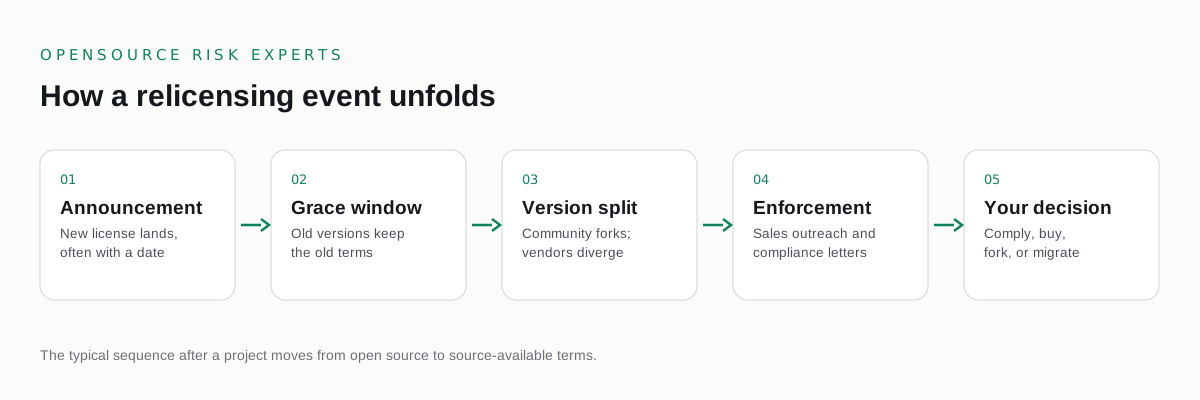
Most discussion of license risk assumes you control the code. You scan your own repositories, map your own dependencies, and decide what to do. But a large share of an enterprise's software is bought, not built. Commercial products, managed platforms, and embedded systems all rest on open source the supplier chose, and that open source can relicense without ever appearing in your repositories. When it does, the exposure flows to you through the supplier relationship rather than through your build. This is relicensing risk in the vendor stack, and it is the part of the picture that a code centered approach misses entirely.
How a relicense inside a product becomes your problem
When a component embedded in a commercial product relicenses, the vendor has a decision to make, and every option can reach the buyer. The vendor may pass on a higher cost if it now has to pay for a commercial license to the relicensed component. It may change the product to remove or replace the component, which can break integrations you depend on. It may face a dispute with the upstream that disrupts the service you rely on. Or it may quietly carry the exposure and hope it never surfaces, which leaves you depending on a position the vendor has not disclosed. In each case, how much lands on you is governed by your contract rather than by your engineering. The relicensing event happened to the vendor. The contract decides whether it stays there.
The components driving this are the same ones reshaping the direct picture. As of August 2023, HashiCorp moved Terraform, Vault, Consul, Nomad, and Packer to the Business Source License 1.1. Redis moved to a dual model with the Server Side Public License as of March 2024, Elasticsearch and Kibana moved to the Server Side Public License and the Elastic License as of 2021, and MongoDB moved to the Server Side Public License in 2018. Any of these can sit inside a product you buy. Source available is not open source, and neither license is approved by the Open Source Initiative, so a product built on one of them carries a restriction the supplier has to manage on your behalf.
Finding the risk in software you only buy
You cannot scan a vendor's source the way you scan your own, but the risk is still discoverable. The signals live in vendor documentation, in any software bill of materials the supplier provides, in security and compliance questionnaires, and in the contract itself. The single most useful step is to ask. A procurement question about what open source a product embeds and how the vendor tracks relicensing is fair, increasingly standard, and often revealing. Suppliers who manage this well can answer it. Suppliers who cannot are themselves a signal. The way these questions fit into a buying process is covered in relicensing and procurement approval processes.
The contract terms that decide who carries the risk
Because the vendor stack risk travels through the contract, the contract is where it is contained. Four terms do most of the work. The indemnity for third party license claims decides who pays if the relicensed component triggers a dispute. The vendor's right to change the product decides whether the supplier can alter what you bought without your agreement. Price protection across the term decides whether a cost the vendor incurs can be passed straight to you. And any explicit commitment about the open source the product depends on tells you whether the supplier is even tracking the question. These terms turn an abstract worry into a concrete allocation of risk. Your own counsel should review the specific language, because the wording determines the outcome. The wider obligation picture is set out in relicensing and your compliance obligations.
Bringing the vendor stack into your exposure picture
A complete view of relicensing exposure covers both what you build and what you buy. The bought in part is harder to see, but ignoring it leaves a blind spot exactly where you have the least control. The practical approach is to extend your dependency mapping with a supplier layer: which products you rely on, what they are known to embed, and what your contracts say about change and indemnity. This work sits on the relicensing pillar, and a relicensing exposure review can include the vendor stack alongside your own code.
We are independent and buyer side. We take no vendor fees and resell no software, so we assess your suppliers from your side of the table. This is commercial and licensing risk advisory, not legal advice. For interpretation of vendor contract terms and license obligations, engage your own counsel.
COMMON QUESTIONS
Questions buyers ask.
What is relicensing risk in your vendor stack?
It is the exposure that arrives through the commercial software and services you buy, rather than through code you adopt directly. When a product you license embeds a component that has relicensed, such as a Business Source License or Server Side Public License project, the vendor's exposure can flow to you through indemnity gaps, price increases, or a forced product change. The risk is real even though you never chose the underlying component.
How does a relicense inside a vendor product reach you?
It reaches you through your supplier. If a vendor's product depends on a relicensed component, the vendor may pass on a higher cost, change the product to remove the component, or face a dispute that disrupts your service. Your contract determines how much of that lands on you. Weak indemnities and broad change rights move the risk toward the buyer.
Can you find relicensing risk in software you only buy?
Yes, though it takes more work than scanning your own code. The signals are in vendor documentation, bills of materials, security questionnaires, and contract terms. Asking suppliers what open source they embed and how they track relicensing is a fair and increasingly standard procurement question. A relicensing exposure review can extend to the bought in part of your stack.
What contract terms matter for vendor relicensing risk?
The terms that matter most are the indemnity for third party license claims, the vendor's right to change the product, price protection across the term, and any commitment about the open source the product depends on. These determine whether a relicense inside the vendor's stack stays the vendor's problem or becomes yours. Your own counsel should review the specific language.
Is this legal advice?
No. This is commercial and licensing risk advisory, not legal advice. For interpretation of vendor contract terms and license obligations, we recommend you engage your own counsel.
CONTAINMENT
See the risk your suppliers carry for you.
A confidential relicensing exposure review. Independent, buyer side, paid only by you.
Not ready to talk? Read the free open source license risk guides first.
One email when a major project relicenses. No marketing, unsubscribe any time.
MORE IN THIS CLUSTER