ARTICLE / GOVERNANCE AND SBOM
Open source inventory automation.
BY FREDRIK FILIPSSON · REVIEWED BY MORTEN ANDERSEN
Open source inventory automation keeps the one map that relicensing risk depends on current at all times. This guide explains how continuous scanning and license state tracking catch a component that changes terms before it becomes a finding.
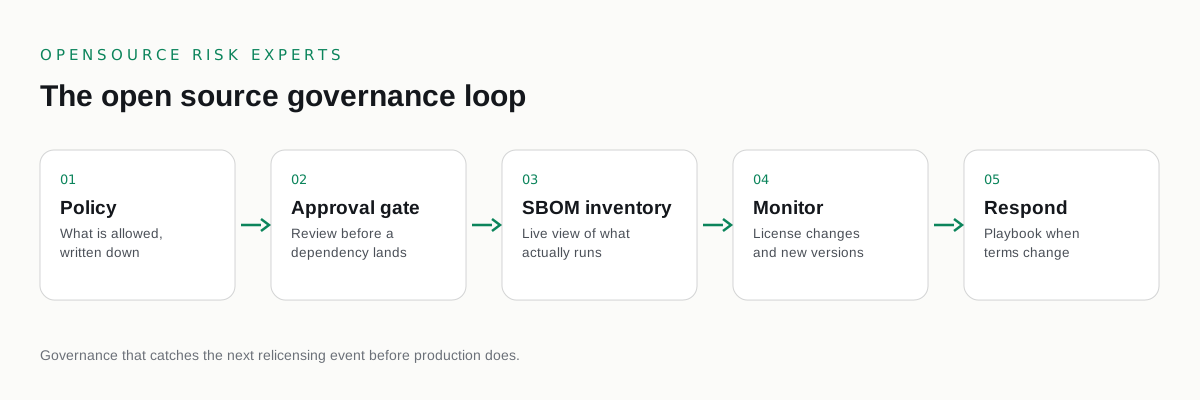
You cannot manage exposure you cannot see, and in a modern dependency tree the things you cannot see outnumber the things you can. Open source inventory automation solves the visibility problem by replacing the periodic hand built list with tooling that scans continuously and keeps the map current. The point is not tidiness for its own sake. It is that a relicensing event hides in the components you stopped looking at, and only a live inventory catches a license that changed after you adopted it. Automation is what turns the inventory from a document that ages into a control that holds.
Why open source inventory automation beats a manual list
A hand built inventory is out of date the day it is finished. Every build pulls new versions, every release adds dependencies, and transitive components arrive that no one chose directly. A spreadsheet cannot keep pace, and the gap between what it says and what runs in production is exactly where relicensing risk lives. The manual approach also misses depth, because a person tracing a dependency tree by hand rarely reaches the bottom, and the bottom is where a quietly relicensed library sits. Automation exists because the problem is too large and too fast for manual review to govern.
Scan continuously, not on a schedule
The core of automation is continuous scanning wired into the build. When the inventory updates on every change rather than at a quarterly review, it reflects production at all times instead of a snapshot taken months ago. Continuous scanning also reaches transitive depth that manual passes miss, recording the full tree down to the components no one adopted on purpose. The result is a map you can trust on any given day, which is the precondition for every other control. Without a current map, governance is guesswork and remediation aims at the wrong targets.
Track license state and alert on change
Recording each component is only half the value. The automation must also record the license of each component and watch it for change. When a project you already run moves to the Business Source License or the Server Side Public License in a new version, the change in license state should fire an alert from your own tooling, before a vendor notice or an audit raises it for you. This is the capability that turns inventory from documentation into early warning. The relicensing wave made the case plainly: HashiCorp, Redis, and Elastic each changed terms on software enterprises were already running, and the firms that learned of it from their own monitoring fared better than those that learned of it from a vendor. We cover ongoing watch in open source license risk monitoring over time.
Output a standard SBOM
The inventory should emit a software bill of materials in a standard format such as SPDX or CycloneDX, because the same data then serves more than one purpose without rework. A regulator asking for an SBOM, a customer asking what you run, and your own risk review all draw from one source of truth. A standard format also makes the inventory portable across tools and durable as your stack evolves. The discipline of producing and maintaining that bill of materials is a service in its own right, covered in SBOM and dependency mapping.
From automated inventory to action
An inventory that updates itself is the foundation, but it only pays off when it feeds decisions. The automated map should connect to the approval gates that govern new dependencies and to the alerting that flags a relicense, so detection turns into containment rather than a report no one reads. The inventory tells you what you run and under what terms. The workflow decides what to do when something changes. Together they close the loop. We cover the intake side in building an open source license inventory, and the full program sits in our pillar on open source governance and SBOM. What a detected license requires of you is a question for your own counsel.
COMMON QUESTIONS
Questions buyers ask.
What is open source inventory automation?
Open source inventory automation is the practice of keeping a complete, current map of every open source component you run by scanning continuously rather than by hand. It records each component, its version, and its license state, direct and transitive, and updates as code changes, so the inventory reflects production at all times instead of a snapshot that ages the day it is finished.
Why automate the open source inventory instead of doing it manually?
A manual inventory is out of date the moment it is complete, because dependencies change with every build. Automation keeps the map current, catches transitive dependencies a manual pass misses, and flags a license change in a component you already run. Manual review cannot keep pace with a modern dependency tree, which is exactly where relicensing risk hides.
How does automation catch a relicensing event?
Automated tooling records the license state of each component and re checks it on every version bump and on a schedule. When a component moves to the Business Source License or Server Side Public License in a new release, the change in license state is flagged automatically, so you learn of it from your own tooling rather than from a vendor notice or an audit.
What should an automated inventory capture?
It should capture every component and version, the license of each, the dependency relationships including transitive depth, and the history of license changes over time. Output in a standard software bill of materials format such as SPDX or CycloneDX lets the same data serve regulators, customers, and your own risk reviews without rework.
Is inventory automation legal advice?
No. This is commercial and licensing risk advisory, not legal advice. For interpretation of what a detected license requires of you and whether a relicense affects your specific use, we recommend your own counsel.
GOVERNANCE AND POLICY
Keep your inventory current automatically.
Our governance advisory stands up continuous scanning and license alerts on your stack. Independent, buyer side, paid only by you.
Not ready to talk? Read the free open source license risk guides first.
One email when a major project relicenses. No marketing, unsubscribe any time.
MORE IN THIS CLUSTER