GOVERNANCE AND SBOM
Governance Metrics and Reporting
BY MORTEN ANDERSEN · REVIEWED BY FREDRIK FILIPSSON
By OpenSource Risk Experts · April 27, 2026
Governance metrics and reporting are how an open source risk program proves it is working. A policy that no one measures is a hope, not a control. The board cannot tell whether the organization is exposed to the next relicensing event from a binder of procedures. It can tell from a small set of numbers that show how much of the estate is mapped, how much carries problematic terms, how quickly exposures are closed, and whether new components are passing through the rules. This article sets out the metrics that matter, the audience they serve, and the cadence that keeps them useful rather than ceremonial.
We write from the buyer side as an independent advisory paid only by the buyer. This is not legal advice. For interpretation of a specific license exposure surfaced in your reporting, we point you to your own counsel.
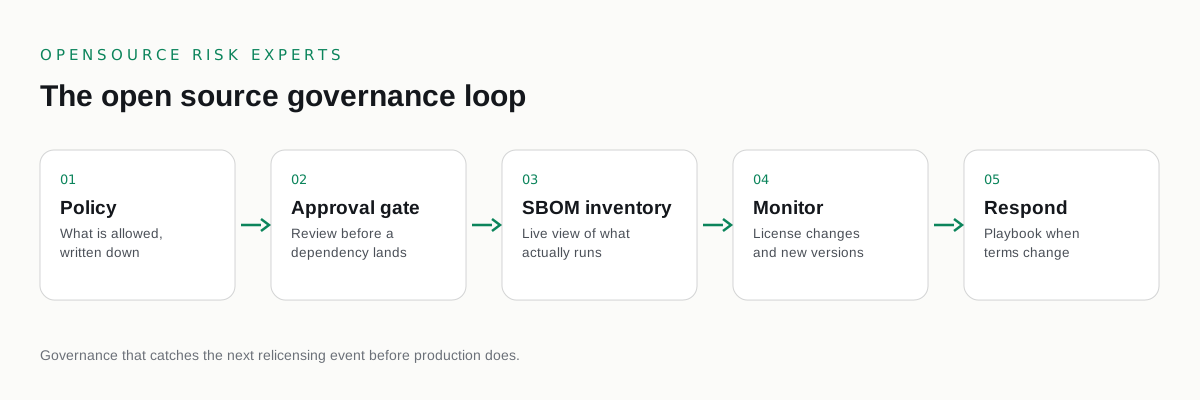
What governance metrics and reporting do
Governance metrics and reporting translate the day to day work of managing open source license risk into a form leadership can act on. The work itself, mapping dependencies, checking licenses, approving components, and remediating exposures, produces a stream of operational detail. Metrics distill that detail into a few measures that answer the questions leadership actually asks. Are we covered? How exposed are we? Are we improving? Reporting then delivers those measures on a regular cadence, in language the board, the risk committee, and counsel understand, so that the program is visible and accountable rather than a black box. Without metrics, an organization cannot say whether its governance is effective. With them, it can defend its posture to a regulator, an auditor, or its own directors.
The discipline is to measure outcomes, not activity. Counting the meetings held or the policies written says nothing about whether risk is contained. The metrics that matter measure the state of the estate and the speed of response, because those are what determine whether a relicensing event finds you prepared or exposed.
The metrics that matter
Four measures carry most of the weight. The first is coverage, the share of your estate that is inventoried and license checked. Coverage below full means there are components you cannot see, and a blind spot is where the next surprise lives. The second is open exposure, the count and severity of components carrying problematic terms, such as a dependency that has moved to the Business Source License or the Server Side Public License and now sits in production under restricted terms. This is the headline risk number, and trending it over time shows whether the organization is accumulating or shedding exposure. The third is time to remediate, how long it takes to close an exposure once it is found. A short and stable time to remediate shows the program can respond; a growing one shows a backlog forming. The fourth is policy compliance, the share of new components passing through the approval process rather than bypassing it. Falling compliance is an early warning that the controls are being worked around. Read together, these four show both where the organization stands today and which way it is moving.
Each metric depends on an accurate underlying inventory, because every measure is only as good as the map it is computed from. Coverage assumes you know the denominator. Exposure assumes you can see the terms on every node. This is why metrics and reporting sit on top of the inventory and monitoring layers rather than beside them. We cover those foundations in maintaining an accurate SBOM and in continuous open source license monitoring.
Reporting to the people who carry the risk
The same metrics serve several audiences, and good reporting cuts them for each. The board and the risk committee want the headline exposure, the trend, and the assurance that the program is controlling it, stated in plain language and tied to business consequence rather than technical detail. The CISO wants exposure alongside the security view, because license risk and security risk share an inventory even though they are distinct concerns. The general counsel wants the components carrying copyleft or distribution obligations, the terms that create legal duty. Procurement wants the commercial exposure, the components likely to require a paid license. Reporting that speaks to each of these in their own terms, from one consistent underlying data set, is what turns metrics into decisions. The goal is not a single report but a shared source of truth presented in the cut each stakeholder needs. The approval data that feeds the compliance metric comes from the process described in open source approval workflows for developers.
Cadence and acting on the numbers
Reporting works only if its cadence matches its purpose. The team running the program watches the operational metrics continuously, because they drive daily work. Leadership reporting usually settles on a quarterly rhythm, frequent enough to show trend and hold the program accountable, but not so frequent that it becomes noise. The exception is the significant event. When a widely used project relicenses, or a material exposure surfaces, the program reports out of cycle, because waiting for the next scheduled review would leave leadership uninformed while the clock runs. The point of the numbers is to drive action, so a metric moving the wrong way should trigger a response rather than simply being noted. A rising time to remediate calls for resourcing. A falling compliance rate calls for tighter gates. Reporting that ends in a decision is governance; reporting that ends in a slide is theater. Designing this reporting and the metrics behind it is part of our open source governance and policy service. For the full picture of governance and software bill of materials practice, see the governance and SBOM pillar.
COMMON QUESTIONS
Questions buyers ask.
What are governance metrics and reporting for open source risk?
Governance metrics and reporting are the measures and the cadence by which an organization shows how well it is controlling open source license risk. They typically track inventory coverage, the count and severity of license exposures, time to remediate, and compliance with policy, reported to leadership in board ready language.
Which metrics matter most?
The most useful are coverage, the share of your estate that is inventoried and license checked, open exposure, the number and severity of components carrying problematic terms, time to remediate, how long it takes to close an exposure once found, and policy compliance, the share of new components passing through approval. Together they show both current state and trend.
Who is the audience for governance reporting?
The audience is leadership: the board, the risk committee, the CISO, the general counsel, and procurement. Each cares about a different cut, but all need the risk stated plainly, quantified where possible, and trended over time rather than presented as a one off snapshot.
How often should governance metrics be reported?
Operational metrics can be reviewed continuously by the team that runs the program. Leadership reporting usually fits a quarterly cadence, with the ability to report out of cycle when a significant relicensing event or exposure demands attention before the next scheduled review.
Is this legal advice?
No. We provide commercial and licensing risk advisory, not legal advice. For interpretation of a specific license exposure surfaced in your reporting, engage your own counsel.
PREVENTION
Give the board a number it can act on.
A confidential open source license risk assessment. Independent, buyer side, paid only by you.
Not ready to talk? Read the free open source license risk guides first.
One email when a major project relicenses. No marketing, unsubscribe any time.
MORE IN THIS CLUSTER