GOVERNANCE AND SBOM
Open source contribution policy and risk.
Most governance attention falls on the code coming in. An open source contribution policy and risk view looks the other way: at the code your engineers send out. Outbound contributions can leak proprietary work, sign away intellectual property through an unreviewed agreement, and create obligations you never agreed to.
An open source contribution policy and risk framework governs the code your employees send to external projects, and it is the half of open source governance that enterprises most often neglect. Inbound dependencies get scanned and gated. Outbound contributions, where an engineer fixes a bug in a library and pushes the change upstream, frequently happen with no review at all. That is a mistake, because a contribution is a one way door. Once proprietary code or an intellectual property grant is public, it is hard to pull back. This article sets out the risks and how a policy contains them. None of it is legal advice, and contributor agreements belong with your own counsel.
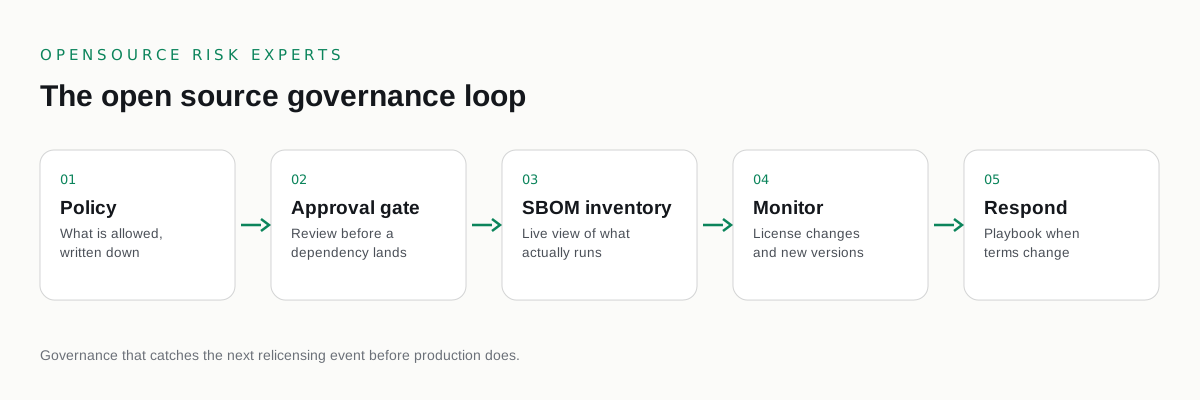
What an open source contribution policy covers
A contribution policy answers four questions before any code leaves the building. Who may contribute on the company's behalf, and how is that authorisation recorded? What may be contributed, and what is off limits because it touches proprietary work? How is the contribution cleared for intellectual property, so it carries nothing it should not? And how are contributor license agreements reviewed before anyone accepts them? A policy that answers these turns an ad hoc activity into a governed one. It does not exist to discourage contribution, which is often good for the company and the engineer alike. It exists to ensure the contribution is deliberate rather than accidental.
The risk of leaking proprietary code
The first and most direct risk is that a contribution carries code it should not. An engineer fixing an upstream bug may, without intending to, include a snippet that originated in your proprietary codebase, or that reveals confidential business logic. Once that code is merged into a public project under an open license, it is public, and reversing it is slow and uncertain. The defence is a clearance step: a review that confirms what is being contributed originated as the engineer's work for this purpose and contains nothing proprietary. This is the same discipline applied in reverse to incoming code, and it sits alongside the controls described in third party and contractor code governance.
Contributor license agreements bind the company
Many projects require a contributor license agreement, or CLA, before they accept a contribution. A CLA governs what rights you grant over the contributed code. Some are narrow, granting only a license to use the contribution. Others are broad, assigning copyright outright or granting sweeping patent rights. When an engineer signs a CLA on the company's behalf, the company is bound, often without anyone in legal having seen the terms. A policy routes every CLA through review before signature, so the company knows what it is granting. The terms vary widely between projects, and the difference between a narrow license grant and a copyright assignment is the difference between keeping and losing control of your own code. This is a question for your counsel, not for a developer under deadline.
License conflicts run in both directions
Contributing to a project means accepting its license for your contribution. If that license conflicts with obligations you carry elsewhere, the contribution can create a compatibility problem. Contributing to a strongly copyleft project, for example under the GNU AGPL, may carry implications you would not accept in your own distributed software. The policy should check that the target project's license is compatible with the company's position before a contribution proceeds, the same compatibility analysis applied to inbound dependencies and covered in license compatibility management. A contribution made into the wrong license is a self inflicted version of the exposure this firm usually helps contain.
Contributions and the relicensing wave
There is a connection between contribution and relicensing risk that buyers rarely consider. A project you contribute to heavily can later change its license. If a project assembled contributions under a permissive or open license and then moved to source available terms, as several widely used projects did between 2018 and 2024, the code you gave now sits under terms you did not choose. Keeping a record of what your engineers contributed, to which projects, and under which agreement, helps you understand your position if a project you depend on relicenses. It also informs whether a community fork such as OpenTofu, Valkey, or OpenSearch is a path you can support or even help maintain. The wider exposure picture is the subject of the governance and SBOM pillar.
Make the policy easy to follow
A contribution policy fails if it is so heavy that engineers route around it or stop contributing entirely. The aim is a lightweight, fast path for low risk contributions and a clear escalation for the cases that need legal review: anything touching proprietary code, any unusual CLA, and any strongly copyleft target. Build the workflow into the tools engineers already use, so requesting clearance is a step in the process rather than a separate chore. A policy that respects the engineer's time gets followed, which is the same principle that governs open source approval workflows for developers on the inbound side. Governance that people accept is governance that works.
The buyer side view
We help you build a contribution policy that protects your intellectual property without smothering the contribution your teams value. We map the risks, design the clearance and CLA review steps with your counsel, and wire the workflow into how your engineers already work. We are independent and paid only by you, so the policy serves your risk posture and not a vendor's interest. The full set of resources sits in the governance and SBOM pillar, and we deliver the work through our open source governance and policy service.
COMMON QUESTIONS
Questions buyers ask.
What is an open source contribution policy?
An open source contribution policy governs how your employees contribute code, documentation, or fixes to external projects. It sets who may contribute, what may be contributed, how intellectual property is cleared, and how contributor license agreements are reviewed, so outbound contributions do not leak proprietary code or create unintended obligations.
What are the main risks of unmanaged contributions?
The main risks are leaking proprietary or confidential code into a public project, assigning or licensing your intellectual property away through a contributor license agreement no one reviewed, and contributing to a project whose license conflicts with your own obligations. Each can be hard to unwind once the code is public.
What is a contributor license agreement and why review it?
A contributor license agreement, or CLA, is the contract a project requires before accepting your contribution. It governs what rights you grant over the contributed code. Some CLAs assign copyright, some grant broad licenses, and the terms bind your company, so they belong with your counsel before anyone signs on the firm's behalf.
How does a contribution policy fit with relicensing risk?
A project you contribute heavily to can later relicense, and your contributions may then sit under terms you did not choose. A contribution policy that records what you gave and under which agreement helps you understand your position if a project you rely on moves to source available terms.
Is this article legal advice?
No. It is commercial and licensing risk analysis, not legal advice. For interpretation of contributor agreements and license terms, engage your own counsel.
CONTAINMENT
Govern the code that leaves, not just the code that arrives.
Confidential open source governance and policy support. Independent, buyer side, paid only by you.
Not ready to talk? Read the free open source license risk guides first.
One email when a major project relicenses. No marketing, unsubscribe any time.
MORE IN THIS CLUSTER