ARTICLE . UPDATED JUNE 2026
HashiCorp Enterprise License Negotiation
BY MORTEN ANDERSEN · REVIEWED BY FREDRIK FILIPSSON
A HashiCorp enterprise license negotiation rewards preparation. The move to the Business Source License pushed many teams toward a paid tier of Terraform or Vault, and the terms you agree now shape years of cost. Your leverage comes from an accurate usage baseline and a credible alternative in the OpenTofu fork. This article shows how to prepare, where the leverage sits, and which terms matter beyond price.
When a license change pushes a buyer toward a commercial agreement, the natural reaction is to treat the vendor's list price as the starting point. It is not. A list price is built for an average customer, not for your actual usage and your actual leverage. The work of a good negotiation is to replace that anchor with a precise picture of what you use and a credible sense of what you would do if the deal were not attractive. As of August 2023, HashiCorp moved Terraform, Vault, Consul, Nomad, and Packer to the Business Source License 1.1, and IBM later acquired HashiCorp. The background to the change is on the HashiCorp and Terraform pillar.
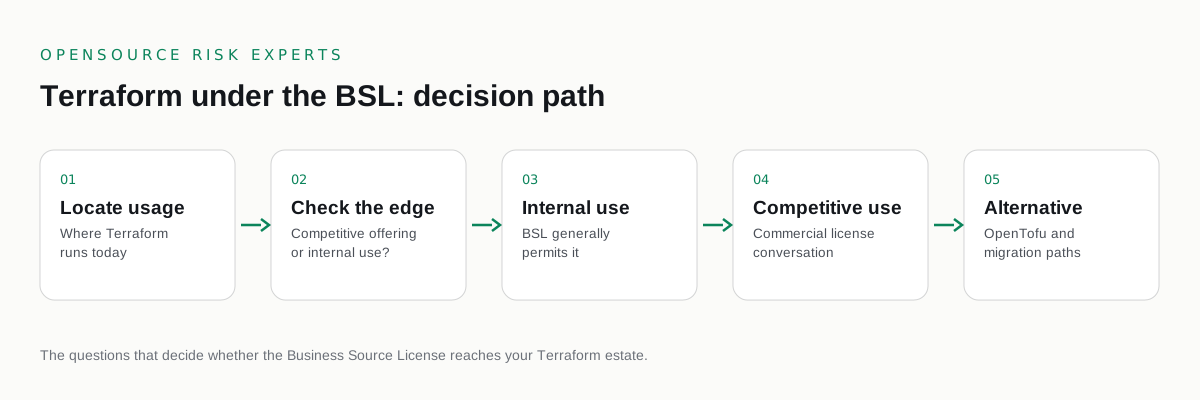
What drives a HashiCorp enterprise license negotiation
Most HashiCorp enterprise license negotiations begin with a trigger. A team needs features in the paid tier, a competitive use question pushes them off the open tooling, or a renewal forces a decision. Whatever the trigger, the negotiation sets three things: the price, the scope of permitted use, and the term. Each of those is movable, and each is easier to move with preparation than under deadline pressure. The first task is to understand why you are at the table, because a negotiation driven by a genuine feature need is different from one driven by a license question that an honest assessment might resolve in your favor. Knowing whether you must license at all is the subject of when you must license HashiCorp commercially.
Set an accurate usage baseline first
The single most valuable preparation is an accurate usage baseline. Vendors price against a usage metric, and a buyer who does not know its own numbers tends to overbuy. Measure what you actually run: the deployments, the users, the workspaces, or whatever metric the agreement uses, and separate the use that genuinely needs the paid tier from the use that does not. A precise baseline does two things at once. It stops you from paying for capacity you will never use, and it gives you a factual position the vendor cannot easily inflate. This baseline is the same artifact that a relicensing exposure review produces, and it underpins every other move in the negotiation.
Build leverage with a credible alternative
Leverage in any license negotiation comes from a credible alternative, and Terraform has one. OpenTofu is the community fork that continues Terraform under an open source license, and for many infrastructure use cases it is a genuine option. A buyer with a real plan to adopt OpenTofu where it fits negotiates from a different place than one with no alternative, because the vendor knows the relationship is not captive. The alternative does not need to be perfect or universal to help. It needs to be credible enough that walking is a real choice. The fork and its momentum are examined in the OpenTofu and Valkey fork story, and the compliance obligations that shape the decision are in HashiCorp BSL compliance obligations.
Negotiate the terms that matter beyond price
Price is the most visible term and rarely the most important over the life of the contract. The usage metric determines whether your bill grows with your business or with your efficiency. The renewal terms and any cap on price increases decide what happens when your leverage is lowest. The audit clause governs how a future disagreement is handled. The exit terms decide how easily you can leave. A narrow win on headline price paired with an uncapped renewal or a punitive audit clause can cost far more than it saves. Negotiate the whole agreement, not just the number on the first page, and model the total cost across the full term rather than the first year alone.
Why buyer side independence changes the table
Much of the advice a buyer receives in a vendor negotiation comes from parties who earn more when the deal is larger. Resellers and vendor aligned advisors have an incentive that does not always align with yours. An independent, buyer side advisor takes no vendor fees and resells no software, so the only interest at the table is the buyer's. That independence is the point of the engagement, because it means the usage baseline, the leverage assessment, and the term advice all reflect your position rather than a commission. This is commercial and licensing risk advisory, not legal advice. For interpretation of the Business Source License, a commercial agreement, or your compliance position, engage your own counsel.
COMMON QUESTIONS
Questions buyers ask.
What drives a HashiCorp enterprise license negotiation?
A HashiCorp enterprise license negotiation is usually driven by a move to a paid tier of Terraform or Vault, often prompted by the Business Source License change or by needing features the open tooling does not provide. The negotiation sets price, scope, and term. Your leverage comes from an accurate usage baseline and from credible alternatives such as the OpenTofu fork.
How do we build leverage in the negotiation?
Leverage comes from three sources: a precise picture of what you actually use, a credible alternative you could switch to, and time. An accurate usage baseline stops you from buying capacity you do not need, the OpenTofu fork gives you a real option to the open tooling, and starting early prevents a renewal deadline from setting the price for you.
Does the OpenTofu fork affect HashiCorp pricing leverage?
Yes. OpenTofu is the community fork of Terraform that continues under an open source license, so it is a genuine alternative for many infrastructure use cases. A credible plan to adopt it where it fits changes the conversation, because the vendor knows you are not locked in. The alternative does not need to be perfect to improve your position, only credible.
What terms matter beyond price?
Price is only part of the agreement. The scope of permitted use, the metric that defines usage, the renewal and price increase caps, the audit clause, and the exit terms all shape your long term cost and risk. A narrow price win paired with a punitive audit clause or an uncapped renewal can cost more over the life of the contract than a higher headline number.
How does independence help in a vendor negotiation?
An independent, buyer side advisor takes no vendor fees and resells no software, so the only interest represented at the table is yours. That matters in a negotiation where resellers and vendor aligned parties earn from a larger deal. The advice you receive reflects your usage and your leverage rather than a commission tied to the outcome.
Is this legal advice?
No. This is commercial and licensing risk advisory, not legal advice. For interpretation of the Business Source License, a commercial agreement, or your compliance position, engage your own counsel.
CONTAINMENT
Enter your HashiCorp negotiation with leverage.
A confidential relicensing exposure review. Independent, buyer side, paid only by you.
Not ready to talk? Read the free open source license risk guides first.
One email when a major project relicenses. No marketing, unsubscribe any time.
MORE IN THIS CLUSTER