ARTICLE . UPDATED JUNE 2026
HashiCorp Renewal and Negotiation Leverage
BY FREDRIK FILIPSSON · REVIEWED BY MORTEN ANDERSEN
HashiCorp renewal and negotiation leverage come from two things you control: an accurate picture of your own usage and a credible alternative you have actually tested. A buyer who knows exactly how much Terraform it runs and that OpenTofu is viable for part of it negotiates from a real position. A buyer who arrives at the renewal date with neither negotiates against the vendor's list price and a clock. The difference is preparation, started early.
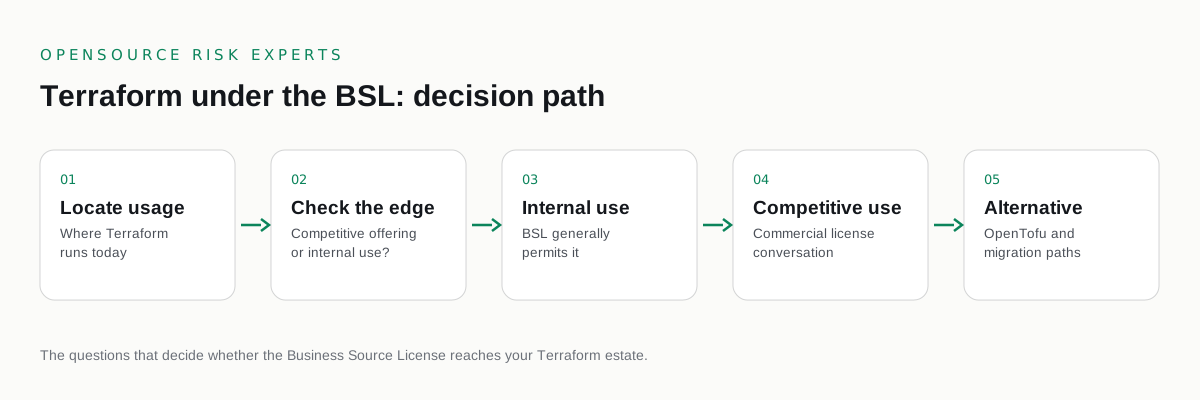
A renewal is a negotiation whether or not the buyer treats it as one. After HashiCorp moved Terraform, Vault, Consul, Nomad, and Packer to the Business Source License 1.1 as of August 2023, and following the acquisition of HashiCorp by IBM, renewals carry more weight than they once did. The license restricts competitive production use, the commercial wrapper around it can move under a new owner, and the buyer's position depends entirely on what it brings to the table. Leverage is not a personality trait or a negotiation tactic. It is the product of homework done before the conversation starts.
Leverage starts with a credible alternative
The foundation of any buyer side negotiation is a believable answer to the question, what happens if we walk away. For Terraform, that answer is OpenTofu, the community fork under a neutral foundation that continues the last open version under an open license. Source available is not open source, and the Business Source License is not approved by the Open Source Initiative, so OpenTofu is not merely a cheaper vendor but a different licensing posture. The leverage is real only if the alternative is real. A buyer who has tested OpenTofu against some of its workloads, and knows what migrating the rest would cost, can hold the option credibly. A buyer who only names the fork without having tried it is bluffing, and vendors can usually tell. The fuller story of the fork sits in assessing Terraform exposure across teams.
Map your usage before you sit down
You cannot negotiate well over something you have not measured. Before a renewal, map how widely Terraform, Vault, and the other affected tools sit across your teams and products, which of your uses might raise a competitive question under the Business Source License, and which workloads could realistically move to OpenTofu or another path. This usage picture does two jobs at once. It is the evidence base for the negotiation, letting you challenge a price that does not match your actual footprint, and it is the input to the underlying decision about whether to stay, move, or license. Whether any specific use is competitive is fact specific and a matter for your own counsel, as set out in is your Terraform use competitive under the BSL.
Start early enough to have real options
Timing is itself a source of leverage. Mapping usage, testing OpenTofu, and clarifying your Business Source License position all take time, and a buyer who begins them in the final weeks before a renewal negotiates under deadline pressure that favors the vendor. Starting a full cycle ahead converts the renewal from a scramble into a planned decision, and a credible threat to migrate only exists if there is enough runway to actually do it. The cost of leaving it late is covered from the other direction in the real cost of staying on HashiCorp BSL, which shows how reliance deepens quarter by quarter when a renewal is not planned for.
Negotiate the terms, not just the price
Price is the obvious lever, but it is not the only one. A buyer side negotiation should also address the term length, the right to audit, price protection across renewals, and clarity on how the competitive use restriction applies to your specific deployment. These terms shape the cost and the risk of the agreement as much as the headline number does, and they are easier to secure when the vendor knows you have a genuine alternative. This work sits on the HashiCorp and Terraform pillar, and a relicensing exposure review produces the usage map and the alternative assessment that the negotiation rests on.
We are independent and buyer side. We take no vendor fees and resell no software, so the leverage we help you build serves your interest and no supplier's. This is commercial and licensing risk advisory, not legal advice. For interpretation of the Business Source License and your renewal contract terms, engage your own counsel.
COMMON QUESTIONS
Questions buyers ask.
What gives a buyer HashiCorp renewal and negotiation leverage?
Leverage comes from a credible alternative and an accurate picture of your own usage. If you know exactly how much Terraform or Vault you run, where it sits, and that OpenTofu or another path is genuinely viable for parts of it, you negotiate from a real position. Without that, the vendor's list price and your renewal deadline set the terms.
How does OpenTofu affect a HashiCorp renewal?
OpenTofu, the community fork of Terraform under a neutral foundation, is a live alternative that carries an open license. Its existence means staying with HashiCorp is a choice rather than a necessity, which is the foundation of leverage. A buyer who has tested OpenTofu for some workloads can negotiate knowing what leaving would actually cost.
When should you prepare for a HashiCorp renewal?
Well before the renewal date, ideally a full cycle ahead. Mapping your usage, testing alternatives, and understanding your Business Source License position all take time. A buyer who starts these in the final weeks negotiates under deadline pressure, which favors the vendor. Starting early converts the renewal from a scramble into a planned decision.
What should you map before negotiating with HashiCorp?
Map how widely Terraform, Vault, and the other tools sit across teams, which uses might raise a competitive question under the Business Source License, and which workloads could move to OpenTofu or another path. This usage picture is the evidence base for the negotiation and the input to any decision about staying, moving, or licensing.
Is this legal advice?
No. This is commercial and licensing risk advisory, not legal advice. For interpretation of the Business Source License and your renewal contract terms, we recommend you engage your own counsel.
CONTAINMENT
Build your leverage before the renewal.
A confidential relicensing exposure review. Independent, buyer side, paid only by you.
Not ready to talk? Read the free open source license risk guides first.
One email when a major project relicenses. No marketing, unsubscribe any time.
MORE IN THIS CLUSTER