REDIS, ELASTIC AND DATABASES
Redis license change: what RSALv2 and SSPL mean.
BY FREDRIK FILIPSSON · REVIEWED BY MORTEN ANDERSEN
The Redis license change moved one of the most widely deployed data stores out of open source and into source available terms. This article explains what RSALv2 and the Server Side Public License actually do, who the change reaches, and how the Valkey fork reshapes your options.
Commercial and licensing risk advisory, not legal advice.
The Redis license change is one of the most consequential moves in the relicensing wave, because Redis sits in so many places. It caches sessions, holds queues, backs rate limiters, and serves as a fast data layer behind countless applications. As of March 2024, Redis moved from an open source license to a dual model of the Redis Source Available License version 2 and the Server Side Public License. The project later added an open license option, which matters for the path forward but does not undo the source available status of the dual model. For most teams the headline is simple: a component long treated as permanently open is now governed by terms that restrict a specific class of use.
This article works through what each license does, who is actually affected, and what the Valkey fork means for buyers. For the full cluster of database relicensing guidance, the pillar on Redis, Elastic, and database license risk is the hub.
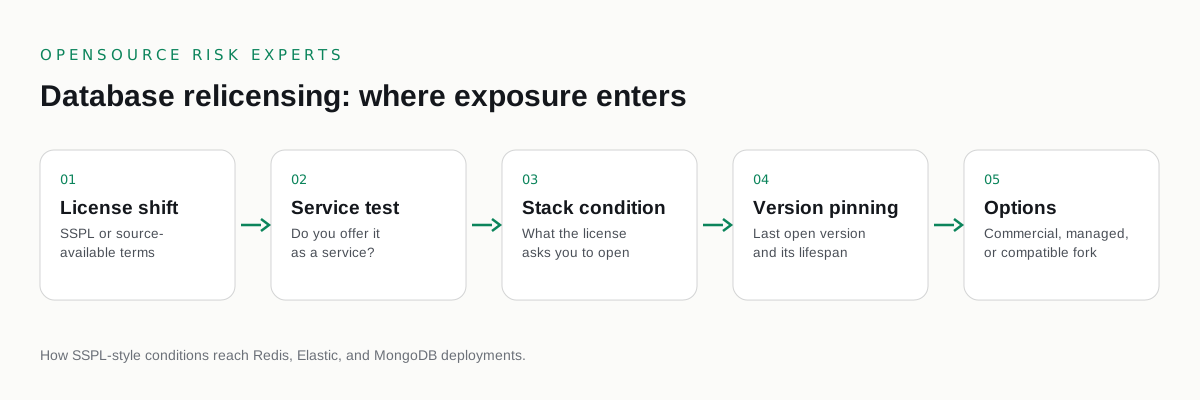
What RSALv2 does
RSALv2 is the Redis Source Available License version 2. It keeps the source code readable and permits most use, including internal use and building products that depend on Redis. What it restricts is offering Redis itself as a managed service that competes with the licensor. The structure mirrors the wider pattern across the relicensing wave: most use remains permitted, while the commercial case of reselling the software as a hosted service is carved out. RSALv2 is source available, not OSI approved open source, and that distinction is the one that surprises teams who assumed Redis would always be open.
The practical effect for an enterprise that runs Redis to support its own applications is usually modest, because that use is internal. The effect is larger for any organization whose business involves hosting Redis for others, which is exactly the use the license is written to reach. Whether your specific deployment falls inside the restriction is the question we take up in is your Redis use affected by the license change.
What the Server Side Public License adds
The Server Side Public License is the second license in the dual model, and it works differently. Rather than simply restricting competitive hosting, it carries a strong copyleft obligation aimed at parties who offer the software as a service. In broad terms, it asks a service provider who makes the functionality of the software available to others to release the source of the surrounding service under its terms. That obligation is far reaching by design, which is why the Server Side Public License is treated as a serious consideration by any organization that operates hosted services. It is the same license MongoDB adopted in 2018 and that Elasticsearch and Kibana moved to in 2021, so it is now a familiar shape across the database landscape.
Like RSALv2, the Server Side Public License is not OSI approved open source. The two licenses together give the licensor a dual instrument: a source available license for general use and a copyleft license that bites hard on the service provider case. The MongoDB experience of this license is covered in MongoDB SSPL and service providers.
Why Redis made the change
The driver was commercial, and it echoes the rest of the wave. Large cloud platforms had built managed Redis offerings on the open source project, capturing significant revenue from hosting software they did not principally develop. The dual license model was the lever to restrict that competitive hosting while keeping the source open to read and most other use unaffected. The community response was a fork. Valkey emerged as an openly licensed continuation of Redis, backed by several organizations that wanted an open path to continue. The addition of an open license option to Redis itself later in the timeline reflects the pressure that the fork and the wider community placed on the change.
For buyers, the existence of Valkey is the most important practical fact. It means there is an openly licensed option that behaves like Redis and does not carry RSALv2 or the Server Side Public License at all, which changes the negotiating and engineering calculus considerably.
What it means for buyers
The practical question for most enterprises is narrow. Do you run Redis to support your own products, in which case your use is likely permitted, or do you host Redis for others, in which case the dual license terms deserve close attention. The answer starts with an inventory: where Redis runs, which versions, and whether any deployment offers Redis functionality to outside parties. From there the options are familiar. You can move to Valkey for an openly licensed path, adopt the open license option Redis later added where it fits, hold a clean version with the usual security trade, or negotiate commercial terms where hosting is central to your business. The same analysis extends to other relicensed data stores, which we cover in time series and analytics database relicensing risk.
The Redis license change is significant but workable. For most teams the everyday use remains permitted, and the existence of Valkey means no one is trapped. The work is to map where Redis runs, understand whether any use touches the restricted hosting case, and choose a path with the facts in hand. This article is commercial and licensing risk advisory, not legal advice. For interpretation of RSALv2, the Server Side Public License, and your compliance position, your own counsel is the right place to turn.
COMMON QUESTIONS
Questions buyers ask.
What is the Redis license change?
The Redis license change is the move of Redis from an open source license to a dual model of the Redis Source Available License version 2 and the Server Side Public License as of March 2024. The project later added an open license option. The change makes Redis source available rather than open source for most new versions.
What is RSALv2?
RSALv2 is the Redis Source Available License version 2. It keeps the source readable and permits most use, but restricts offering Redis as a managed service that competes with the licensor. It is source available, not OSI approved open source.
What is the SSPL in the Redis context?
The Server Side Public License is the second license in the Redis dual model. It carries a strong copyleft obligation aimed at parties who offer the software as a service, requiring them to release the service source under its terms. Like RSALv2, it is not OSI approved open source.
What is Valkey?
Valkey is the community fork of Redis created after the license change, maintained under an open license. It gives buyers an openly licensed path that does not depend on RSALv2 or the Server Side Public License, though moving to it is a migration that should be planned.
Is this legal advice?
No. This article is commercial and licensing risk advisory, not legal advice. For interpretation of RSALv2, the Server Side Public License, and your compliance position, we recommend your own counsel.
CONTAINMENT
Map your Redis exposure before it spreads.
A confidential open source remediation advisory. Independent, buyer side, paid only by you.
Not ready to talk? Read the free open source license risk guides first.
One email when a major project relicenses. No marketing, unsubscribe any time.
MORE IN THIS CLUSTER