REDIS, ELASTIC AND DATABASES
Time series and analytics database relicensing risk.
BY FREDRIK FILIPSSON · REVIEWED BY MORTEN ANDERSEN
Time series and analytics database relicensing risk is the quiet edge of the wave. The data stores behind your metrics, logs, and analytics are exactly the projects vendors have reason to relicense. This article maps where that exposure forms and how to contain it.
Commercial and licensing risk advisory, not legal advice.
Time series and analytics database relicensing risk gets less attention than the headline moves at HashiCorp, Redis, and Elastic, but it follows the same logic and can be harder to see. The data stores that hold your metrics, logs, events, and analytical workloads tend to sit deep in pipelines that many teams depend on without thinking about the license underneath. When one of those stores moves from an open source license to source available terms, the change can reach observability dashboards, alerting, billing analytics, and product telemetry all at once. The exposure is not always large, but it is often widely distributed, which makes it easy to underestimate.
This article explains why these databases are common relicensing targets, where the exposure tends to form, and how to contain it. For the broader database context, the pillar on Redis, Elastic, and database license risk is the hub, and the Redis case is covered in the Redis license change and what RSALv2 and SSPL mean.
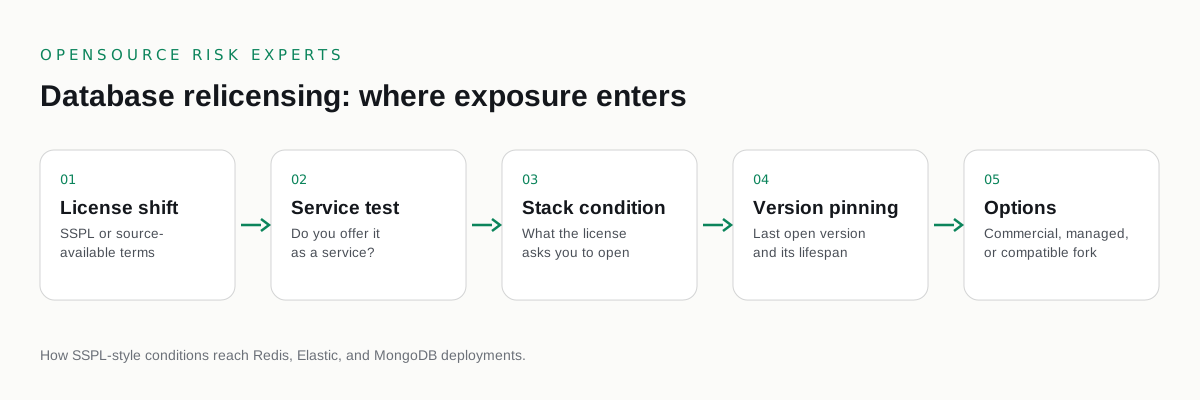
Why these databases get relicensed
The pressure that drove the whole relicensing wave applies sharply to time series and analytics stores. These projects are attractive to managed service operators, because metrics and analytics are recurring, high value workloads that customers will pay to have hosted. A vendor that builds and maintains such a project, then watches a cloud platform capture much of the hosting revenue, has the same incentive HashiCorp, Redis, Elastic, and MongoDB had to restrict competitive hosting. The instruments are the same too: the Business Source License, with its competitive use restriction and timed conversion, and the Server Side Public License, with its strong copyleft aimed at service providers. Neither is OSI approved open source, and both are source available rather than open.
Because the commercial logic is identical, the safe assumption for a buyer is that any widely used analytics or time series project backed by a single commercial vendor is a candidate for relicensing. That does not mean a change is imminent. It means the dependency deserves the same monitoring you would now apply to Redis or Elastic.
Where the exposure forms in your stack
The exposure tends to gather in three places. The first is observability, where time series stores hold metrics and logs that feed dashboards and alerting. The second is product analytics, where event and columnar stores power the numbers a business runs on. The third is any place where you offer analytics functionality to customers, which is the service provider case that source available licenses target most directly. The first two are usually internal use, which the common source available licenses permit, although the open posture you relied on has still changed. The third is where a real obligation can attach, and it deserves the same careful read we give to service providers in MongoDB SSPL and service providers.
The complicating factor is depth. A time series store is often wired into many systems through exporters, agents, and query layers, so a single relicensed component can have a wide blast radius. The same internal versus service test that governs Redis applies here, and we walk through it in is your Redis use affected by the license change.
Finding and sizing the risk
The only reliable way to see this exposure is a current map. Inventory every data store across your observability, metrics, and analytics pipelines. For each, record the license state, the version, and whether the store offers functionality to outside parties or is used purely to support your own systems. That map tells you which stores have already moved to source available terms, which are candidates that warrant monitoring, and which deployments sit in the service provider lane where an obligation can bite. With the map in hand, the risk stops being a vague worry and becomes a short, prioritized list.
Sizing follows naturally. Internal use on a clean version carries little immediate exposure but belongs on a watch list. Internal use on a relicensed version is generally permitted but now governed by source available terms that may matter for policy and downstream distribution. Service provider use on a relicensed version is where the weight sits and where counsel should be involved.
Containment options
The containment set mirrors the rest of the wave. You can move to an openly licensed fork or alternative where one exists and the migration is affordable, hold a clean pre change version while accepting the security trade, adopt an open license option where the project offers one, or negotiate commercial terms where the store sits in a service offering central to your business. The right choice depends on how deeply the store is embedded and whether your use is internal or offered as a service. The common thread across every relicensed data store is that the map comes first and the decision follows. Treat your analytics and time series dependencies the way you now treat Redis and Elastic, and the next change becomes a planned event rather than a surprise. This article is commercial and licensing risk advisory, not legal advice. For interpretation of a specific license and your compliance position, your own counsel is the right place to turn.
COMMON QUESTIONS
Questions buyers ask.
What is time series and analytics database relicensing risk?
Time series and analytics database relicensing risk is the exposure that forms when a data store you rely on for metrics, logs, events, or analytics moves from an open source license to source available terms such as the Business Source License or the Server Side Public License. Because these stores often sit deep in observability and analytics pipelines, a change can reach many systems at once.
Why are analytics databases a common relicensing target?
Analytics and time series databases attract managed service competition, which is the pressure that drove the wider relicensing wave. Vendors that depend on these projects for revenue have reason to restrict competitive hosting, so source available licenses appear here for the same commercial reasons they appeared for Redis, Elastic, and MongoDB.
How do I find this exposure in my stack?
Inventory every data store in your observability, metrics, and analytics pipelines, record the license state and version of each, and flag any that have moved to source available terms or that offer their functionality to outside parties. A current dependency map is the only reliable way to see where the exposure sits.
What are the containment options?
Common options are moving to an openly licensed fork or alternative, holding a clean pre change version with the security trade, adopting an open license option where the project offers one, or negotiating commercial terms. The right path depends on how deeply the store is embedded and whether your use is internal or offered as a service.
Is this legal advice?
No. This article is commercial and licensing risk advisory, not legal advice. For interpretation of a specific license and your compliance position, we recommend your own counsel.
CONTAINMENT
Map the data stores under your analytics.
A confidential open source remediation advisory. Independent, buyer side, paid only by you.
Not ready to talk? Read the free open source license risk guides first.
One email when a major project relicenses. No marketing, unsubscribe any time.
MORE IN THIS CLUSTER