ARTICLE . UPDATED JUNE 2026
Relicensing and Open Source Foundations
BY MORTEN ANDERSEN · REVIEWED BY FREDRIK FILIPSSON
Relicensing and open source foundations are connected by a simple fact of governance. When a project is stewarded by a neutral foundation rather than a single vendor, no one company controls the copyright or the roadmap, and a unilateral license change becomes far harder to make. Foundation hosted projects rarely relicense. This article explains why governance matters, where it helps, and how to weigh it when you choose a dependency.
The relicensing wave has a common thread: the projects that changed terms were each controlled by a single company. That is not a coincidence. The structure of ownership and governance is what makes a license change possible in the first place, and it is also what makes one unlikely. Understanding the difference helps a buyer judge how durable a dependency is before adopting it, and it explains why the community forks moved toward foundation stewardship. The broad mechanics of a change are set out on the relicensing pillar; here the focus is governance.
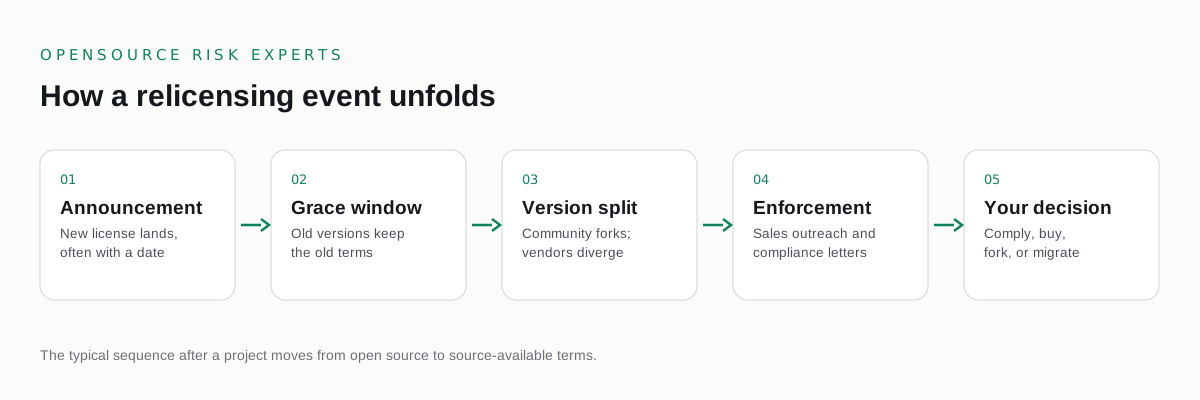
How open source foundations lower relicensing risk
A foundation holds a project under neutral, multi party governance. Copyright is often spread across many contributors or held by the foundation itself, decisions run through a defined process, and no single member can rewrite the license by fiat. That structure removes the mechanism a single vendor uses to relicense. There is no controlling party with both the right and the commercial incentive to flip the terms, which is why projects under mature foundation governance very rarely move to source available licenses. For a buyer, neutral stewardship is a meaningful signal that a dependency is less likely to change underneath you.
Why single vendor projects relicense more often
A project controlled by one company is a different proposition. The vendor often holds broad rights, sometimes through a contributor license agreement that assigns those rights inward, which means a single board decision can change the license. When a cloud provider or a managed competitor builds a service on the project and captures revenue the vendor wanted, relicensing becomes a commercial lever to pull. That is the pattern behind the recent moves. HashiCorp moved Terraform, Vault, Consul, Nomad, and Packer to the Business Source License 1.1 as of August 2023. Redis moved to a Redis Source Available License and the Server Side Public License as of March 2024. Elasticsearch and Kibana moved to the Server Side Public License and the Elastic License as of 2021, and MongoDB moved to the Server Side Public License in 2018. Each was a single vendor project at the time. The acquisition angle is covered in relicensing triggered by acquisition.
Where the major forks landed
The community response to the recent changes leaned on foundation stewardship precisely because it addresses the root cause. OpenTofu, the fork of Terraform, and Valkey, the fork of Redis, both moved under the Linux Foundation umbrella, and OpenSearch continues the Elasticsearch lineage under open governance. Placing a fork inside a foundation is a deliberate signal that the new project will not repeat the single vendor pattern, because control is shared rather than held by one company. That is a large part of why these forks are treated as durable continuations under open terms rather than as temporary mirrors. The fork dynamics are examined in the OpenTofu and Valkey fork story and the OpenSearch fork story.
The limits of governance as a guarantee
Foundation governance lowers the odds of a unilateral relicense, but it is not a guarantee and it does not address every risk. A foundation hosted project can still lose maintainers, slow down, or depend on components that carry their own terms. Governance is one input into a durability judgment, not the whole answer. The disciplined approach is to record the governance model alongside the license for every significant dependency and to treat single vendor control as a risk factor rather than a disqualifier. Plenty of well run single vendor projects are worth adopting, provided you go in with eyes open about how the terms could change.
How to weigh governance in adoption and renewal
Bring governance into the same inventory that tracks licenses and versions. For each major dependency, capture who controls the project, whether a contributor agreement concentrates rights, and whether a foundation hosted alternative exists. Use that signal during selection and at renewal, where a lower license change risk can tip a close decision. The aim is not to avoid all single vendor software, which would be impractical, but to know where the relicensing risk sits and to have a plan for it. A risk assessment captures these governance signals as part of the dependency picture, and the procurement workflow is covered in relicensing and procurement approval processes.
We are independent and buyer side. We take no vendor fees and resell no software, so our read of a project's governance reflects your risk and nothing else. This is commercial and licensing risk advisory, not legal advice. For interpretation of a foundation's governance documents or a contributor agreement, engage your own counsel.
COMMON QUESTIONS
Questions buyers ask.
How do open source foundations affect relicensing risk?
Open source foundations hold a project under neutral, multi party governance rather than a single vendor. Because no one company controls the copyright or the roadmap, a unilateral license change is far harder to make. Foundation hosted projects rarely relicense, which is why governance is a useful signal when you weigh the durability of a dependency.
Why do single vendor projects relicense more often?
A project controlled by one company, often through a contributor agreement that assigns broad rights, can change its license by a single decision. When a managed competitor pressures the vendor's revenue, relicensing becomes a commercial lever. HashiCorp, Redis, Elastic, and MongoDB were each single vendor projects when they moved to source available terms.
Which foundations steward major projects?
The Linux Foundation and its sub foundations host many widely used projects, and the Cloud Native Computing Foundation, the Apache Software Foundation, and the Eclipse Foundation steward others. The community forks OpenTofu and Valkey moved under the Linux Foundation umbrella, which is part of why those forks are seen as durable continuations under open terms.
Does foundation stewardship guarantee a license will never change?
No. Foundation governance lowers the probability of a unilateral change but does not make one impossible, and it does not address every risk, such as a project losing maintainers. Treat governance as one factor in a wider assessment rather than a guarantee, and keep your inventory current regardless of where a project is hosted.
How should governance factor into our adoption decisions?
Record the governance model alongside the license for each significant dependency, and weigh single vendor control as a relicensing risk factor during selection and renewal. Where a foundation hosted alternative exists, it may carry lower license change risk. A risk assessment captures governance signals as part of the dependency picture.
Is this legal advice?
No. This is commercial and licensing risk advisory, not legal advice. For interpretation of a foundation's governance documents or a contributor agreement, engage your own counsel.
CONTAINMENT
Weigh governance before you depend on a project.
A confidential relicensing exposure review. Independent, buyer side, paid only by you.
Not ready to talk? Read the free open source license risk guides first.
One email when a major project relicenses. No marketing, unsubscribe any time.
MORE IN THIS CLUSTER