ARTICLE / GOVERNANCE AND SBOM
Open source policy: what to include.
BY MORTEN ANDERSEN · REVIEWED BY FREDRIK FILIPSSON
An open source policy is the control that catches a relicense at intake rather than in an audit. This guide sets out what to include, the license rules, the approval gates, the ownership, and the link to your SBOM, so a future move to a source available license is found early.
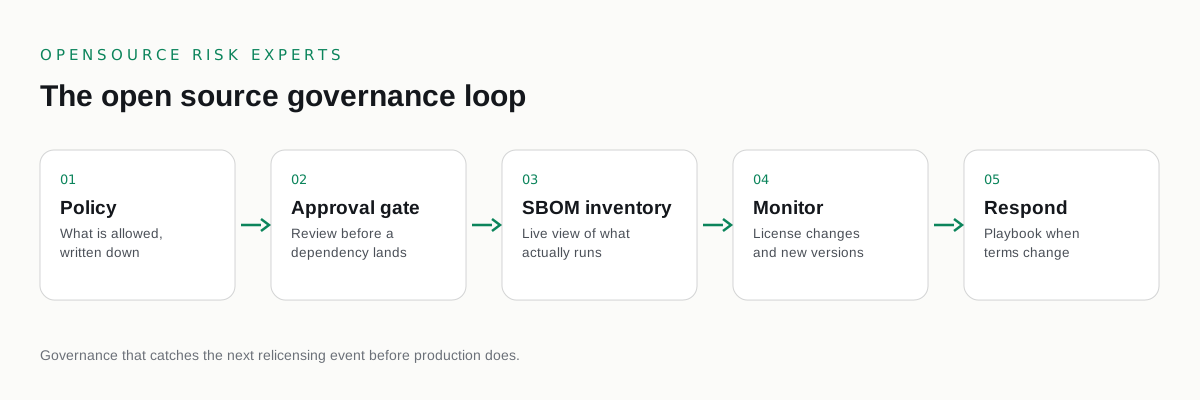
Most open source risk does not arrive through a new adoption. It arrives when a component you already run quietly changes its license. An open source policy is the standing control that makes both moments visible: the point of adoption, where a new component enters, and the point of change, where an existing one shifts terms. A good policy is not a long document that sits unread. It is a short set of rules, gates, and owners wired into how teams ship, so the common case moves fast and the risky case surfaces for review. What you include determines whether a future move to the Business Source License or the Server Side Public License is an early alert or a late surprise.
License rules: the allowlist and the denylist
The core of the policy is a clear statement of which licenses your teams may adopt freely, which need review, and which are blocked. An allowlist of well understood open source licenses such as the MIT License and the Apache License 2.0 lets the common case proceed without friction. A denylist, or an escalation list, names the licenses that require a decision, including the source available licenses that are not approved by the Open Source Initiative. Without these lists every adoption becomes an ad hoc judgment, and a component under a restrictive license can reach production simply because no one was asked. The lists turn license posture from an opinion into a rule, and they give engineers a fast answer for the vast majority of choices. Whether a specific license belongs on the allowlist is a question to settle with your own counsel.
Approval gates at the point of intake
Rules only work if something enforces them. Approval gates put the policy at the moment a component enters, so a license that needs review cannot slip into production without a decision. The gate should be light for allowlisted licenses and firm for the rest, routing an escalation to the right owner rather than blocking work outright. The aim is a control that runs at the speed of delivery, catching the exceptions while letting the routine flow. A gate that is too heavy gets bypassed, and a bypassed gate is no control at all. We set out how to build gates developers will actually use in open source approval workflows for developers.
Monitoring components already in use
The part most policies omit is the one that matters most for relicensing risk: watching the components you already run. The recent wave of changes, with HashiCorp moving Terraform and others to the Business Source License as of August 2023, and Elastic and Redis moving to the Server Side Public License, attached new restrictions to software that was already in production. A policy that only checks licenses at adoption misses all of it. Include a rule that ties each component to its current license state and flags a change, so a relicense becomes an alert rather than a discovery made during an audit. That monitoring depends on knowing what you run, which is why the policy should require an accurate inventory, covered in maintaining an accurate SBOM.
Ownership, scope, and the SBOM link
A policy needs an owner or it ages into a document no one follows. Name the function accountable for keeping it current, whether an open source program office, a governance lead, or a cross functional committee, with legal consulted on interpretation. Set the scope clearly so it covers not only first party code but the third party and contractor code that often enters with the least oversight, which we address in third party and contractor code governance. Finally, link the policy to the SBOM, so the rules and the record of what you run point at each other rather than living apart. A policy connected to a live inventory is a control. A policy in a wiki is a wish. The full frame sits in our pillar on governance and SBOM. Interpretation of any license is a question for your own counsel.
COMMON QUESTIONS
Questions buyers ask.
What should an open source policy include?
An open source policy should include a license allowlist and denylist, approval gates for new components, clear ownership of decisions, rules for tracking license changes on components already in use, and a link to the SBOM that records what you run. The aim is a policy that catches a relicense at intake and gives every component a known license state and a named owner, so a future move to a source available license is found early rather than in an audit.
Why does an open source policy need a license allowlist?
An allowlist sets the licenses your teams may adopt without further review, and a denylist names the ones that need escalation or are blocked. Together they make the common case fast and the risky case visible. Without them, every adoption is an ad hoc judgment, and a source available license such as the Business Source License or the Server Side Public License can enter production without anyone deciding it should.
How does an open source policy catch a relicense?
A policy catches a relicense by requiring that components already in use are monitored for license changes, not only checked at adoption. The recent wave of moves to source available terms attached restrictions to software organizations were already running. A policy that ties each component to its current license state in the SBOM, and flags a change, turns a relicense into an alert rather than a surprise discovered during an audit or a vendor inquiry.
Who should own the open source policy?
Ownership usually sits with a named function such as an open source program office, a security or engineering governance lead, or a cross functional committee, with legal consulted on license interpretation. What matters is that the policy has an owner accountable for keeping it current and for the escalation path when a component needs review. A policy with no owner ages into a document no one follows.
Is an open source policy legal advice?
No. This is commercial and licensing risk advisory, not legal advice. The interpretation of whether a specific license restricts your use, which informs the allowlist and the escalation rules, is a question for your own counsel. Our role is to help you design the policy, the gates, and the ownership that keep open source risk visible and controlled.
GOVERNANCE
Build a policy that catches the next change.
Our governance and policy advisory designs the rules, gates, and ownership that keep open source risk visible. Independent, buyer side, paid only by you.
Not ready to talk? Read the free open source license risk guides first.
One email when a major project relicenses. No marketing, unsubscribe any time.
MORE IN THIS CLUSTER