ARTICLE / GOVERNANCE AND SBOM
Open source risk in the procurement process.
BY FREDRIK FILIPSSON · REVIEWED BY MORTEN ANDERSEN
Open source risk in the procurement process is the exposure you inherit when a product or vendor you buy rests on open source that can change terms. This guide sets out the diligence questions and contract protections that keep a future relicense from becoming your problem after the contract is signed.
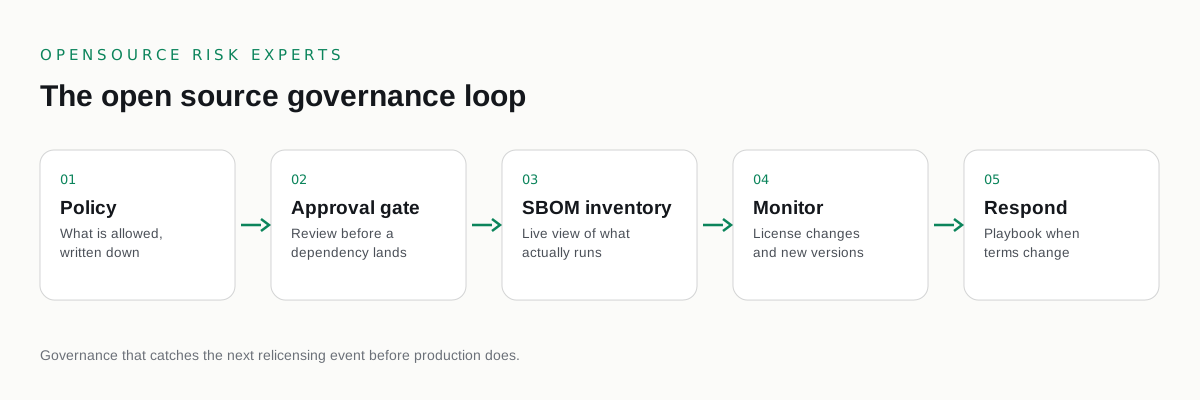
Most open source risk is discussed as a problem of your own code. It is also a problem of what you buy. Open source risk in the procurement process is the exposure that transfers to you when a vendor product, a managed service, or an embedded platform depends on open source that can relicense. The vendor may run Elasticsearch behind its analytics, ship Terraform inside its deployment tooling, or cache on Redis without ever naming it in the contract. When one of those components changes terms, the vendor must respond, and the cost of that response can reach you through price, support, or a forced migration you did not choose. Procurement is the one moment where you can ask the question and price the answer before the leverage shifts. After signing, the same question is a renegotiation.
Why a vendor relicense becomes your exposure
The recent wave of changes showed how a single upstream move ripples outward. HashiCorp moved Terraform, Vault, Consul, Nomad, and Packer to the Business Source License as of August 2023. Elasticsearch and Kibana moved to the Server Side Public License and the Elastic License in 2021. Redis moved to a source available model as of March 2024. Each of those components sits inside countless commercial products. A vendor that embedded one of them inherited the change, and had to relicense commercially, migrate to a fork such as OpenTofu, OpenSearch, or Valkey, or rework its architecture. Every one of those responses has a cost, and a vendor under pressure will look for ways to pass it on. If your contract is silent on who carries that cost, the default answer is often you. Source available is not open source, and the restrictions these licenses add are what turn a vendor's dependency into your renewal surprise.
The open source questions to put into diligence
Good procurement diligence sees the dependency tree, not only the product surface. Ask the vendor for a software bill of materials and treat it as a deliverable rather than a courtesy. Ask which components carry source available or restrictive licenses, naming the families directly so the answer is specific. Ask who absorbs the cost if an embedded component relicenses, and how the vendor monitors its own dependencies for changes in license state. A vendor that can answer these questions has done the work and is a safer dependency. A vendor that cannot is carrying exposure it has not mapped, which means you would be too. The structure of a thorough review is set out in our open source due diligence checklist, and the inventory that supports it is covered in maintaining an accurate SBOM.
Contract terms and an intake gate that hold
Diligence finds the exposure. The contract is where you contain it. Useful terms include a current software bill of materials as an ongoing deliverable, a warranty that the vendor holds the rights it grants you, a notice obligation if a key dependency relicenses, and clear language on who pays for remediation if it does. The drafting and enforceability of any clause is a question for your own counsel, and we recommend involving them early. Procurement also needs an intake gate so these questions are asked every time rather than only on the large deals, which is the work of an open source policy that catches a relicense at intake and the approval workflows your teams will actually use. The whole frame sits in our pillar on open source governance and SBOM. Our role is to help you ask and size the risk on the buyer side, not to interpret the terms, which belongs with counsel.
COMMON QUESTIONS
Questions buyers ask.
What is open source risk in the procurement process?
Open source risk in the procurement process is the exposure you take on when a product or vendor you buy depends on open source that can change terms. A vendor whose platform embeds Elasticsearch, Redis, or Terraform inherits any relicense to a source available license, and without the right diligence and contract terms that exposure transfers quietly to you. Procurement is the point where you can ask the question and price the answer before signing.
What open source questions belong in vendor diligence?
Ask for a software bill of materials, ask which components carry source available or restrictive licenses such as the Business Source License or the Server Side Public License, ask who carries the cost if an embedded component relicenses, and ask how the vendor monitors its own dependencies for license changes. The aim is to see the dependency tree you are about to depend on, not only the product surface.
How does a relicense affect a vendor product I buy?
If a vendor embeds an open source component that moves to a source available license, the vendor must respond, by relicensing commercially, migrating to a fork, or changing its architecture. Each response can reach your contract through price increases, feature changes, or support disruption. The recent wave of moves by HashiCorp, Redis, and Elastic showed how a single upstream change ripples through every product built on it.
What contract terms reduce open source procurement risk?
Useful terms include a current software bill of materials as a deliverable, a warranty that the vendor has the rights it grants you, notice obligations if a key dependency relicenses, and clarity on who absorbs remediation cost. The interpretation and enforceability of any clause is a question for your own counsel, but procurement is where these protections are negotiated rather than discovered later.
Is open source procurement diligence legal advice?
No. This is commercial and licensing risk advisory, not legal advice. We help procurement and engineering teams ask the right open source questions and size the exposure on the buyer side. For drafting and interpretation of contract terms and license obligations, engage your own counsel.
GOVERNANCE
Put open source risk on the procurement agenda.
Our governance and policy advisory wires open source diligence into how you buy. Independent, buyer side, paid only by you.
Not ready to talk? Read the free open source license risk guides first.
One email when a major project relicenses. No marketing, unsubscribe any time.
MORE IN THIS CLUSTER