HASHICORP AND TERRAFORM
HashiCorp BSL and internal platform engineering.
BY MORTEN ANDERSEN · REVIEWED BY FREDRIK FILIPSSON
Internal developer platforms concentrate tooling so teams do not have to. That same concentration is why HashiCorp BSL and internal platform engineering deserve a careful look: one relicensed component in a shared platform can put exposure under every team at once.
Commercial and licensing risk advisory, not legal advice.
HashiCorp BSL and internal platform engineering meet at a structural fact: a platform exists to be shared. When a platform team standardizes provisioning on Terraform or secrets on Vault, every product team inherits that choice. After the Business Source License change as of August 2023, that inheritance includes the license. A relicensed component embedded once in the platform is effectively running in every workload built on top of it, which means a question that looks like one team's tooling decision is actually an organization wide exposure. The platform that was meant to reduce duplication has also concentrated the license risk into a single, far reaching point.
This article looks at why platforms amplify the exposure, where the competitive use question gets harder, and how the same concentration that spreads the risk can be used to contain it. For the underlying change, see HashiCorp BSL: what changed and what it means, and the cluster hub is the pillar on HashiCorp and Terraform license risk.
Why platforms amplify the exposure
The whole value of an internal platform is leverage: build a capability once and let many teams consume it. License risk rides that same leverage in reverse. A single Business Source License component in the provisioning layer of a platform is present, indirectly, in every environment that platform creates. The blast radius is no longer one application but the full set of products the platform serves, which in a large organization can be most of the estate. Worse, the consuming teams usually have no idea the component is there, because the platform abstracts it away. They asked for an environment, not for Terraform, and so the exposure is invisible at exactly the layer where it is most widespread.
This is the platform version of a general pattern, where a relicensed component reaches far beyond the named product through the things built on it. The wider mechanics are set out in Terraform exposure in a multicloud estate.
Where the competitive use question gets harder
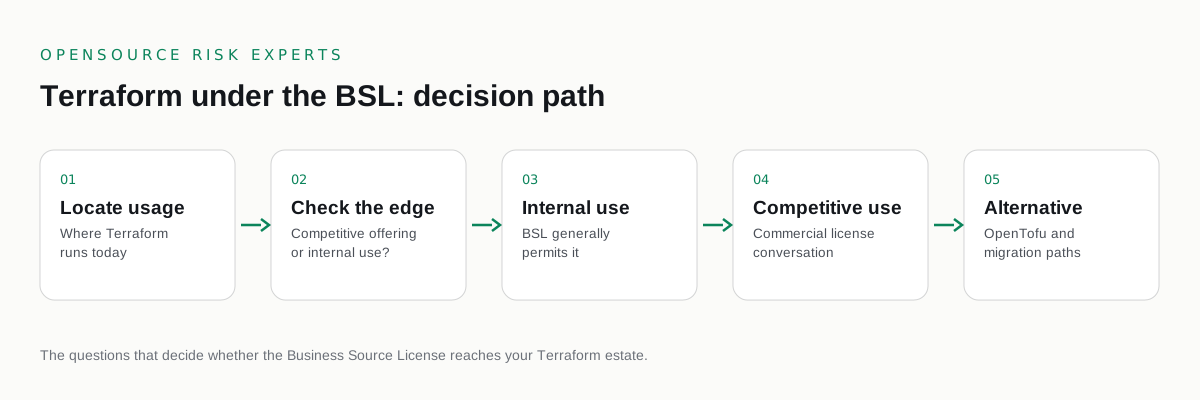
The Business Source License permits most use but restricts production use that competes with the licensor. For a single team running Terraform internally, that line is usually comfortable. A platform can complicate it. When an internal platform starts to resemble a managed service, offering provisioning as a product to internal customers, with self service, billing, or service levels, it begins to look more like the kind of offering the license is written to restrict. Whether that crosses the competitive line is a fact specific question, and it can also turn on how the organization is structured, for example where separate legal entities or external partners consume the platform. None of this is settled by reading the license alone.
This is precisely the kind of judgment that belongs with your own counsel rather than an engineering call. The general shape of the competitive question is examined in is your Terraform use competitive under the BSL, but a platform that behaves like a service warrants specific legal review.
The platform is also the lever for containment
The good news is symmetrical. Because the platform is the single point where the component enters, it is also the single point where you can fix it. Swapping the provisioning layer to OpenTofu, pinning a clean version, or negotiating commercial terms can be done once, by the platform team, on behalf of every consumer. There is no need to coordinate dozens of product teams or chase the component through scattered repositories, because it lives in one place by design. The concentration that made the exposure wide makes the remedy narrow. A platform level change propagates to everyone automatically, which is the opposite of the painful, team by team remediation that an unconsolidated estate would require.
This is why platform teams are the right owners of the decision. They can see the whole footprint, they control the single insertion point, and they can carry out a migration such as the one described in migrating from Terraform to OpenTofu step by step in a way that quietly removes the exposure for the whole organization.
What platform leaders should do
Begin by mapping which HashiCorp components the platform embeds, the versions in use, and which consuming teams and products sit downstream. Establish whether the platform's behavior raises any competitive use question, and put that to your own counsel if it does. Then decide the containment path once, at the platform layer, and sequence it so consuming teams are unaffected. Finally, treat the platform as the place where license posture is governed going forward, so the next relicense is caught at the single point of control rather than rediscovered across the estate. That governance role is the natural home for license policy and intake controls.
HashiCorp BSL and internal platform engineering are tightly linked because a platform both magnifies and localizes the risk. The exposure is wide, but the lever is single and strong. Platform teams that understand this can turn what looks like an organization wide problem into one well placed decision. This article is commercial and licensing risk advisory, not legal advice. For interpretation of a specific license and your compliance position, your own counsel is the right place to turn.
COMMON QUESTIONS
Questions buyers ask.
How does the HashiCorp BSL affect internal platform engineering?
HashiCorp BSL and internal platform engineering intersect when a relicensed tool such as Terraform or Vault sits inside a shared internal platform. Because every team builds on that platform, a single Business Source License component can spread exposure across the whole organization rather than a single application.
Is an internal developer platform competitive use under the BSL?
It depends on what the platform does. Purely internal use is generally permitted, but a platform that resembles a managed service offered to others, even other business units in some readings, can approach the competitive line. The specific facts and your own counsel determine the answer.
Why is a platform a bigger risk than a single app?
A platform multiplies reach. A relicensed component embedded once in a shared platform is effectively present in every product that platform serves, so the blast radius is the entire estate built on it rather than one team's application.
How do platform teams contain the exposure?
Centralize the decision. Because the platform is the single point where the component enters, it is also the single point where you can swap to OpenTofu, pin a clean version, or negotiate terms once for everyone. The platform that spreads the risk is also the lever that contains it.
Is this legal advice?
No. This article is commercial and licensing risk advisory, not legal advice. For interpretation of a specific license and your compliance position, we recommend your own counsel.
SEE YOUR EXPOSURE
Find the exposure your platform spreads.
A confidential relicensing exposure review. Independent, buyer side, paid only by you.
Not ready to talk? Read the free open source license risk guides first.
One email when a major project relicenses. No marketing, unsubscribe any time.
MORE IN THIS CLUSTER