HASHICORP AND TERRAFORM
Vault BSL Exposure and Alternatives
By OpenSource Risk Experts · June 14, 2026
Vault BSL exposure and alternatives is the question facing every team that built its secrets management on HashiCorp Vault before the license changed. When HashiCorp moved Vault to the Business Source License 1.1 as of August 2023, alongside Terraform, Consul, Nomad, and Packer, the code stayed visible but the terms of use narrowed. For most enterprises running Vault to secure their own systems, the immediate impact is limited. For vendors and service providers who offer Vault competitively, the exposure is real. This article separates the two cases and lays out the alternatives worth weighing.
We write from the buyer side, as an independent advisory paid only by the buyer. This is not legal advice. For interpretation of the Business Source License, we point you to your own counsel. The aim is to help you decide whether to act, and if so, how.
What the Vault BSL actually restricts
The Business Source License is a source available license, not a closed one. The Vault source remains public and readable. What the license adds is a restriction on competitive production use and a delay, commonly four years per version, after which that version converts to an open license. The crucial phrase is competitive. The restriction targets using Vault to offer a product or service that competes with HashiCorp, now part of IBM. Running Vault internally to manage your own secrets is a different activity from selling a Vault based service to others.
This is why exposure varies so widely between Vault users. Two organizations can run the same software and carry entirely different risk depending on how they use it. The mechanics of the license family are set out in HashiCorp BSL what changed and what it means, and the same change applied to the other tools in Consul, Nomad, and Packer under the BSL.
Who carries Vault exposure and who does not
The lowest exposure sits with the internal user. An enterprise running Vault to store and rotate its own credentials, sign certificates, and broker access to its own systems is generally not engaged in competitive use. That said, the line should be confirmed against the license text and your own counsel rather than assumed, because the details of your deployment can matter. The middle ground holds organizations whose use sits near the edge of competitive, such as a platform team that exposes Vault backed services to many internal business units that resemble customers.
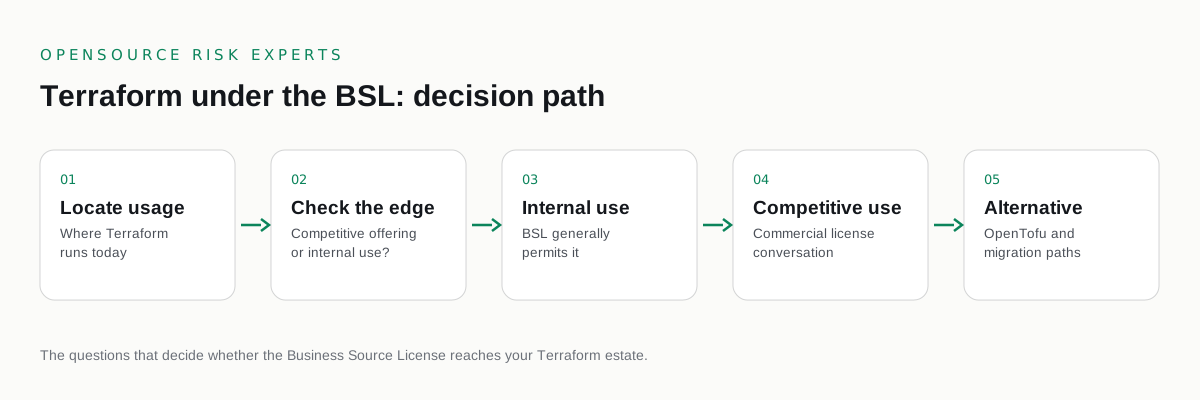
The highest exposure sits with vendors and service providers. A company that offers a managed secrets service built on Vault, or bundles Vault into a product it sells, is in the zone the license most wants to restrict. Service providers face this directly, as covered in HashiCorp BSL and managed service providers. The test for whether your specific use is competitive is treated in is your Terraform use competitive under the BSL, and the same logic applies to Vault.