ARTICLE . UPDATED JUNE 2026
HashiCorp BSL for Software Vendors and ISVs
BY MORTEN ANDERSEN · REVIEWED BY FREDRIK FILIPSSON
The HashiCorp BSL for software vendors and ISVs is a sharper question than it is for ordinary users. Where an enterprise managing its own infrastructure is usually clear of the competitive restriction, an independent software vendor that embeds or redistributes a HashiCorp product inside a commercial offering sits exactly where the Business Source License was aimed. For these firms, the license change is a product question, not just a procurement one.
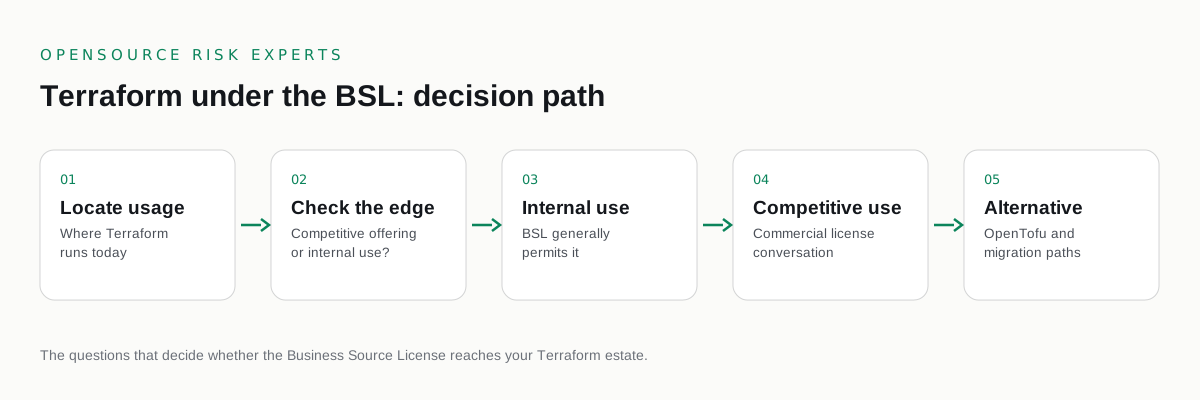
A software vendor lives closer to the licensor than an end user does. When an ISV builds a product on top of someone else's software and sells access to it, the line between using a tool and competing with its maker grows thin. The Business Source License was written with this exact relationship in mind. For an ISV, the right response to the HashiCorp change is not to assume the worst or to ignore it, but to map precisely how the product uses the covered component and to test that use against the competitive restriction.
Why ISVs carry the most concentrated exposure
As of August 2023, HashiCorp moved Terraform, Vault, Consul, Nomad, and Packer to the Business Source License 1.1, which restricts competitive production use and converts to an open license after a delay, commonly four years. The restriction targets offerings that compete with HashiCorp's commercial products. An enterprise managing its own infrastructure rarely competes with HashiCorp. An ISV that embeds Terraform in a platform and offers infrastructure provisioning to its own customers may be doing exactly that. The same component that is low risk for an internal user is high risk for a vendor, because the vendor's business model is the thing the restriction was designed to reach. The general shape of the competitive test is set out in is your Terraform use competitive under the BSL.
The patterns that put an ISV inside the restriction
Several common product patterns deserve careful testing. Embedding a HashiCorp product as a component customers rely on, exposing its functionality through your own interface, bundling it into an appliance or image you ship, or offering it as a managed capability within your platform all move toward the competitive line. None of these is automatically a breach, because the deciding factor is competition with the licensor rather than the mechanism of distribution. But each is the kind of use that an ISV should map deliberately rather than treat as settled. Where the product offers the covered functionality as a service, the analysis overlaps with the service patterns covered in relicensing and cloud and managed service use.
The options an affected ISV holds
An ISV that finds itself inside the restriction has a familiar set of paths, each with a cost to cure. It can move to the OpenTofu fork, which continues under a recognized open source license and removes the competitive use question entirely. It can negotiate a commercial license with the vendor, which keeps the original but sets a price against the product's usage. It can redesign the product so it no longer embeds the covered component. Or it can stay on a pre change version where that remains viable for the product. The fork option and its tradeoffs are covered in the OpenTofu and Valkey fork story, and recovery and standby configurations that vendors often overlook are covered in HashiCorp BSL and disaster recovery environments.
How an ISV should approach the analysis
The work is to map the product, not the company. Identify every place the product depends on a HashiCorp component, direct and transitive, record which versions and whether they predate the change, and describe exactly how each is used and exposed to customers. Test the offering patterns against the competitive restriction and route the genuinely ambiguous questions to counsel. Where the analysis shows exposure, size the cost to cure across the available paths so the product team can choose on real numbers. A relicensing exposure review produces this analysis, and the wider context sits on the HashiCorp and Terraform pillar.
We are independent and buyer side. We take no vendor fees and resell no software, so our read of an ISV's Business Source License exposure reflects the product's risk and nothing else. This is commercial and licensing risk advisory, not legal advice. For interpretation of the Business Source License and your compliance position, engage your own counsel.
COMMON QUESTIONS
Questions buyers ask.
What does the HashiCorp BSL mean for software vendors and ISVs?
Software vendors and independent software vendors carry the most concentrated exposure under the HashiCorp Business Source License, because embedding or redistributing a HashiCorp product inside a commercial offering is the pattern the competitive restriction targets most directly. Where an enterprise managing its own infrastructure is usually clear, an ISV shipping Terraform inside a product needs to test its use carefully.
Can an ISV embed Terraform in a commercial product under the BSL?
It depends on whether the product competes with HashiCorp's commercial offerings. The Business Source License permits broad use but restricts competitive production use. Embedding Terraform in a product that offers infrastructure provisioning to customers is the pattern most likely to fall inside that restriction, so an ISV should test the specific offering rather than assume it is permitted.
What are the options for an ISV affected by the BSL?
An ISV can move to the OpenTofu fork, which continues under a recognized open source license, negotiate a commercial license with the vendor, redesign the product so it no longer embeds the covered component, or stay on a pre change version where viable. Each carries a cost to cure, and the right path depends on the product architecture and the leverage the ISV holds.
Does redistributing a HashiCorp product trigger the BSL restriction?
Redistribution itself is broadly permitted, but redistribution as part of a competing commercial offering is where the restriction bites. The deciding factor is competition with the licensor, not the act of shipping the software. An ISV should map exactly how the product uses and exposes the covered component before drawing a conclusion.
Is this legal advice?
No. This is commercial and licensing risk advisory, not legal advice. For interpretation of the Business Source License and your compliance position, we recommend you engage your own counsel.
CONTAINMENT
Map your product's exposure before a customer asks.
A confidential relicensing exposure review. Independent, buyer side, paid only by you.
Not ready to talk? Read the free open source license risk guides first.
One email when a major project relicenses. No marketing, unsubscribe any time.
MORE IN THIS CLUSTER