REDIS AND ELASTIC DATABASES
Commercial licensing for Elastic, explained for buyers.
Commercial licensing for Elastic became a live question after Elasticsearch and Kibana moved to the Server Side Public License. This article explains when a paid license is actually required, what it covers, the alternatives, and how to size and negotiate the cost from the buyer side.
Commercial licensing for Elastic is where the 2021 license change turns from a policy concern into a budget line. Many organizations assume a relicense automatically means a bill. It does not. Whether you need a paid license depends on the version you run, the edition, and how you deploy. The first job is to separate the deployments that genuinely require a commercial agreement from those that do not, because the cost difference is large.
This article walks through the change, the editions, when a commercial license applies, and how buyers reduce the exposure. For the wider data layer pattern, see the Redis and Elastic database licensing pillar and database relicensing as a pattern.
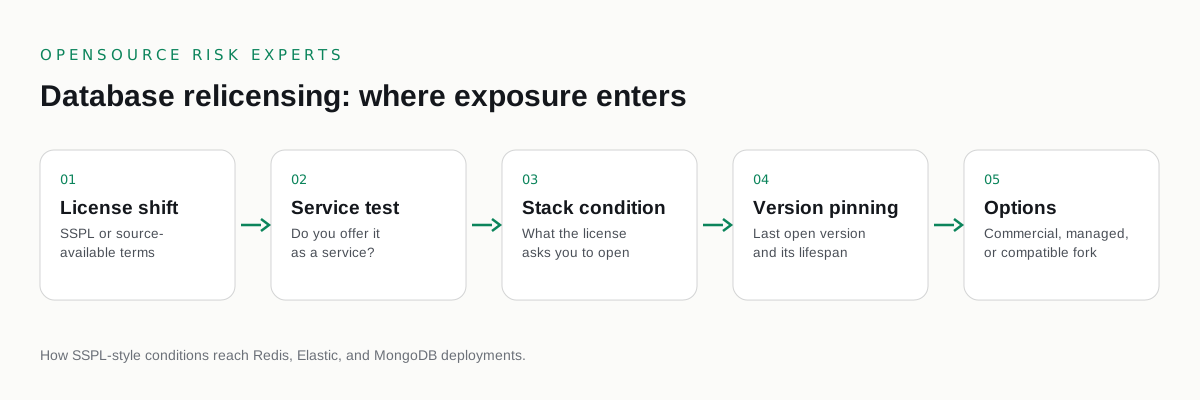
What the Elastic license change did
Elasticsearch and Kibana moved from Apache 2.0 to the Server Side Public License and the Elastic License in 2021. The trigger was a managed Elasticsearch service offered at scale by a large cloud provider. Source available is not open source, and the Server Side Public License is not approved by the Open Source Initiative. Elastic later added an open license option for some versions, but the source available editions still carry use restrictions, and the change reset the assumptions of anyone who had adopted Elasticsearch as ordinary open source.
The community response was OpenSearch, the fork led by AWS, which continues under an open license. That fork matters for commercial licensing because it gives buyers a credible alternative, which changes the negotiation. Read the background in the OpenSearch fork story.
When you actually need a commercial license
The need for a paid license turns on use, not mere presence. Running a basic edition internally generally carries no fee. The exposure rises in two situations. The first is offering Elasticsearch or Kibana as a managed service to third parties, which is the use the Server Side Public License is written to restrict. The second is relying on paid features that sit under the Elastic License rather than the free tier.
Because the answer depends on the exact version, edition, and deployment model, a confident position requires an inventory. Many organizations discover that most of their Elasticsearch footprint runs internally on a free edition and needs no commercial license at all, while a small number of deployments carry the real exposure. Finding that line is the difference between a contained cost and an overpriced enterprise agreement.
What a commercial license covers
A commercial Elastic license typically grants the right to use the restricted features and to deploy in ways the source available terms otherwise limit, along with support and defined service levels. The value of the agreement is not only the license grant. It is the certainty: a documented right to run what you run, which removes the audit risk that source available terms create for software already in production.
The cost, though, is set by how the agreement is scoped. A license priced against your entire estate, including deployments that never needed it, will cost far more than one scoped to the genuine exposure. This is why the inventory comes first and the contract second.
The alternatives to paying
A commercial license is one of three realistic paths, and it is not always the cheapest. Migration to OpenSearch returns the affected workloads to an open license and removes the dependency on Elastic commercial terms, at the cost of an engineering project. Holding a stable version in place can be defensible for deployments that carry no live trigger, provided the decision is documented and the security posture is managed. The right path depends on your roadmap and the cost to cure, which our open source remediation advisory weighs option by option.
How buyers reduce the cost
Three moves consistently bring the number down. Baseline your real usage so the agreement reflects your footprint, not a list price. Remove or migrate the deployments that do not need the paid edition before you negotiate, so you are not buying coverage you will not use. Negotiate from a credible alternative, because the existence of OpenSearch gives you a walk away position that a vendor has to price against.
- Inventory every Elasticsearch and Kibana instance, with version, edition, and deployment model.
- Classify each by use, since the service condition depends on how you run it.
- Separate true exposure from harmless internal use before any vendor conversation.
- Build a credible migration plan to OpenSearch as leverage, whether or not you execute it.
- Scope the contract to the genuine footprint and the term that fits your roadmap.
For the full set of answers across both engines, read the Redis, Elastic and database licensing FAQ. For a worked example, see how a healthcare system remediated its Elastic SSPL exposure.
COMMON QUESTIONS
Questions buyers ask.
When do you need a commercial license for Elastic?
You need a commercial license for Elastic when your use falls outside the free tiers, most often when you offer Elasticsearch as a managed service or use paid features. Internal use of the basic tier is generally free, but the answer depends on the exact version, edition, and how you deploy.
What did the Elastic license change do?
Elasticsearch and Kibana moved from Apache 2.0 to the Server Side Public License and the Elastic License in 2021. Source available is not open source. Elastic later added an open license option, but the source available editions still carry use restrictions.
Is a commercial license the only option after the Elastic change?
No. The realistic options are a commercial license, migration to the OpenSearch fork under an open license, or a documented decision to hold a stable version. Which path fits depends on your usage, your roadmap, and the cost to cure.
How do buyers reduce the cost of an Elastic commercial license?
By baselining actual usage, removing deployments that do not need the paid edition, and negotiating from a credible alternative such as OpenSearch. A license priced to your real footprint and leverage costs far less than a list price built for someone else.
Is this article legal advice?
No. It is commercial and licensing risk analysis, not legal advice. For interpretation of license terms, engage your own counsel.
CONTAINMENT
Size your Elastic exposure before you sign.
A confidential open source license risk assessment. Independent, buyer side, paid only by you.
Not ready to talk? Read the free open source license risk guides first.
One email when a major project relicenses. No marketing, unsubscribe any time.
MORE IN THIS CLUSTER