REDIS AND ELASTIC DATABASES
Database relicensing: a pattern enterprises must track.
Database relicensing is no longer a one off event. From MongoDB in 2018 to Redis in 2024, the same move keeps happening for the same reasons. This article explains the pattern, why databases are the most affected category, and how to track the exposure before an upgrade carries it into production.
Database relicensing has become one of the most reliable sources of open source exposure in the enterprise. The data layer is where the largest projects have changed terms, and it is where the change is hardest to undo, because a database sits at the center of everything built on it. If you treat each relicense as an isolated surprise, you will keep being surprised. If you treat it as a pattern, you can see the next one coming and prepare for it.
This article sets out the pattern, names the events that define it, and shows how a buyer side organization tracks database relicensing risk across its estate. For the full landscape of the data layer, start with the Redis and Elastic database licensing pillar.
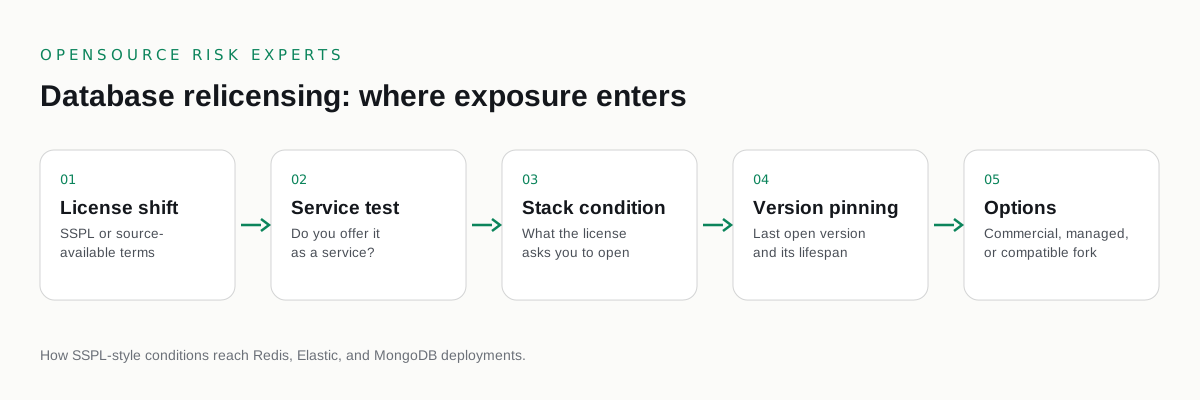
What database relicensing means
Database relicensing is the move of a database project from an open source license to a source available or otherwise restricted license. The code usually stays visible. What changes is what you are permitted to do with it. The most common destination is the Server Side Public License, which carries a strong condition aimed at anyone who offers the software as a service. Source available is not open source, and the Server Side Public License is not approved by the Open Source Initiative.
The distinction matters because most license policies were written for open source. They have a category for permissive licenses such as Apache 2.0 and a category for copyleft such as the GNU GPL, but no category for a competitive use restriction. When a database relicenses into source available terms, it passes through that gap unrecorded.
Why databases keep relicensing
The pattern is driven by a single commercial pressure. A database company builds an open source engine, gathers a large user base, and then watches a major cloud provider offer that engine as a managed service at scale. The provider captures much of the revenue without carrying the development cost. The vendor responds by changing the license to restrict exactly that managed service use, which is what the Server Side Public License was designed to do.
Databases are the category where this dynamic is sharpest. They are durable, central, and expensive to operate well, which makes them attractive as a managed service and valuable to protect. That is why the data layer keeps producing relicensing events while many other categories do not. Understanding the motive lets you predict which projects are exposed: a widely used open source database with a single commercial backer and a popular cloud managed version is a candidate to watch.
The events that define the pattern
Four moves give the pattern its shape, and each followed the same logic.
MongoDB moved to the Server Side Public License in 2018. It was the first major database to adopt those terms and set the template that others followed. The move was aimed squarely at managed service providers offering MongoDB without contributing.
Elasticsearch and Kibana moved from Apache 2.0 to the Server Side Public License and the Elastic License in 2021. The trigger was a managed Elasticsearch service offered by a large cloud provider. The community responded with OpenSearch, the fork led by AWS, which remains under an open license.
Redis moved to a model that includes the Redis Source Available License and the Server Side Public License as of March 2024, and later added an open license option. The community fork is Valkey, backed by a foundation. The same managed service tension drove the change.
Outside the data layer, HashiCorp moved Terraform, Vault, Consul, Nomad and Packer to the Business Source License 1.1 as of August 2023, with the fork OpenTofu. The license differs, but the motive is the same: restrict competitive commercial use of a widely adopted project. Read the deeper account in the 2023 to 2026 relicensing wave explained.
Why the pattern matters to enterprises
A database is rarely a leaf node. It anchors applications, analytics, search, caching, and logging, and it is often embedded in vendor delivered systems you did not build. When a database relicenses, the exposure radiates through everything that depends on it. The cost to remove or replace a database is also higher than for most components, which means the window to act cheaply is narrow.
The quiet risk is that nothing breaks. Upgrades continue to install, the engine keeps running, and the new terms apply to software already in production without any visible signal. The exposure accrues until an audit, a procurement review, or a deal forces the question. By then the choices are fewer and more expensive. This is the same trap that source available creates across the board, explained in why source available is not open source.
How to track database relicensing risk
Tracking the pattern is a discipline, not a one time scan. Five practices hold the line.
- Record the license state of every database engine, not just its name, and keep it current across versions.
- Give source available its own category in policy, separate from open source, so a relicensed database is flagged at intake.
- Watch the candidate projects: any popular open source database with one commercial backer and a managed cloud version.
- Classify each deployment by how it is used, because the service condition in the Server Side Public License depends on use, not mere presence.
- Check vendor delivered systems, since an embedded database can place the obligation with your supplier.
When a change has already reached your estate, a relicensing exposure review maps the blast radius and sizes both the cost of exposure and the cost to cure. From there, our open source remediation advisory weighs the realistic paths, whether that is migration to a fork such as Valkey or OpenSearch, a negotiated commercial license, or a documented decision to hold a stable version in place.
For the specific engines, read commercial licensing for Elastic and the Redis, Elastic and database licensing FAQ.
COMMON QUESTIONS
Questions buyers ask.
What is database relicensing?
Database relicensing is when a database project moves from an open source license to a source available or restricted license. MongoDB, Elasticsearch, and Redis all did this between 2018 and 2024, shifting from open terms to the Server Side Public License or related models.
Why do databases keep relicensing?
Database vendors relicense to stop large cloud providers from offering their software as a managed service without contributing back. The Server Side Public License and similar terms target that service model, which is why databases are the most affected category.
Which databases have relicensed?
MongoDB moved to the Server Side Public License in 2018. Elasticsearch and Kibana moved to the Server Side Public License and the Elastic License in 2021. Redis moved to a model that includes the Server Side Public License as of March 2024. Each move produced a community fork.
How do enterprises track database relicensing risk?
They record the license state of every database engine in a dependency map, watch for upgrades that cross a new license boundary, and treat source available databases as a distinct category with their own policy. A relicensing exposure review then sizes the exposure.
Is this article legal advice?
No. It is commercial and licensing risk analysis, not legal advice. For interpretation of license terms, engage your own counsel.
CONTAINMENT
See the next database relicense before it reaches production.
A confidential open source license risk assessment. Independent, buyer side, paid only by you.
Not ready to talk? Read the free open source license risk guides first.
One email when a major project relicenses. No marketing, unsubscribe any time.
MORE IN THIS CLUSTER