REDIS AND ELASTIC DATABASES
Redis, Elastic and database licensing FAQ.
This Redis, Elastic and database licensing FAQ answers the questions enterprises ask most after the data layer relicenses: what changed, whether the software is still open source, when you have to pay, what the forks are, and how to contain the exposure on your own terms.
The Redis, Elastic and database licensing FAQ below pulls together the practical answers we give buyers most often. The data layer has produced the largest open source license changes of recent years, and the same questions recur whether the engine in question is Redis, Elasticsearch, or another database that has relicensed. Use this as a starting map, then read the deeper articles for the detail behind each answer. The full landscape sits in the Redis and Elastic database licensing pillar.
What changed with Redis
Redis moved from an open source license to a model that includes the Redis Source Available License and the Server Side Public License as of March 2024, and later added an open license option. The change was aimed at managed service providers offering Redis at scale. The community fork is Valkey, backed by a foundation and continuing under an open license. For most internal users running Redis as a cache or data store, day to day operation continued, but the license posture changed underneath them.
What changed with Elastic
Elasticsearch and Kibana moved from Apache 2.0 to the Server Side Public License and the Elastic License in 2021, with the trigger being a managed Elasticsearch service offered by a large cloud provider. Elastic later added an open license option for some versions. The AWS led fork is OpenSearch, which remains under an open license. The detail on paying or not paying sits in commercial licensing for Elastic.
Are these databases still open source
The source available editions are not open source. The Server Side Public License and the Redis Source Available License are not approved by the Open Source Initiative. Source available means the code is visible but the license restricts what you may do with it. Both projects later offered open license options, and the forks Valkey and OpenSearch remain open. The distinction matters because a policy written for open source has no category for a competitive use restriction, so a relicensed database can pass through your controls unflagged. See why source available is not open source.
Do we have to pay
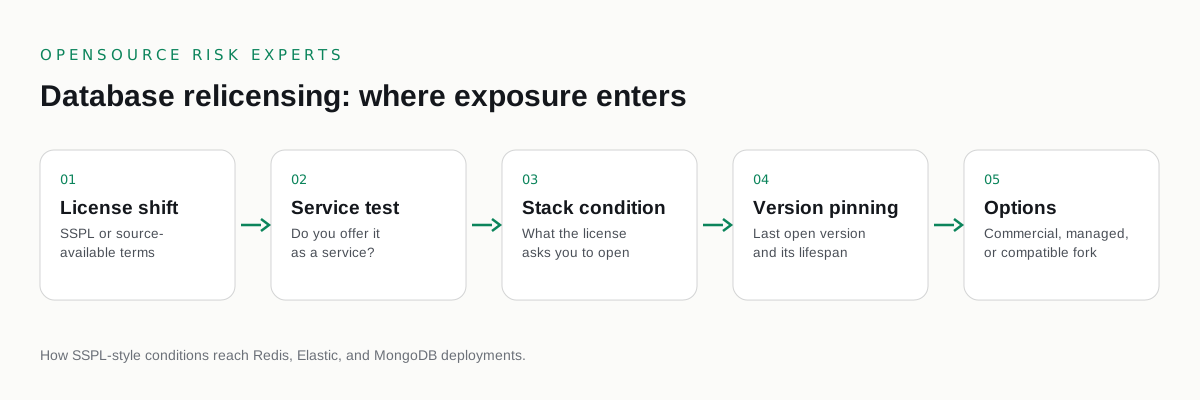
Not necessarily. Payment depends on how you deploy, because the restrictions in the Server Side Public License turn on offering the software as a service. Internal use of a free edition often carries no fee. The exposure rises when you provide the database to third parties as a managed service, or when you rely on paid features. The honest answer for any specific estate requires an inventory that records version, edition, and deployment model for each instance.
What are the alternatives to paying
There are three realistic paths after a database relicense.
- Migrate to the community fork, Valkey for Redis or OpenSearch for Elasticsearch, returning the workload to an open license.
- Negotiate a commercial license scoped to your genuine footprint and the term that fits your roadmap.
- Hold a stable version in place where there is no live trigger, with the decision documented and the security posture managed.
The right choice depends on usage, roadmap, and the cost to cure. Our open source remediation advisory weighs the options against each other rather than defaulting to one.
Why this keeps happening
Database relicensing is a pattern, not a series of isolated events. A widely used open source database with a single commercial backer and a popular cloud managed version is a candidate to relicense, because the vendor wants to restrict the managed service use that captures its revenue. Treating this as a pattern lets you watch the candidates and prepare. The full argument is in database relicensing as a pattern enterprises must track, and the wider timeline is in the database licensing pillar.
Where to start
Start with an inventory of your data layer that records the license state of every engine, then classify each deployment by use so you can separate true exposure from harmless internal use. From there, size the cost of exposure against the cost to cure before any vendor conversation. That sequence consistently produces a smaller bill and a defensible position.
COMMON QUESTIONS
Questions buyers ask.
What changed with the Redis license?
Redis moved from an open source license to a model that includes the Redis Source Available License and the Server Side Public License as of March 2024, and later added an open license option. The community fork is Valkey, backed by a foundation.
What changed with the Elastic license?
Elasticsearch and Kibana moved from Apache 2.0 to the Server Side Public License and the Elastic License in 2021, and Elastic later added an open license option. The AWS led fork is OpenSearch, which remains under an open license.
Are Redis and Elastic still open source?
The source available editions are not open source. The Server Side Public License and the Redis Source Available License are not approved by the Open Source Initiative. Both projects later offered open license options, and the forks Valkey and OpenSearch remain open.
Do we have to pay after these database relicenses?
Not necessarily. Payment depends on how you deploy. Internal use of a free edition often carries no fee, while offering the software as a service can trigger restrictions. The alternatives are migration to a fork or holding a stable version.
What are Valkey and OpenSearch?
Valkey is the community fork of Redis, and OpenSearch is the community fork of Elasticsearch and Kibana led by AWS. Both remain under open licenses and give enterprises a migration path and negotiation leverage after the relicense.
Is this FAQ legal advice?
No. It is commercial and licensing risk analysis, not legal advice. For interpretation of license terms, engage your own counsel.
CONTAINMENT
Map your database license exposure before it surfaces.
A confidential open source license risk assessment. Independent, buyer side, paid only by you.
Not ready to talk? Read the free open source license risk guides first.
One email when a major project relicenses. No marketing, unsubscribe any time.
MORE IN THIS CLUSTER