ARTICLE / UPDATED JUNE 2026
Redis and AGPL: the 2025 reversal explained
BY FREDRIK FILIPSSON · REVIEWED BY MORTEN ANDERSEN
The story of Redis and AGPL is a rare round trip. A widely used open source database left its permissive license, drew a fork, and then brought back an approved open source option through the GNU AGPL. The headline reads like good news, and in one respect it is, but the AGPL carries its own obligations. This article walks the timeline and explains what the reversal does and does not change for your production risk.
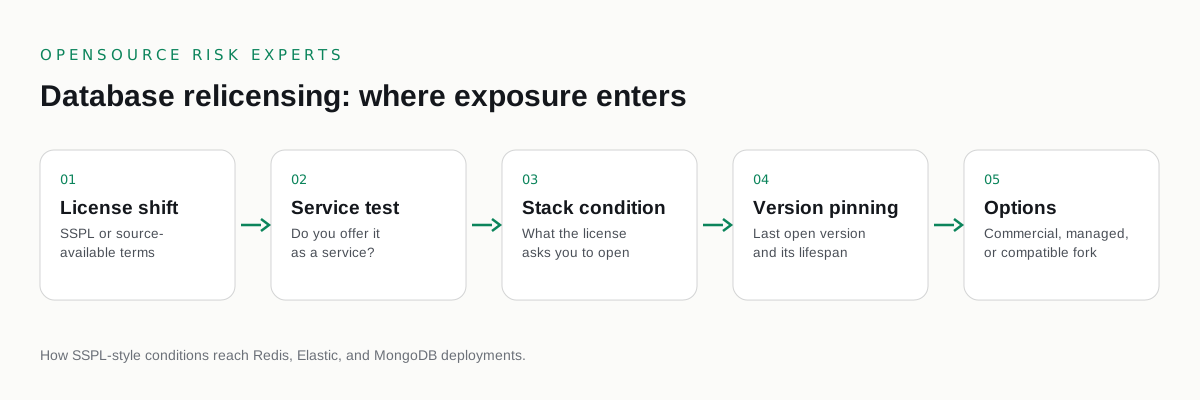
For years Redis shipped under a permissive open license that placed almost no conditions on use. That made it one of the most widely deployed data tools in production, sitting in caches, queues, and session stores across nearly every industry. When the license changed, the question for enterprises was not abstract. It touched software already running in critical paths. The later addition of the GNU AGPL changed the picture again, which is why a clear timeline matters more than any single headline.
The 2024 move to source available terms
As of March 2024, Redis moved from its permissive open license to a dual model under the Redis Source Available License version 2 and the Server Side Public License. Source available is not the same as open source. The code remained public and readable, but use conditions now sat on top of it, aimed primarily at parties offering Redis as a managed service to others. Neither the Redis Source Available License nor the Server Side Public License is approved by the Open Source Initiative. For most internal deployments the change did not prohibit use, but it ended the era in which Redis carried no license conditions worth tracking, and it prompted a serious reaction from the community.
The Valkey fork and the pressure that followed
The response was swift. Maintainers and cloud providers backed a community fork, Valkey, kept under a permissive open license and governed in the open. Valkey gave teams a way to keep the Redis programming model without accepting the new source available terms, and its momentum made clear that a meaningful part of the user base would not simply follow the relicense. That pressure is the backdrop to what happened next. A project that loses its community to a fork loses the network effects that made it valuable, and the reversal that followed should be read with that dynamic in mind.
The 2025 reversal: adding the GNU AGPL
As of 2025, Redis added the GNU AGPL version 3 as an open license option for new releases, alongside the existing source available terms. This is the reversal. The AGPL is approved by the Open Source Initiative, so the project once again offers a genuine open source path, not only a source available one. For some teams this resolves the core objection to the 2024 change. It is important to be precise about what was added. Redis did not return to its original permissive license. It added a strong copyleft license. An offering can now be taken under the AGPL or under the source available terms, and which one governs a given deployment depends on the version and how it was obtained. Confirm the current terms for your version with the vendor and your counsel, since this remains a fast moving area.
Why the AGPL is not a clean all clear
The AGPL is open source, which is real progress, but it is strong copyleft with a network use provision. That provision extends source disclosure obligations to software made available to users over a network, not only to software that is distributed. For an enterprise running Redis purely as an internal cache, the obligations are usually limited. For a company that offers Redis backed functionality to its own customers over a network, the AGPL can reach further than the permissive license ever did. The trade is therefore not strictly better in every direction. The license posture moved from source available with competitive restrictions to open source with copyleft obligations, and the right read for you depends entirely on how you deploy. For the underlying mechanics, see our glossary entry on what a source available license means.
What to do about Redis and AGPL in your estate
Start by mapping the versions of Redis you run and how each was obtained, because the governing license follows the version, not the project name. Separate internal use from any deployment that exposes Redis functionality to external users over a network, since that distinction drives the AGPL analysis. Then weigh your options deliberately. Staying on an older permissively licensed version, adopting the AGPL release, taking the source available terms, or migrating to Valkey are all on the table, and each carries a different mix of obligation, cost, and operational effort. Bring the genuinely uncertain cases to your counsel before you decide. For the broader pattern, read our pillar on Redis and Elastic database licensing, and for adjacent reading see whether your Elasticsearch use is affected, assessing database license exposure in production, and vector database licensing risk to watch.
CONTAINMENT
Map your Redis exposure before you choose
Our remediation advisory maps which Redis versions and licenses run where, isolates any network facing exposure, and weighs stay, adopt, or migrate against cost and obligation. Independent, buyer side, paid only by you.
Not ready to talk? Read the free open source license risk guides first.
One email when a major project relicenses. No marketing, unsubscribe any time.
Talk to a remediation advisorCOMMON QUESTIONS
Questions buyers ask.
What is the connection between Redis and AGPL?
Redis moved away from its permissive open license in 2024 to a dual Redis Source Available License version 2 and Server Side Public License model. As of 2025 Redis added the GNU AGPL version 3 as an open license option for new releases, so the same project now offers both source available terms and a strong copyleft open license. Confirm the terms for your specific version with the vendor and your own counsel.
Why did Redis add the AGPL after moving to the SSPL?
The 2024 change to source available terms drew significant community concern and prompted the Valkey fork. Adding the GNU AGPL version 3 as of 2025 returned an Open Source Initiative approved option to the project. The AGPL is open source, but it is strong copyleft, so it carries its own obligations rather than removing all license risk.
Does the AGPL remove the risk from the Redis relicensing?
No. The AGPL is an approved open source license, which resolves the source available concern, but it is strong copyleft with a network use provision. For a service that offers Redis functionality over a network, the AGPL can trigger source disclosure obligations. Which license governs your deployment depends on the version you run and how you obtained it.
What is Valkey and how does it relate?
Valkey is the community fork of Redis created after the 2024 license change, maintained under a permissive open license. For teams that want to avoid both the source available terms and the copyleft obligations of the AGPL, Valkey is the path many have taken. Whether it fits depends on feature parity and your operational needs.
How do we know which Redis license applies to us?
The governing license depends on the specific version and build you run and when you obtained it. Older versions remain under their original open license, the 2024 and later versions carry the source available terms, and newer releases may be available under the GNU AGPL. Mapping your actual versions is the only reliable way to answer, and interpretation is a matter for your counsel.
Is this legal advice?
No. This is commercial and licensing risk advisory, not legal advice. For interpretation of the Redis license terms, the SSPL, or the GNU AGPL, engage your own counsel.
MORE IN THIS CLUSTER