ARTICLE / UPDATED JUNE 2026
Vector database licensing risk to watch
BY FREDRIK FILIPSSON · REVIEWED BY MORTEN ANDERSEN
The vector database licensing risk to watch is not a single event that has already happened. It is a pattern forming in plain sight. AI features are driving rapid adoption of vector stores, often under permissive licenses, in a market where relicensing has become a familiar move. This article explains why the conditions rhyme with the changes already seen at HashiCorp, Redis, and Elastic, and how a buyer can stay ahead of a change rather than absorb it.
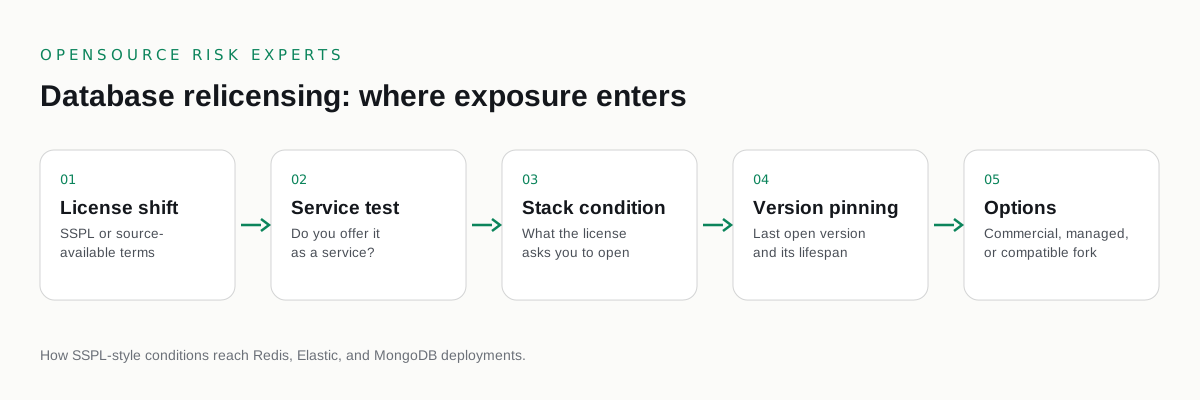
Vector databases store and search the numerical embeddings that power retrieval augmented generation, semantic search, and recommendation. They moved from niche to core infrastructure in a short span, pulled along by the surge in AI applications. That speed is the point. Software adopted quickly, under licenses few teams read closely, tends to embed itself before anyone considers what happens if the terms change. The recent relicensing wave taught a clear lesson, and the prudent response is to apply that lesson to the newest layer of the stack before, not after, a change lands.
Why the conditions rhyme with past relicenses
The projects that relicensed in recent years shared a profile. They were widely adopted, central to production, and backed by companies under pressure to convert popularity into revenue. HashiCorp moved its tools to the Business Source License as of August 2023. Redis moved to source available terms as of March 2024. Elasticsearch and Kibana moved to the Server Side Public License as of 2021, and MongoDB did so in 2018. Many leading vector databases fit the same description today. They are young, venture backed, heavily used, and offered under permissive open licenses that place no conditions on use. That combination has repeatedly preceded a relicense, because a permissive license gives the sponsoring company little leverage over cloud providers and competitors building on its work. None of this predicts that any specific vector database will change terms. It does say the category carries the conditions under which change has happened before, which is reason enough to watch.
The exposure you may already carry through extensions
There is a nearer term version of this risk that does not wait for any future announcement. Many teams add vector search not through a dedicated vector database but through extensions to engines they already run. A vector capability layered onto Redis inherits the Redis license posture, including the source available terms and the later GNU AGPL option. Vector features in Elasticsearch sit under the Server Side Public License and the Elastic License, while the equivalent in OpenSearch remains under Apache 2.0. In other words, a vector feature can carry exactly the same exposure as the database beneath it, and a team that believes it adopted a simple search add on may have extended a relicensed engine into a new and more visible part of the stack. The map you build for your databases should therefore include how their vector capabilities are used.
Why vector stores sit in a sensitive path
Vector databases are not background infrastructure. They sit directly in the path of customer facing AI features, often in services delivered to users over a network. That placement matters, because the license provisions that bite hardest, the service restrictions in source available licenses and the network use provision in the GNU AGPL, are precisely the ones triggered by network facing, customer serving deployments. A relicense of a tool that you run only internally is a manageable problem. A relicense of a tool that sits in the live path of a product you sell is a larger one. The sensitivity of the placement raises the stakes of any future change, which argues for treating these components with more care than their newness might suggest.
How to stay ahead of a change
Staying ahead is a matter of keeping your options open and your information current. Inventory the vector databases and vector extensions you run and record the current license of each, so you are never surprised about what governs a component. Where you have a genuine choice, prefer engines under licenses approved by the Open Source Initiative, since an approved open license is far less likely to restrict you later. Design for portability, keeping the embedding and retrieval layer loosely coupled so that switching engines is an engineering project rather than a rebuild. Finally, monitor for license announcements in this fast moving category, and treat your dependency map as a living artifact wired into intake. The aim is to keep the cost of changing course low, so that if a vector database does relicense, your response is a planned decision rather than a scramble.
Where to read next
This article is part of our pillar on Redis and Elastic database licensing. Because vector capabilities so often ride on the engines that have already changed terms, the most useful adjacent reading is Redis and the AGPL reversal, whether your Elasticsearch use is affected, and assessing database license exposure in production.
CONTAINMENT
Watch the next wave before it reaches you
Our remediation advisory maps the vector stores and extensions you run, flags the network facing exposure, and builds portability into your AI data layer. Independent, buyer side, paid only by you.
Not ready to talk? Read the free open source license risk guides first.
One email when a major project relicenses. No marketing, unsubscribe any time.
Talk to a remediation advisorCOMMON QUESTIONS
Questions buyers ask.
What is the vector database licensing risk to watch?
The vector database licensing risk to watch is that fast growing AI infrastructure is being adopted quickly, often under permissive open licenses, in a market where relicensing has become common. A vector store that powers retrieval today could change terms tomorrow, and because these systems sit in the path of production AI features, a change would reach software already serving users.
Why are vector databases particularly exposed to relicensing?
Vector databases are young, venture backed, and central to AI applications, which is exactly the profile of projects that have relicensed in recent years. Commercial pressure to monetize, combined with heavy adoption under permissive licenses, creates the same conditions that led HashiCorp, Redis, and Elastic to change terms. The pattern is worth watching even where no change has occurred.
How does an existing database become a vector database risk?
Many teams add vector search through extensions to databases they already run, such as Redis or PostgreSQL, or through Elasticsearch and OpenSearch vector features. When the underlying engine carries source available or copyleft terms, the vector capability inherits that license posture, so a vector feature can carry the same exposure as the database beneath it.
How do we stay ahead of a vector database license change?
Inventory the vector stores and extensions you run and record their current license, prefer Open Source Initiative approved licenses where the choice exists, design for portability so a switch is feasible, and monitor for license announcements. The goal is to keep the cost of changing course low so a future relicense is a managed decision rather than a forced one.
Is this legal advice?
No. This is commercial and licensing risk advisory, not legal advice. For interpretation of any vector database license and how it applies to your deployment, engage your own counsel.
MORE IN THIS CLUSTER