ARTICLE . UPDATED JUNE 2026
How Vendors Communicate a Relicense to Users
BY MORTEN ANDERSEN · REVIEWED BY FREDRIK FILIPSSON
How vendors communicate a relicense to users follows a familiar pattern: a blog post, a sustainability narrative, a new license name, and an effective date. What the announcement almost never contains is the one thing a buyer needs, which is what the change means for your estate. The vendor explains its decision. It does not map your exposure. That gap is the buyer's to close, and closing it starts with reading the announcement for facts rather than framing.
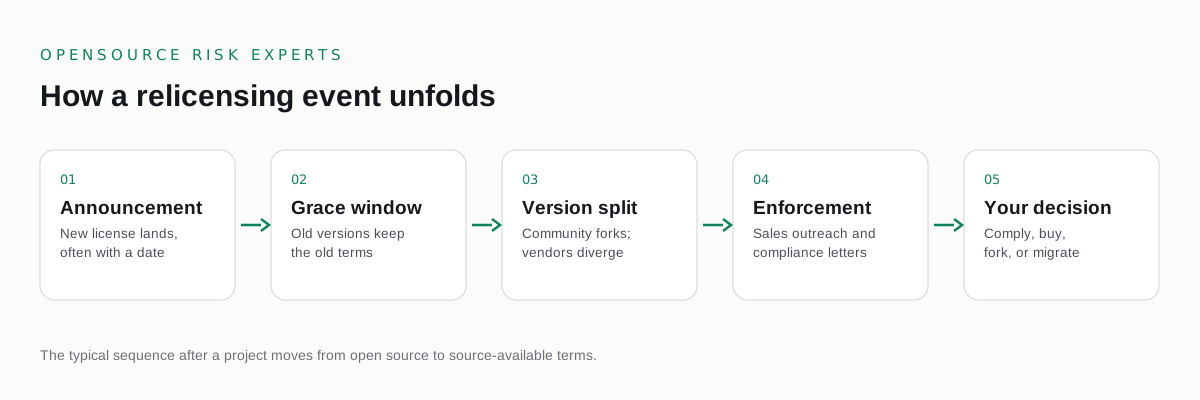
A relicense is a corporate decision delivered as a community announcement. The vendor has usually weighed the move for months, prepared the messaging, and lined up an FAQ before a word reaches users. By the time you read it, the decision is final and the framing is set. Understanding how that communication is built helps a buyer separate what is operative, meaning the new license and the date it takes effect, from what is narrative, meaning the reasons the vendor offers for the change. Both matter, but only the operative facts drive your exposure.
The standard channels and what they carry
The primary channel is almost always a post on the vendor's own site, timed and worded for maximum control of the story. It is usually paired with a frequently asked questions page that anticipates the obvious objections, and with an update to the license file in the source repository so the new terms are in place when the post goes live. Direct notice to individual users is rare. There is seldom an email to every adopter, because in an open source model the vendor often does not know who they all are. The practical result is that many buyers learn of a relicense indirectly, through a news article, a colleague, or a build that suddenly carries different terms. This is why monitoring the projects you depend on matters, a discipline covered in the 2023 to 2026 relicensing wave explained.
The framing vendors reach for
Relicense announcements tend to use a small set of frames. The most common is sustainability: the change is presented as necessary to keep funding the project's development. A second is fairness, usually aimed at large cloud providers who sell a managed version of the software without contributing in proportion. A third is continuity, reassuring most users that nothing changes for them while the new restriction targets a narrow class of competitor. These frames are reasonable business positions and are often sincere. They are also, unavoidably, the vendor's story about its own decision. A buyer reads them for context, then looks past them to the operative terms, because the framing does not change what the license now restricts.
The licenses behind these announcements are specific and worth naming plainly. As of August 2023, HashiCorp moved Terraform, Vault, Consul, Nomad, and Packer to the Business Source License 1.1. Redis moved to a dual model with the Server Side Public License as of March 2024. Elasticsearch and Kibana moved to the Server Side Public License and the Elastic License as of 2021, and MongoDB moved to the Server Side Public License in 2018. Source available is not open source, and neither the Business Source License nor the Server Side Public License is approved by the Open Source Initiative, whatever the framing of the post.
The gaps the announcement leaves
However clear the post, it cannot tell you your own exposure, because the vendor does not know your estate. It will not list which of your services depend on the component, how deep the dependency runs through the indirect part of your tree, or what it would cost you to remediate, fork, or license. The announcement answers the vendor's questions. Your questions are different. The effective date, in particular, is often stated in a way that requires care to apply to your own release history, which is why it deserves its own attention as set out in notice and effective dates in a relicense.
Turning an announcement into a decision
The buyer's job is to convert the announcement into facts and then into a plan. Capture the operative details: the exact license, the effective date, and what the new terms restrict. Treat the vendor FAQ as one input rather than as the answer. Then map the affected component across your estate to size the exposure, and weigh the paths out, including the fork, a commercial license, or a deliberate hold. This work sits on the relicensing pillar, and a relicensing exposure review produces the quantified picture the announcement leaves out.
We are independent and buyer side. We take no vendor fees and resell no software, so we read an announcement for what it means to you rather than for the vendor. This is commercial and licensing risk advisory, not legal advice. For interpretation of an announcement and the license terms behind it, engage your own counsel.
COMMON QUESTIONS
Questions buyers ask.
How do vendors usually communicate a relicense to users?
The standard channel is a blog post on the vendor site, often paired with a frequently asked questions page and an update to the license file in the repository. The announcement typically frames the change around sustainability or fairness, names the new license, and gives an effective date. Direct notice to individual users is rare, so most buyers learn of the change by reading the post or hearing it secondhand.
Why is the vendor announcement not enough to assess your exposure?
The announcement explains the vendor's decision, not your situation. It rarely tells you which of your services depend on the component, how deep the dependency runs, or what the change costs you. The vendor knows its own reasons. Only you can map the change against your estate, which is the work the announcement leaves undone.
What framing do vendors use for a relicense?
Common framings present the change as protecting the project's sustainability, ensuring fair contribution from large cloud providers, or keeping the company able to fund development. These are reasonable business positions, but they are the vendor's narrative. A buyer should read past the framing to the operative facts: the new license, the effective date, and what it restricts.
What should a buyer do when a relicense is announced?
Capture the operative facts from the announcement, confirm the effective date and the exact license, then map the affected component across your estate to size the exposure. Treat the vendor FAQ as input, not as your answer. A relicensing exposure review turns the announcement into a quantified picture of what the change means for you specifically.
Is this legal advice?
No. This is commercial and licensing risk advisory, not legal advice. For interpretation of an announcement and the license terms behind it, we recommend you engage your own counsel.
CONTAINMENT
Turn an announcement into a plan.
A confidential relicensing exposure review. Independent, buyer side, paid only by you.
Not ready to talk? Read the free open source license risk guides first.
One email when a major project relicenses. No marketing, unsubscribe any time.
MORE IN THIS CLUSTER