GOVERNANCE AND SBOM
Building an open source program office.
BY MORTEN ANDERSEN · REVIEWED BY FREDRIK FILIPSSON
When a license changes under software you already run, someone has to own the response. This article covers building an open source program office: the mandate, the structure, and the controls that catch a relicense at intake rather than in an audit.
Commercial and licensing risk advisory, not legal advice.
Building an open source program office is the structural answer to a problem the relicensing wave made plain: open source license risk has no natural owner. Engineering chooses the dependencies, legal interprets the terms, security tracks the vulnerabilities, and procurement signs the contracts, but no single function watches the whole picture. So when HashiCorp, Redis, and Elastic changed terms under software already in production, the change had nowhere to land. A program office gives it an owner. It is the function that holds the policy, runs the intake controls, and keeps the inventory current, so the next relicense is a tracked event rather than an audit finding.
This is governance work, and it sits alongside the inventory and bill of materials discipline that makes it possible. The wider treatment of that discipline lives in the pillar on open source governance and SBOM.
Why building an open source program office pays off
The case for a program office is the cost of not having one. Without a single owner, a license change is discovered late, usually by an auditor or a vendor inquiry, at the point where leverage is lowest and options are narrowest. With an owner, the same change is caught early, sized while there is still room to maneuver, and routed to a chosen response. The office does not eliminate the risk that projects relicense; nothing can. What it does is convert that risk from a recurring surprise into a managed process, which is the difference between a crisis and a line item on a roadmap.
The return is sharpest for organizations that depend heavily on open source or operate under regulation, where an unmanaged change carries compliance weight as well as cost. Those higher stakes are the subject of open source governance for regulated industries.
Give it a mandate that reaches engineering and legal
A program office without authority is a mailing list. The mandate is what makes it work, and license risk in particular needs a mandate that spans two functions that rarely report together. Engineering owns the dependencies and the only people who can change them. Legal owns the interpretation of what a license actually requires. The office has to be able to convene both, set policy that engineering follows, and escalate a license interpretation to counsel when one is needed. That usually means it reports high enough to carry weight with both, whether it sits under engineering leadership, the office of the chief information security officer, or a shared governance function. The exact home matters less than the reach.
The mandate should be explicit about what the office decides versus what it advises. It decides policy and the allowlist. It advises on remediation, where engineering owns the work and counsel owns the legal call. Drawing that line clearly at the start prevents the office from becoming either a rubber stamp or a bottleneck.
Wire the controls into how teams already ship
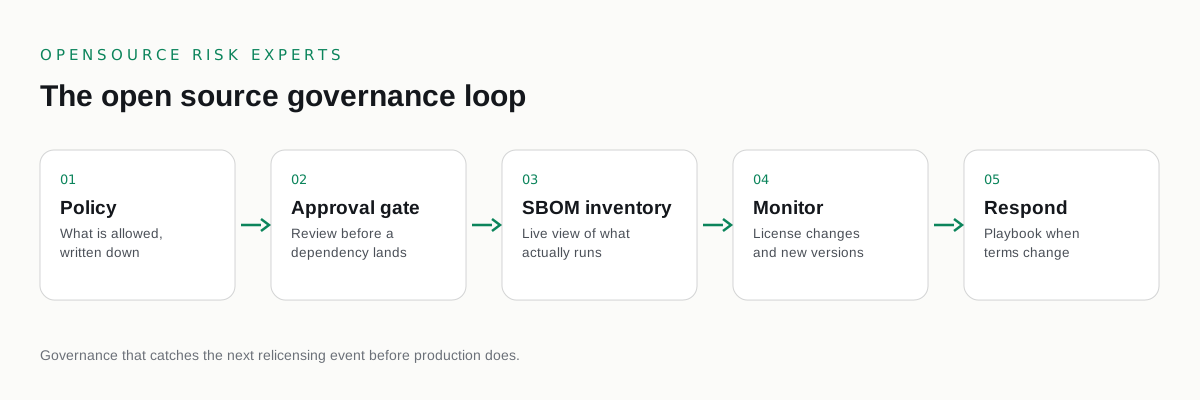
The office earns its keep through controls that catch problems at intake. A license policy and allowlist define which licenses are acceptable and which require review. An intake gate checks new dependencies against that policy before they enter the estate, so a source available component is flagged when a developer first reaches for it rather than years later in an audit. The controls only work if they live where the work happens, in the pull request and the build pipeline, rather than in a document nobody opens. A gate that adds friction without adding speed gets routed around, which is covered in open source approval workflows for developers.
Intake is only half the job, because the dangerous changes happen to components already in use. The office also needs to watch the licenses of what it already runs, which depends on an inventory that stays current automatically rather than through a periodic manual sweep. The mechanics of that are set out in open source inventory automation.
Start small and prove value before scaling
A program office does not have to launch fully formed. The pragmatic path starts with the two things that deliver value immediately: an accurate inventory of what you run and its license state, and a simple policy with an intake gate on the highest risk categories. From there the office adds the watch function, the remediation coordination, and the broader governance over contribution and community engagement. Trying to stand up the complete function on day one tends to stall on process before it delivers anything. Proving the value of early detection on a real relicense is what wins the mandate to grow.
Building an open source program office is how an organization stops being surprised by its own software. Give it a mandate that reaches engineering and legal, wire its controls into the way teams ship, and start with the inventory and the intake gate before scaling. This article is commercial and licensing risk advisory, not legal advice. For interpretation of a specific license or your compliance obligations, your own counsel is the right place to turn.
COMMON QUESTIONS
Questions buyers ask.
What is an open source program office?
An open source program office is the function that owns how an organization consumes, contributes to, and governs open source. For license risk, it is the place where policy, intake controls, and an accurate inventory come together so a relicense is caught early rather than discovered in an audit.
Why build an open source program office now?
The wave of relicensing since 2023, including HashiCorp, Redis, and Elastic, showed that license terms can change under software already in production. A program office gives the change an owner and a process, turning a surprise into a tracked event.
Where should an open source program office sit?
It needs a mandate that reaches both engineering and legal, so it usually reports high enough to convene both. The exact home matters less than the authority to set policy, run intake controls, and require an inventory that engineering keeps current.
What does an open source program office actually do day to day?
It maintains the license policy and allowlist, runs the intake gate for new dependencies, keeps the inventory and SBOM current, watches for license changes in components already in use, and coordinates remediation when a change lands.
Is this legal advice?
No. This article is commercial and licensing risk advisory, not legal advice. For interpretation of a specific license or your compliance obligations, we recommend your own counsel.
PREVENT THE NEXT ONE
Catch the next relicense at intake.
Open source governance and policy advisory. Independent, buyer side, paid only by you.
Not ready to talk? Read the free open source license risk guides first.
One email when a major project relicenses. No marketing, unsubscribe any time.
MORE IN THIS CLUSTER