ARTICLE . UPDATED JUNE 2026
Commercial Open Source Negotiation Mistakes
BY MORTEN ANDERSEN · REVIEWED BY FREDRIK FILIPSSON
The commercial open source negotiation mistakes that cost buyers most are predictable, which means they are avoidable. Each one is a failure to prepare a single thing before the conversation: real usage, a costed alternative, or controlled timing. Learn the pattern and you can stop handing value to the other side of the table.
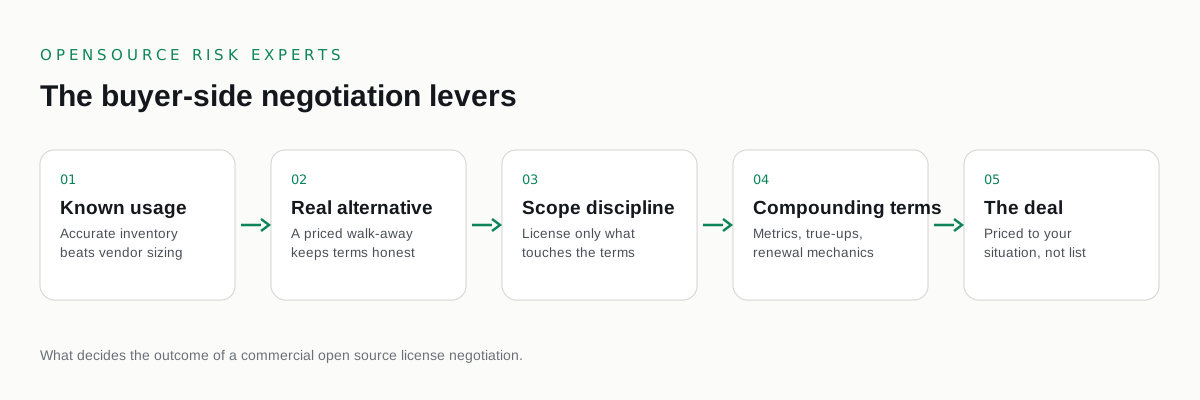
When a project relicenses, the commercial conversation that follows tends to go the same way for unprepared buyers. The pattern repeats across vendors because the underlying dynamic is the same. As of August 2023, HashiCorp moved Terraform, Vault, Consul, Nomad, and Packer to the Business Source License 1.1. Redis moved to a dual model with the Server Side Public License as of March 2024. Elasticsearch and Kibana moved to the Server Side Public License and the Elastic License as of 2021. In each case the buyer arrives at a disadvantage, and the mistakes below are how that disadvantage turns into an oversized bill. None of them are exotic. They are simply the things buyers fail to do before they sit down.
Negotiating without knowing your usage
The most expensive mistake is arriving without numbers. When the buyer cannot state exactly what they run, the vendor's tiering and assumptions become the baseline, and those are sized for the buyer's most generous footprint. Every later argument is then anchored to a figure the buyer never set. The fix is a precise inventory of instances, scale, and features actually in use before any conversation begins. An open source license risk assessment produces that baseline, and it is the single highest leverage piece of preparation a buyer can do.
Accepting the vendor's deadline
The second mistake is treating the vendor's timeline as your own. Most relicensing exposure already exists in production, which means the urgency in a vendor letter is often manufactured rather than real. A buyer who accepts the deadline negotiates under pressure that the facts do not justify, and pressure is exactly what produces concessions. The discipline is to separate genuine deadlines from invented ones, and to negotiate on your own clock wherever the exposure permits it. We explain why timing is itself leverage in leverage in open source commercial negotiations.
Using the fork as a bluff
The third mistake is waving a community fork as a threat without having done the work behind it. OpenTofu, Valkey, and OpenSearch are real alternatives, but only for a buyer who has scoped the migration, costed it, and is genuinely prepared to make it. Vendors can tell the difference between a buyer who has a plan and one who has a line. An uncosted threat is no leverage at all, and using it can weaken your position by signaling that you have not prepared. The honest valuation of the alternative is what makes it useful, a calculation we work through in forking versus paying, the database decision.
Accepting terms that expand silently
The fourth mistake lives in the fine print. Agreements that auto expand with growth, tie pricing to metrics the buyer does not control, or renew on terms that ratchet upward look acceptable on signing and become expensive later. A buyer focused only on the headline figure can accept a structure that costs far more over the term than the first year suggests. The fix is to model the agreement across its full life against your actual growth, not just to compare opening numbers. The structure matters as much as the price, and sometimes more.
Treating negotiation as the only path
The final mistake is assuming a commercial license is the only outcome. For some components, staying on a pre change version, moving to a fork, or removing the dependency is the better answer, and entering a negotiation without having weighed those paths means you may pay for something you did not need. The negotiation should be one branch of a remediation decision, not a foregone conclusion. We set out how the paths compare in building an open source remediation roadmap, and the wider negotiation discipline sits on the commercial licensing pillar.
We help buyers avoid these mistakes from the buyer side only. We take no vendor fees and resell no software, so the preparation we bring, the usage baseline, the costed alternative, and the term model, serves your economics rather than a commission. Where a commercial license is the right answer, we will help you reach a fair one. Where it is not, we will say so. This is commercial and licensing risk advisory, not legal advice. For interpretation of specific license terms and your compliance position, engage your own counsel.
COMMON QUESTIONS
Questions buyers ask.
What is the most common commercial open source negotiation mistake?
Negotiating without knowing your real usage. When the buyer brings no figures, the vendor's tiering and assumptions become the baseline, and the agreement is almost always larger than the buyer's footprint justifies.
Why is accepting a vendor deadline a mistake?
A deadline the vendor set transfers control of the timing to them. Most relicensing exposure already exists in production, so the urgency is often manufactured. Negotiating on your own clock is usually worth more than any single concession won under pressure.
Is using the fork as a threat a mistake?
Yes, when the fork is only a threat. Vendors can tell whether a buyer has actually costed and prepared a move to a fork such as OpenTofu, Valkey, or OpenSearch. An uncosted threat carries no weight. A genuinely prepared alternative does.
How do buyers avoid these mistakes?
Enter with measured usage, a costed alternative, and no artificial deadline, then hold to the price the facts support. Each mistake is a failure to prepare one of those three things before sitting down.
Is this legal advice?
No. This is commercial and licensing risk advisory, not legal advice. For interpretation of license terms and compliance questions, we recommend you engage your own counsel.
CONTAINMENT
Avoid the mistakes before you sit down.
Buyer side commercial license negotiation. Independent, paid only by you.
Not ready to talk? Read the free open source license risk guides first.
One email when a major project relicenses. No marketing, unsubscribe any time.
MORE IN THIS CLUSTER