COMMERCIAL LICENSING
Using a fork as negotiation leverage.
Using a fork as negotiation leverage is the single most powerful move available to a buyer after a relicense. A credible exit forces a vendor to price its offer against the cost of you leaving. This article explains how to make the leverage real rather than a bluff a vendor will call.
Using a fork as negotiation leverage rests on a simple economic truth. A vendor's pricing power comes from your inability to leave. Remove that inability and the power shifts. When a project relicenses and a community fork appears, the fork is not only a remediation path. It is a negotiating instrument. A buyer who can credibly move to OpenTofu, Valkey, or OpenSearch is no longer negotiating list price. They are inviting the vendor to beat the cost of migration. The vendor knows it, and the conversation changes. The whole game is to make the alternative real enough that the vendor must take it seriously.
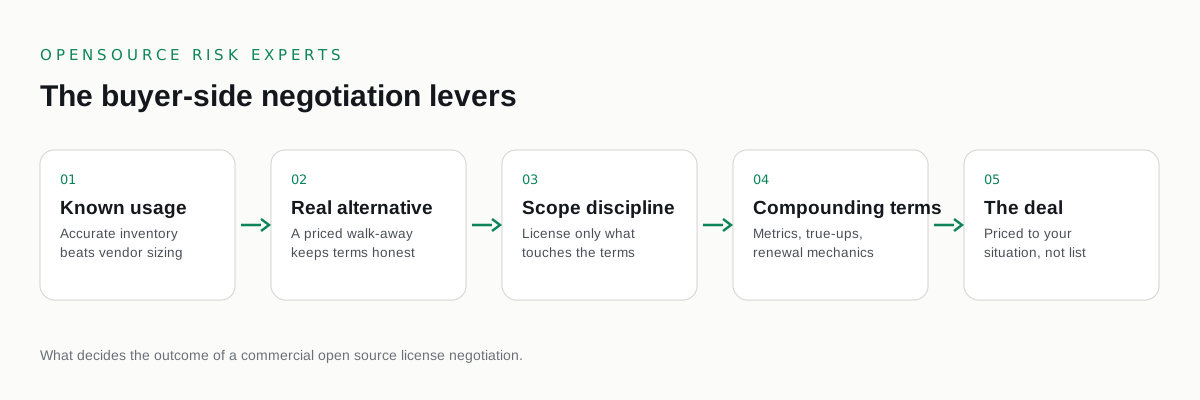
Why the fork changes the math
Before a fork exists, a buyer facing a restrictive relicense has narrow options: pay, remove the dependency, or freeze on an old version. None of those is comfortable, and the vendor prices accordingly. A credible fork adds a fourth option that is materially cheaper than the others for many estates. As of August 2023 HashiCorp moved Terraform and related tools to the Business Source License, and OpenTofu followed. As of March 2024 Redis moved to a Server Side Public License model, and Valkey followed. Elasticsearch and Kibana moved to the Server Side Public License and the Elastic License in 2021, and OpenSearch followed. Each fork carries an open license, which means the buyer has a destination with no competitive use restriction. That destination is what caps the vendor's price.
Credible beats theoretical, every time
A fork only works as leverage if it is real, and vendors are skilled at telling the difference. A buyer who waves at OpenSearch without having tested it is bluffing, and a good vendor will call the bluff by holding the price. Credibility comes from work done in advance. Validate the fork against your actual workloads, not a sample. Price the migration honestly, including the engineering time and the risk. Establish the timeline within which you could move. When you can state, with evidence, that you could migrate for a known cost on a known schedule, the fork stops being a threat and becomes a fact. Facts move prices. Threats do not.
Qualify the fork before you open the conversation
The sequence matters. Do the qualification before you sit down with the vendor, not during. A buyer who arrives already holding a validated migration plan negotiates from a settled position. A buyer who starts qualifying mid negotiation signals that the alternative is not ready, which weakens the very leverage they are trying to use. Treat the fork qualification as the first step of the negotiation, completed quietly, so that when the pricing conversation begins you already know your own walk away cost and the vendor is the one with something to prove.
How to use the leverage without overplaying it
Leverage is most effective when it is stated calmly and backed by evidence rather than brandished. You do not need to threaten to leave. You need only make clear that you have a real option and a number above which it becomes the better choice. Let the vendor reconcile its offer with that reality. Overplaying the hand, by issuing ultimatums or inflating the readiness of the fork, invites the vendor to test you. Understating it, by hiding the option entirely, leaves money on the table. The disciplined middle is to present a true alternative and let the economics speak. This is the same principle that runs through leverage in open source commercial negotiations, and avoiding the traps it warns against matters here too, which is why the common negotiation mistakes are worth reading before you begin.
When the fork is genuinely the better answer
Sometimes the qualification work reveals that migrating is simply cheaper and lower risk than any commercial license the vendor will offer. That is not a failure of the negotiation. It is the negotiation working. The point of using a fork as leverage is to make the best decision visible, and if the best decision is to move, you move. The leverage and the remediation are two faces of the same analysis. Either you secure terms better than the cost of leaving, or you leave for less than the cost of staying. Both are wins. The losing position is the one with no validated alternative at all, where you simply pay whatever is asked. The duration of any deal you do strike also matters, which is why it is worth weighing the multiyear commercial license tradeoffs before signing.
The buyer side view
We build the leverage and we keep it honest. We qualify the fork against your workloads, price the migration so your walk away number is real, and help you present the alternative in a way that moves the vendor without inviting a test you cannot pass. We are paid only by you, never by the vendor whose price we are working to improve, so the analysis serves your position alone. For the wider picture, see the commercial licensing pillar. License interpretation stays with your own counsel.
COMMON QUESTIONS
Questions buyers ask.
How does using a fork as negotiation leverage work?
Using a fork as negotiation leverage means qualifying a credible open alternative, such as OpenTofu, Valkey, or OpenSearch, so a vendor knows you could leave. A real exit forces the vendor to price the offer against the cost of you migrating, which moves the conversation away from list price.
Does the fork have to be fully deployed to count as leverage?
No, but it must be credible. A fork counts as leverage when you have validated it against your real workloads, priced the migration, and know the timeline. You do not have to migrate, but you must be able to show that you could. An untested fork is a bluff a vendor will call.
Which forks are available for the major relicensed projects?
OpenTofu is the fork of Terraform after the Business Source License change of August 2023. Valkey is the fork of Redis after its move to a Server Side Public License model in March 2024. OpenSearch is the fork of Elasticsearch and Kibana after the move to the Server Side Public License and the Elastic License in 2021.
Is it ethical to negotiate with a fork you may not use?
Yes, provided the option is genuine. The point is not to deceive but to make a real choice visible. A buyer who has honestly qualified a fork is presenting a true alternative, and the vendor is free to win the business by offering terms better than the cost of leaving.
Is this article legal advice?
No. It is commercial and licensing risk analysis, not legal advice. For interpretation of license terms and contract questions, engage your own counsel.
CONTAINMENT
Make your alternative real before you negotiate.
Confidential commercial license negotiation support. Independent, buyer side, paid only by you.
Not ready to talk? Read the free open source license risk guides first.
One email when a major project relicenses. No marketing, unsubscribe any time.
MORE IN THIS CLUSTER