GOVERNANCE AND SBOM
Choosing an SCA and SBOM tool.
Most software composition analysis tools were built to find security vulnerabilities. Choosing an SCA and SBOM tool for license risk means weighting different things: license detection accuracy, transitive depth, standard SBOM output, and the ability to gate a build when a component quietly changes its terms.
Choosing an SCA and SBOM tool is a decision most enterprises make once and live with for years, so it pays to choose for the right reasons. Software composition analysis tools, often shortened to SCA, scan your code to identify the open source components inside it and produce a software bill of materials, or SBOM, that lists them. The category grew up around security, and most tools still lead with vulnerability scanning. License risk, the concern that drives this advisory, tends to be a secondary feature. For an enterprise worried about relicensing exposure, that secondary feature is the one that matters most. This article sets out what to weigh. None of it is legal advice, and license interpretation belongs with your own counsel.
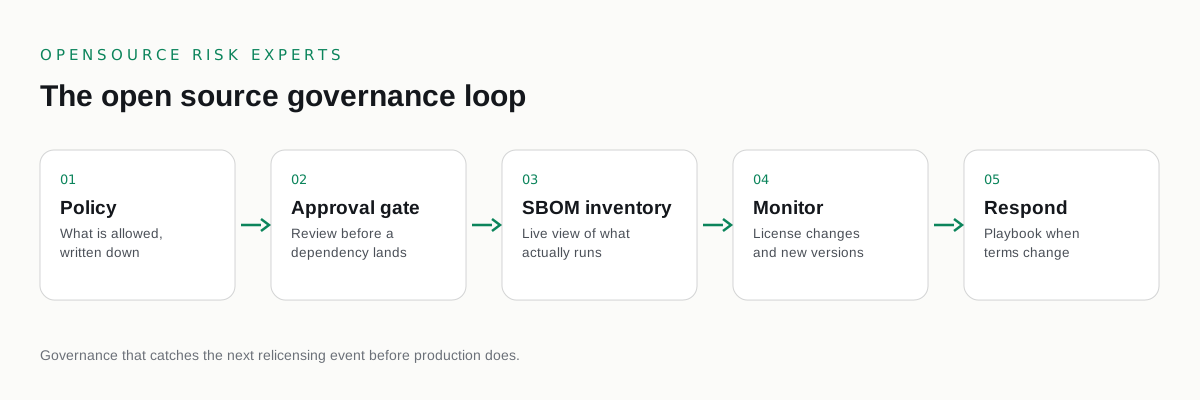
What to evaluate when choosing an SCA and SBOM tool
Start from what you need the tool to tell you. For license risk, the core requirements are accurate license detection for every component, depth that reaches transitive dependencies and not just direct ones, standard SBOM output in formats such as SPDX and CycloneDX, awareness of license changes over time, and the ability to enforce a policy in your pipeline. Vulnerability scanning is useful, but it is not the same job. A tool that is excellent at finding known security flaws and weak at reading licenses will leave your relicensing exposure unmapped. Weight the evaluation toward the work you are actually trying to do.
License detection accuracy comes first
The most important capability is reading the actual license of each component correctly. This is harder than it sounds. A package may declare one license in its metadata and ship files under another. A component may carry a source available license such as the Business Source License or the Server Side Public License that a tool tuned for permissive and copyleft families misreports or ignores. A tool that cannot tell you that a dependency moved from an open license to a source available one between versions cannot help you with relicensing risk at all. Test detection accuracy on your own dependency tree, including the components you already know have relicensed, before you trust a vendor's claim.
Transitive depth decides what you can see
A relicensed component rarely sits at the top of your dependency tree where it is easy to find. It hides several layers down, pulled in by something you chose deliberately. A tool that maps only direct dependencies gives you a comforting but false picture. The depth of transitive resolution, across every package ecosystem you use, decides whether the SBOM reflects what you actually run or only what you meant to run. Ask how the tool resolves transitive dependencies in each language and build system in your estate, and check the result against a known deep dependency. The value of an SBOM is in the layers you did not already know about, a point developed in maintaining an accurate SBOM.
Standard SBOM formats keep you portable
An SBOM is most useful when it is portable. The two standard machine readable formats in common use are SPDX and CycloneDX. A tool that produces at least one of them lets the same SBOM serve a regulator who asks for it, a customer who requires it in a contract, and your own risk process, without re keying the data. A tool that locks your dependency inventory inside a proprietary report format ties your most important governance artifact to one vendor. Standard output is also what lets you feed the SBOM into the automation that keeps your inventory current, the subject of open source inventory automation.
Policy enforcement turns a report into a control
A tool that produces a report tells you about a problem after it exists. A tool that enforces a policy in your build pipeline stops the problem at intake. The capability to watch for is gating: the ability to fail a build, raise an approval, or flag a pull request when a component arrives under a disallowed license or when an existing dependency changes its terms. This is what catches the next relicense at the moment it enters your code, when removing it is cheap, rather than in an audit, when it is not. The policy the tool enforces should reflect your own risk tolerance, which is why tool selection follows from deciding what your open source policy should include rather than the other way around.
Fit with your pipeline and your teams
The best tool on paper is the wrong tool if your teams route around it. Evaluate how it integrates with your build systems, your CI, and the package ecosystems you actually use. A tool that fits cleanly into the developer workflow gets used; one that adds friction gets disabled. Consider the false positive rate too, because a tool that cries wolf on every permissive license trains people to ignore its warnings, including the one that matters. The aim is a control that developers accept as part of shipping, not a gate they learn to bypass. The ongoing watch that the tool enables is covered in continuous open source license monitoring.
The buyer side view
We help you evaluate SCA and SBOM tools against the work you actually need them to do, weighted for license risk rather than only security, and tested on your own dependency tree. Because we are independent and sell no tool of our own, our recommendation reflects your requirements and not a reseller margin. We are paid only by you. The full set of governance resources sits in the governance and SBOM pillar, and we build the surrounding policy and controls through our open source governance and policy service.
COMMON QUESTIONS
Questions buyers ask.
What should you evaluate when choosing an SCA and SBOM tool?
Evaluate license detection accuracy, transitive dependency depth, the SBOM formats it produces such as SPDX and CycloneDX, how it handles license changes over time, policy enforcement and gating, and how it fits your build and CI pipeline. License risk coverage, not only vulnerability scanning, should be a first class requirement.
Why does license detection accuracy matter most for license risk?
Many tools focus on security vulnerabilities and treat license data as secondary. For relicensing risk you need a tool that reads the actual license of each component, flags source available terms such as the Business Source License or Server Side Public License, and detects when a dependency has changed its license between versions.
Do we need SPDX or CycloneDX output?
Most enterprises need at least one standard machine readable SBOM format, and SPDX and CycloneDX are the two in common use. Standard output lets the same SBOM serve a regulator, a customer, and your own risk process, rather than locking your dependency data inside one vendor's report.
Should the tool block builds on a license policy violation?
Policy gating in the pipeline is what turns a tool from a report into a control. A tool that can fail a build or raise an approval when a disallowed or newly relicensed component appears catches the problem at intake rather than in an audit, which is far cheaper to fix.
Is this article legal advice?
No. It is commercial and licensing risk analysis, not legal advice. For interpretation of license terms and compliance, engage your own counsel.
CONTAINMENT
Pick the tool that maps license risk, not just bugs.
Confidential open source governance and policy support. Independent, buyer side, paid only by you.
Not ready to talk? Read the free open source license risk guides first.
One email when a major project relicenses. No marketing, unsubscribe any time.
MORE IN THIS CLUSTER