ARTICLE / COMMERCIAL LICENSING
Bundling and discount tactics for open source vendors.
BY MORTEN ANDERSEN · REVIEWED BY FREDRIK FILIPSSON
Bundling and discount tactics for open source vendors are the commercial mechanics that shape a quote. This guide reads the common moves, bundles, anchored list prices, time limited discounts, and tiered editions, so you can judge a deal on its merits rather than on its framing.
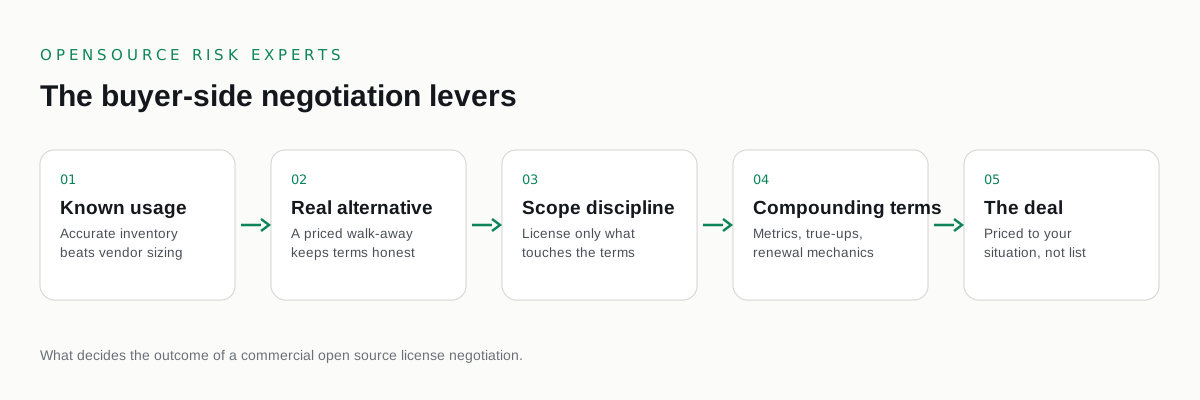
When a formerly open project moves to a commercial model, the sales motion that follows is professional and well rehearsed. Bundling and discount tactics for open source vendors are not tricks to be offended by. They are the standard mechanics of enterprise software sales, applied to a component you may have adopted years ago when it was free. The buyer's task is not to resist them but to read them, because each tactic shapes the headline number in a way that can flatter the deal. A bundle, an anchored list, a quarter end discount, and a tier upgrade all change what you appear to be paying without necessarily changing what you actually need. Seeing through the framing is how you keep the price tied to your footprint.
Bundling: paying for what you will not use
Bundling packages the component you need with modules you may not. Sometimes that is genuine value, when you would have bought the additional capabilities anyway. Often it pads the price with features you will not use, and, more subtly, it hides the unit price of the one thing you came for. A bundle that prevents you from seeing what the core component costs on its own is doing two jobs: selling you more, and stopping you from comparing the part you need against your alternative. The defense is to insist on a price for the component alone, even if you ultimately buy the bundle, so you can benchmark the number that matters. If the vendor cannot or will not unbundle for pricing purposes, that resistance is itself information.
Anchoring and the discount that is not a saving
A high list price exists to be discounted. Anchoring sets a reference point so that a forty percent reduction feels generous, even when the discounted figure still sits above what your usage warrants. The percentage off is the wrong number to focus on. A discount off an inflated list is not a saving, it is a smaller premium. The only number that matters is the final price compared to the cost of your best alternative, which means you need your own benchmark before the discount is ever quoted. Build that benchmark from your usage and your options, as we cover in commercial open source pricing benchmarks, and the list price loses its pull. With a benchmark in hand, a discount either brings the price into your range or it does not, and the headline percentage stops mattering.
Time limited discounts and manufactured urgency
A discount that expires at the quarter end is a scheduling tool, not a law of physics. The vendor still wants the deal after the quarter, and a genuine price is usually still available, often on similar terms, once the deadline passes. Manufactured urgency works by pushing a signature before the buyer has finished benchmarking, so the antidote is simply to do the benchmarking first and treat the deadline as a test of how real the price is. A measured buyer can usually let a forty eight hour window close without losing the substance of the offer. The leverage you hold here is the same leverage you hold throughout: a credible alternative and the willingness to wait, which we set out in leverage in open source commercial negotiations.
Tiers, prepayment, and the multi year view
Tiered editions nudge you toward a richer tier than your use requires, and multi year prepayment trades a lower rate for committed spend and reduced flexibility. Both can be reasonable, and both can lock in cost you would rather keep optional. The discipline is to map your real needs against the tier rather than the tier against your fears, and to model prepayment as a multi year total that accounts for the flexibility you give up. A lower annual rate is worth less if it ties you to a vendor whose component you may want to leave. Run every structure through the full horizon, including the renewal increases a vendor will seek once you are committed, as we weigh in multi year commercial license tradeoffs. The wider frame sits in our pillar on commercial licensing. Interpretation of any agreement is a question for your own counsel.
COMMON QUESTIONS
Questions buyers ask.
What are common bundling and discount tactics for open source vendors?
Common tactics include bundling the component you need with modules you do not, anchoring on a high list price so a deep discount feels generous, time limited discounts tied to a quarter end, multi year prepayment in exchange for a lower rate, and tiered editions that push you toward a richer tier than your use requires. None are improper. They are sales mechanics, and the buyer's job is to read what each one actually costs over the full term.
Is a bundle always a bad deal?
No. A bundle can be good value when you would have bought the extra modules anyway. It becomes a poor deal when it pads the price with capabilities you will not use, or when the bundle obscures the unit price of the one component you actually need. The test is whether you can price the component on its own and compare that to your alternative. If the bundle hides that number, treat it with caution.
How should a buyer handle a time limited discount?
Treat the deadline as a sales tool, not a fact of nature. A genuine discount is usually still available after the quarter, often on similar terms, because the vendor still wants the deal. Use the time pressure to test how real the price is rather than to rush a signature. If a discount only exists for forty eight hours, that scarcity is part of the tactic, and a measured buyer can usually wait without losing it.
Why do vendors anchor on a high list price?
Anchoring sets a reference point so that a later discount feels like a win even when the discounted price is still above what your footprint warrants. The defense is to ignore the list and build your own benchmark from your usage and your alternatives. A discount off an inflated list is not a saving. The number that matters is the final price compared to the cost of your best alternative, not the percentage off.
Are vendor bundling and discount tactics legal advice?
No. This is commercial and licensing risk advisory, not legal advice. For interpretation of license terms and the drafting of any agreement, we recommend your own counsel. Our role is to read the commercial structure, size your real needs, and help you judge a bundle or discount on its merits.
COMMERCIAL LICENSING
Read the deal, not the framing.
Our negotiation advisory unpacks bundles and discounts and ties the price to your real footprint. Independent, buyer side, paid only by you.
Not ready to talk? Read the free open source license risk guides first.
One email when a major project relicenses. No marketing, unsubscribe any time.
MORE IN THIS CLUSTER