ARTICLE / COMMERCIAL LICENSING
Commercial open source pricing benchmarks.
BY FREDRIK FILIPSSON · REVIEWED BY MORTEN ANDERSEN
Commercial open source pricing benchmarks tell you whether a vendor quote is fair for your footprint. This guide explains why the pricing is opaque, what actually drives the number, and how to build a benchmark from your own usage and your real alternatives.
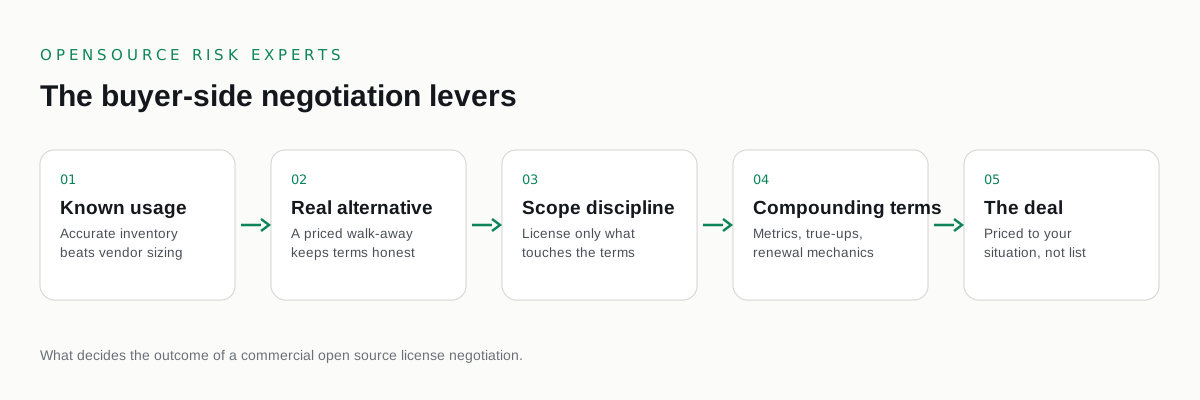
When a project you depend on moves to a commercial or source available model, the vendor quote arrives without much context. There is rarely a public price list, the deal is negotiated, and the buyer is left wondering whether the number is reasonable or simply the vendor's opening position. Commercial open source pricing benchmarks exist to close that gap. A benchmark is not a single published figure you can look up. It is a reference range built from your usage, comparable deployments, and the alternatives you hold, against which a specific quote can be judged. Built well, it turns a take it or leave it conversation into a grounded negotiation.
Why open source pricing resists a simple benchmark
The opacity is structural. Most commercial open source vendors do not publish list prices, and the ones that do treat the list as a ceiling to negotiate down from. The unit of pricing varies widely: some price per node, some per core, some by data volume, some by user, and some by a blend. Two enterprises with similar deployments can pay materially different amounts depending on their negotiation, their timing, and what the vendor knew about their alternatives. That variation is the reason a benchmark cannot be looked up. It has to be constructed for your specific footprint. The buyer who skips that construction tends to anchor on the vendor's first number, which is exactly what the first number is designed to do.
What actually drives the number
Five factors move a commercial open source price more than any others. The first is your usage footprint, which sets the base in whatever metric the vendor uses. The second is the pricing metric itself, because the same deployment can look large or small depending on whether it is counted in nodes, cores, or data. The third is the strength of your alternatives: a credible fork such as OpenTofu or Valkey, or a costed migration plan, caps what the vendor can charge before you walk. The fourth is timing, since a vendor with a quarter to close has reasons to move. The fifth is the support and feature tier you genuinely need, as opposed to the one bundled by default. Footprint and metric set the base. Leverage and timing move it. The tier determines how much of what you are paying for you will actually use.
How to build a benchmark you can defend
Start with an accurate usage baseline, because every benchmark rests on knowing what you actually run rather than what the vendor assumes. Translate that footprint into the vendor's pricing metric so the comparison is direct. Then set two anchors: the cost of your best alternative, which is your ceiling, and a reasonable price for your footprint given comparable deployments, which is your target. A quote that sits below the alternative and near the target is fair. A quote above the alternative is, by definition, more expensive than walking away, which makes the alternative your benchmark. Convert everything to a multi year total, including the renewal increases a vendor will seek once you are committed, so you are comparing the real cost rather than the first year headline. The leverage that holds the number down comes from the alternative being real, which we cover in leverage in open source commercial negotiations.
Judge the quote, then negotiate
With the benchmark in hand, a quote stops being a mystery and becomes a measurement. If it sits within your range, the conversation moves to terms: renewal caps, usage definitions, and the right to audit your own consumption. If it sits above your range, the benchmark gives you the specific gap to close and the alternative that justifies closing it. Either way you are negotiating from numbers rather than from the vendor's narrative. The multi year view matters most here, because a quote that looks fine in year one can drift well above the benchmark by year three if renewal increases go unchecked. We weigh that horizon in multi year commercial license tradeoffs, and the errors that inflate a deal in commercial open source negotiation mistakes. The wider frame sits in our pillar on commercial licensing. Interpretation of any license or agreement is a question for your own counsel.
COMMON QUESTIONS
Questions buyers ask.
What are commercial open source pricing benchmarks?
Commercial open source pricing benchmarks are reference points for what an enterprise should expect to pay when licensing a commercial edition of a formerly open project or an open core product. Because public list prices are rare and deals are negotiated, a benchmark is built from your own usage, comparable deployments, and the alternatives available to you, rather than a single published figure. The benchmark tells you whether a quote is reasonable for your footprint.
Why is open source pricing so hard to benchmark?
Open source commercial pricing is opaque because most vendors do not publish list prices, deals are individually negotiated, and the unit of pricing varies between nodes, cores, data volume, and users. Two buyers can pay very different amounts for similar use. That opacity is why a benchmark has to be constructed from your usage and your alternatives rather than looked up, and why an uninformed buyer often anchors to the vendor's first number.
What drives the price of a commercial open source license?
The main drivers are your usage footprint, the pricing metric the vendor uses, the strength of your alternatives, the timing of the deal, and the support and feature tier you need. A credible fork or migration plan lowers the price you should accept, because it caps what the vendor can charge before you walk. Footprint and metric set the base; leverage and timing move it.
How do I know if a vendor quote is fair?
Compare the quote against a benchmark built from your actual usage and your alternatives, not against the vendor's list. Convert it to a multi year total including likely renewal increases, and test it against the cost of forking or migrating. If the quote exceeds the cost of a credible alternative, that alternative is your ceiling. A fair quote sits below the cost of leaving and reflects your real footprint.
Are commercial open source pricing benchmarks legal advice?
No. This is commercial and licensing risk advisory, not legal advice. For interpretation of license terms and the drafting of any agreement, we recommend your own counsel. Our role is to build the benchmark, size your usage, and help you judge whether a price is fair for your deployment.
COMMERCIAL LICENSING
Benchmark the quote before you sign.
Our negotiation advisory sizes your usage and builds the benchmark a fair deal is judged against. Independent, buyer side, paid only by you.
Not ready to talk? Read the free open source license risk guides first.
One email when a major project relicenses. No marketing, unsubscribe any time.
MORE IN THIS CLUSTER