COMMERCIAL LICENSING
Negotiating an Elastic commercial license.
Negotiating an Elastic commercial license is a winnable conversation when you prepare for it. The license change handed Elastic a stronger position, but the OpenSearch fork handed buyers a credible exit. This article shows how to baseline usage, build leverage, and shape terms from your side of the table.
Negotiating an Elastic commercial license starts with understanding why the conversation exists at all. In 2021 Elastic moved Elasticsearch and Kibana from the Apache 2.0 license to the Server Side Public License and the Elastic License. The change restricted certain uses, particularly offering the software as a managed service, and pushed some enterprises toward a commercial agreement to keep operating with confidence. Elastic later added an open license option as well, so the picture is layered. The point for a buyer is simple. A commercial license is sometimes the right answer, and when it is, the terms are negotiable. What separates a good outcome from a bad one is preparation, not nerve.
Decide first whether you actually need to buy
Before any negotiation, confirm that a commercial license is required for what you actually do. The Server Side Public License and the Elastic License restrict specific uses, and your deployment may fall inside what they permit. Whether your use requires a commercial agreement is a question of fact and license interpretation, and it belongs with your own counsel. The reason this matters commercially is that a buyer who has confirmed the need negotiates calmly, while a buyer who assumes the need negotiates from fear. Establish the requirement before you establish the price, because the answer to whether you must buy changes every number that follows.
Baseline your usage with precision
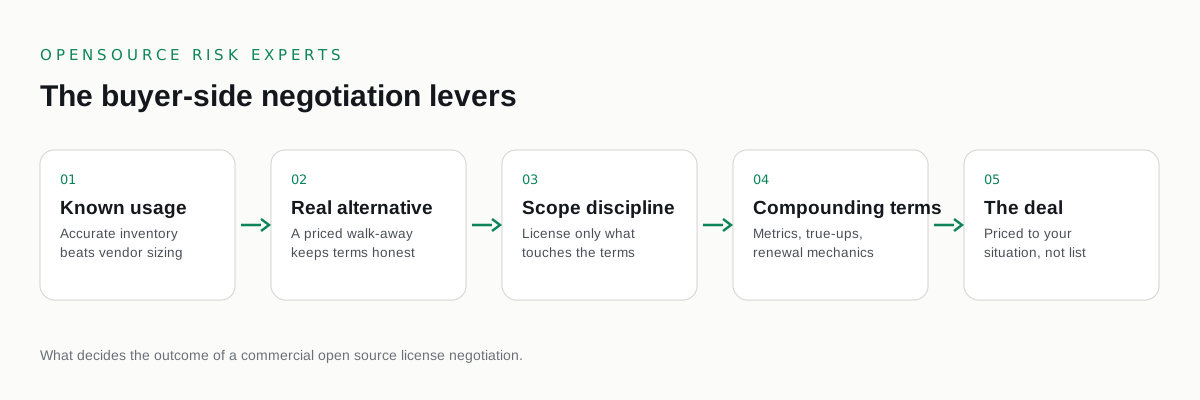
Every term you negotiate rests on a usage baseline, so build it carefully. Measure where Elasticsearch and Kibana actually run across your estate, the node and cluster counts, the data volumes you index and retain, and the specific features you depend on. A precise baseline does two things. It stops you from buying capacity, tiers, or features you do not use, which is where list pricing quietly inflates a deal. And it gives you a factual position the vendor cannot easily dispute. A buyer who can state exactly what they run, and what they do not, has already removed the vendor's easiest pricing lever, which is your uncertainty about your own footprint.
Build leverage with a credible OpenSearch path
The strongest card a buyer holds is a real alternative, and Elastic buyers have one. OpenSearch is the fork of Elasticsearch and Kibana, led by AWS after the 2021 relicense, and it carries an open license. A validated OpenSearch migration path changes the entire shape of the conversation. It means you are not forced to accept the vendor's terms, because you could leave. To count as leverage, the path has to be real. Qualify OpenSearch against your own workloads, price the migration, and know how long a move would take. Demonstrated optionality is what the vendor must price into any offer, and it is the difference between negotiating and accepting. For the deeper mechanics, see leverage in open source commercial negotiations.
Set your walk away number before you talk
Pair the OpenSearch baseline with a decision. Price the migration to the fork, then set the number above which you would move rather than pay. Hold it privately and let it govern the conversation. A walk away position grounded in a real migration cost keeps the negotiation honest, because it converts an open ended fear into a bounded comparison. Without it, almost any quoted figure feels safer than the unknown of leaving, and that asymmetry is exactly what a vendor's pricing relies on. The number does not need to be shared. It only needs to be known by you.
Shape the terms, not just the headline price
The annual figure is the most visible term but rarely the most important. Watch the term length, the renewal uplift caps, the definition of the usage that is being licensed, the audit clauses, and what happens if your footprint grows or shrinks. A low first year price with an uncapped renewal increase is not a good deal. A fair price with predictable renewals, a usage definition that matches your baseline, and audit terms you can live with is. Negotiate the whole agreement, not the headline. The clauses that look like boilerplate are where multiyear cost and risk actually sit, which is why the audit clauses to watch deserve close reading, and why the tradeoffs of longer terms are worth weighing in multiyear commercial license tradeoffs.
The buyer side view
We run this negotiation from your side and only your side. We confirm whether you need a license with your counsel, build the usage baseline, qualify the OpenSearch path so your leverage is real, and shape the terms so the agreement reflects your actual usage rather than a list price built for someone else. We are paid only by you, never by Elastic, AWS, or any reseller, so the recommendation serves your budget and your risk. For the wider context, see the commercial licensing pillar. License interpretation remains with your own counsel throughout.
COMMON QUESTIONS
Questions buyers ask.
When do you need an Elastic commercial license?
You may need an Elastic commercial license when your use of Elasticsearch or Kibana falls outside what the Server Side Public License or the Elastic License permit for your deployment, or when you want commercial support and proprietary features. Whether your specific use requires it is a question for your own counsel.
What gives a buyer leverage in an Elastic negotiation?
The strongest leverage is a credible alternative. OpenSearch, the AWS led fork of Elasticsearch and Kibana, gives buyers a real exit. A validated migration path, a clear usage baseline, and a defined walk away number convert a list price conversation into a negotiation the buyer can win.
How do you baseline Elastic usage before negotiating?
Measure where Elasticsearch and Kibana actually run, the node and cluster counts, the data volumes, and which features you depend on. A precise baseline stops you from buying capacity or tiers you do not use, and it is the foundation of every term you negotiate.
Should we move to OpenSearch instead of buying?
Sometimes. If OpenSearch meets your needs and the migration cost is lower than the license, moving may be the better answer. Often the right move is to qualify OpenSearch as a real option, which both gives you an exit and strengthens any commercial negotiation you choose to run.
Is this article legal advice?
No. It is commercial and licensing risk analysis, not legal advice. For interpretation of license terms and contract drafting, engage your own counsel.
CONTAINMENT
Negotiate Elastic from your side of the table.
Confidential commercial license negotiation support. Independent, buyer side, paid only by you.
Not ready to talk? Read the free open source license risk guides first.
One email when a major project relicenses. No marketing, unsubscribe any time.
MORE IN THIS CLUSTER