ARTICLE / COMMERCIAL LICENSING
Multi year commercial license tradeoffs.
BY FREDRIK FILIPSSON · REVIEWED BY MORTEN ANDERSEN
The multi year commercial license tradeoffs come down to certainty against flexibility. This guide weighs term length, price caps, and lock in, so you can decide whether a longer commitment protects your budget or quietly surrenders your leverage.
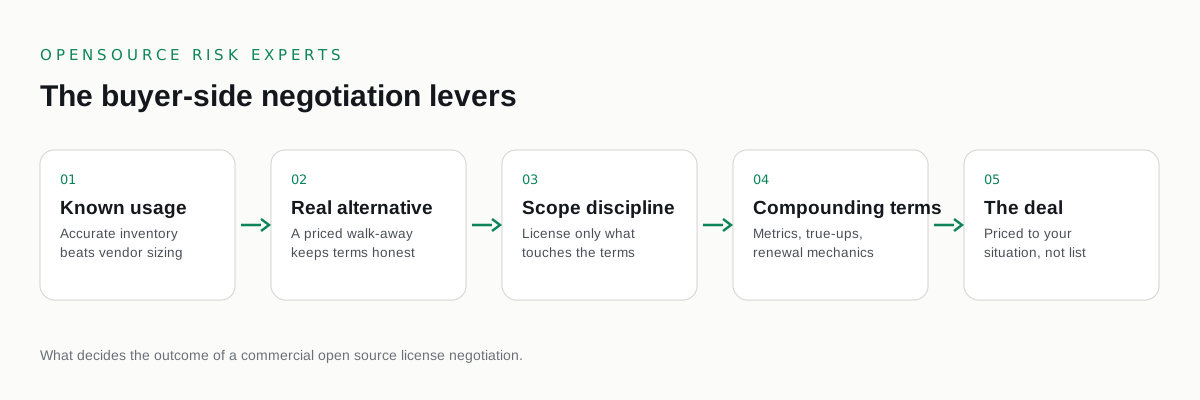
After a relicensing event pushes you toward a commercial license, the vendor will often propose a multi year term, framed as a discount. The discount is real, but so is what you give up to earn it. The multi year commercial license tradeoffs are not abstract. They decide whether your costs are predictable, whether you can scale down when usage falls, and whether you keep any leverage for the next conversation. A longer term is the right answer in some situations and a trap in others. The difference is whether you understand what you are trading before you sign.
Multi year commercial license tradeoffs: certainty against flexibility
The central tradeoff is price certainty against flexibility. A multi year term can lock your rate and cap increases, which protects the budget and removes the annual scramble of renewals. In exchange you commit to the vendor for the length of the term, which deepens lock in and reduces your ability to walk if a community fork or an alternative matures during those years. If your usage is stable and the component is genuinely irreplaceable in the near term, certainty is worth a great deal. If your architecture is in flux or a fork is gaining ground, the flexibility you surrender may be worth more than the discount you gain.
Term length and the renewal points you give up
Every renewal is a natural negotiation point, a moment when your leverage is highest because the vendor wants to keep you. A multi year term removes those moments. Commit for three years and you have traded away two annual negotiations. That can be a good trade if the locked rate and a tight escalator beat what those renewals would likely have cost, but it is a poor one if you signed at a high rate with a generous increase built in. Model the multi year total against a series of annual renewals before agreeing, and treat the loss of renewal leverage as a real cost rather than a footnote. The leverage dynamics of renewals are covered in HashiCorp renewal and negotiation leverage.
Clauses that make a long term safe
A multi year term is only as good as the protections inside it. Negotiate a cap on annual increases, so the locked rate stays meaningful across the term. Negotiate a usage adjustment right, so you can scale scope down as well as up rather than paying for capacity you stopped using. Secure defined audit and true up terms, and a clean exit or non renewal path at the end. With these clauses a long term delivers certainty without trapping you in rising costs or inflated scope. Without them, the discount that justified the commitment can evaporate as usage shifts and increases compound.
Right size the scope before you lengthen the term
Locking in a term locks in a scope, so the scope must be right before the term lengthens. A multi year commitment on an inflated usage count multiplies the error across every year of the deal. Build an accurate usage baseline first, separate the use that truly needs a license from the use you can migrate or that stays within open terms, and only then decide the term. The longer the commitment, the more the baseline matters, because there is no annual renewal to correct it. The negotiation discipline that produces that baseline is covered in negotiating a HashiCorp commercial license.
When a database vendor proposes a long term
The same tradeoffs apply when a database vendor offers a multi year commercial agreement after a relicense, as with Redis, which moved to a dual Redis Source Available License and Server Side Public License model as of March 2024 before later adding an open option. A long term on a database is especially weighty because migration is hard, which raises both the value of certainty and the cost of lock in. Weigh the maturing fork, Valkey, as a live alternative even if you intend to pay, because it shapes the term you can negotiate. We cover the database specific picture in commercial licensing for Redis Enterprise, and the cross vendor frame sits in our pillar on commercial licensing. Interpretation of specific term and exit language is a matter for your own counsel.
COMMON QUESTIONS
Questions buyers ask.
What are the main multi year commercial license tradeoffs?
The core tradeoff is price certainty against flexibility. A multi year term can lock a rate and cap increases, which protects budget, but it deepens lock in and reduces your ability to walk if a fork or alternative matures. The right term balances how confident you are in your usage forecast against how much you value keeping options open.
When is a multi year commercial license worth it?
A multi year term is worth it when your usage is stable and forecastable, the component is deeply embedded with no near term alternative, and the rate plus a capped escalator beats the likely cost of annual renewals. It is less attractive when a community fork is maturing or your architecture is in flux, because the term locks you in just as your options would otherwise grow.
How does a multi year term affect future leverage?
A longer term trades away renewal leverage. Each renewal is a natural negotiation point, and committing for several years removes those points. To offset this, negotiate caps on increases, the right to reduce scope, and clear exit terms, so the commitment buys price certainty without surrendering all future negotiating position.
What clauses protect a buyer in a multi year deal?
Protective clauses include a cap on annual increases, a usage adjustment right so you can scale down as well as up, defined audit and true up terms, and a clean exit or non renewal path. Together these let a multi year term deliver budget certainty without locking you into rising costs or inflated scope you cannot reduce.
Are multi year license tradeoffs legal advice?
No. This is commercial and licensing risk advisory, not legal advice. For interpretation of term, escalation, and exit language in your agreement, we recommend your own counsel.
COMMERCIAL LICENSING
Weigh the term before you commit.
Our negotiation advisory models term length, caps, and exit terms against your usage. Independent, buyer side, paid only by you.
Not ready to talk? Read the free open source license risk guides first.
One email when a major project relicenses. No marketing, unsubscribe any time.
MORE IN THIS CLUSTER