COMMERCIAL LICENSING
Negotiating source available commercial terms.
When a source available project requires a paid license for the way you run it, the negotiation is unlike a normal software purchase. Negotiating source available commercial terms means baselining your real usage, building leverage with a credible fork, and shaping price, term, and audit clauses to your footprint rather than the vendor's default.
Negotiating source available commercial terms is a particular kind of buyer side work, and it differs from buying ordinary enterprise software. With a source available license such as the Business Source License or the Server Side Public License, the vendor is not selling you the right to use software you do not have. You already run it. What they are selling is a license to lift a restriction that your deployment may already touch. That changes the dynamic, the leverage, and the preparation required. This article sets out how to approach it from your side of the table. None of it is legal advice, and whether your use requires a license is a question for your own counsel.
Why source available terms change the negotiation
An open source license grants broad rights with few conditions. A source available license grants the right to read and use the code while reserving specific uses for a paid agreement. The Business Source License restricts competitive production use and converts to an open license after a delay, commonly four years. The Server Side Public License carries a strong condition aimed at offering the software as a service. The practical effect is that you are often negotiating around an existing deployment, sometimes under time pressure created by the vendor. The buyer who walks in without having measured their usage or scoped an alternative is negotiating from the weakest possible position, because the vendor knows the cost of switching better than the buyer does.
Baseline your usage before the first conversation
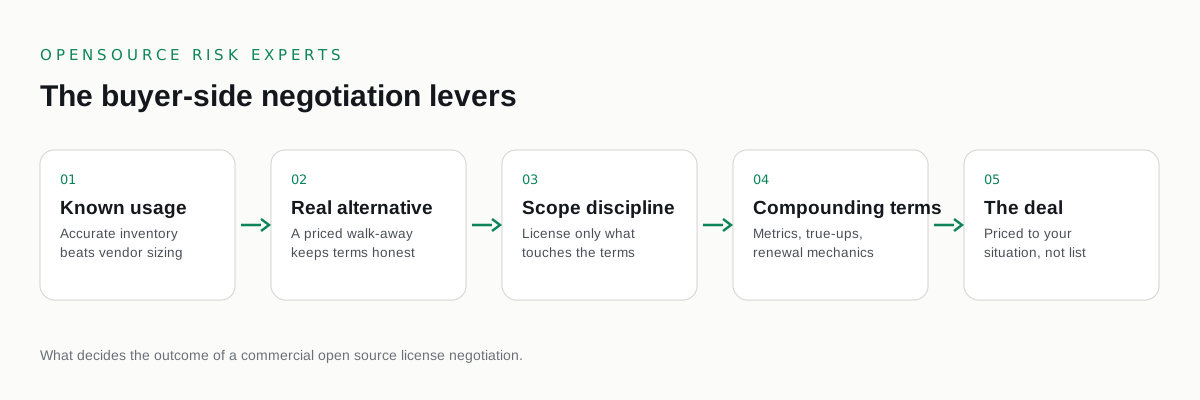
The single most valuable preparation is an accurate usage baseline. Source available commercial pricing is almost always tied to a metric: nodes, cores, clusters, data volume, or seats. If you cannot state precisely what you run, the vendor's count of that metric defines the bill, and that count is chosen to grow. A buyer who measures first turns an open ended figure into a bounded one and can challenge any number that does not match reality. The baseline also tells you whether your use genuinely falls inside the restricted category at all, or whether, with your counsel's confirmation, parts of your deployment sit outside it and need no license. The discipline of measuring usage is the same one that underpins commercial open source pricing benchmarks.
Build leverage with a credible fork
The strongest leverage a buyer holds is a credible exit. For most relicensed projects, a community fork exists: OpenTofu for Terraform, Valkey for Redis, and OpenSearch for Elasticsearch, all maintained under neutral governance as of 2024. If migrating to the fork is cheaper than the vendor's price, the fork sets a rational ceiling on what you will pay. But the leverage is only real if you have actually scoped the migration and could execute it. A bluff that the vendor sees through is worse than no leverage at all. Qualifying the fork as a genuine option, with a costed migration plan behind it, is what converts a talking point into negotiating power, as set out in using a fork as negotiation leverage.
Set a walk away number and hold it
Before you negotiate, decide the price above which you would migrate to the fork or remove the dependency instead. That walk away number should be grounded in the real migration cost, including engineering time, not a feeling about fairness. Once set, it governs the conversation. A buyer with a defined walk away number negotiates calmly, because every offer is measured against a known alternative. A buyer without one negotiates against the vendor's anchor and tends to settle near it. Setting and holding the number is the difference between a price you chose and a price you accepted.
Negotiate the clauses, not just the price
The headline figure is the part vendors expect you to focus on, which is exactly why it deserves less of your attention than the terms around it. Renewal uplift caps decide your multiyear cost. The precise definition of licensed usage decides whether ordinary growth quietly breaches the agreement. Audit clauses decide how much open ended liability you carry, and they can turn a clean contract into a recurring exposure. Term length and the treatment of footprint changes decide your flexibility. A low first year price with an uncapped renewal and a broad audit clause is not a saving. The clauses that most often catch buyers are detailed in commercial license audit clauses to watch, and the broader traps in commercial open source negotiation mistakes.
Know when paying is the right answer
Negotiating well does not mean refusing to pay. Sometimes a commercial license is the correct outcome: when no credible fork exists, when the vendor features are genuinely required, or when the migration cost exceeds a fairly negotiated fee. The goal is not to avoid payment at all costs but to pay a price that reflects your actual usage and your real leverage, on terms that hold as you grow. The judgment of when buying is genuinely the right path is worked through in when you must buy a commercial open source license.
The buyer side view
We negotiate these terms from your side of the table. We baseline your usage, confirm the scope of the restriction with your counsel, qualify the fork that gives you leverage, and review the contract so the agreement reflects what you actually do. We are paid only by you, never by a vendor or reseller, so every position serves your budget and your risk. The full set of resources sits in the commercial licensing pillar, and we run the engagement through our open source commercial license negotiation service.
COMMON QUESTIONS
Questions buyers ask.
What does negotiating source available commercial terms involve?
It is the buyer side work of agreeing a paid license when a source available project such as a Business Source License or Server Side Public License component requires one for your use. It covers baselining your real usage, building leverage with a credible fork, and shaping price, term, renewal caps, and audit clauses to your actual footprint.
Why is a source available license different to negotiate?
Source available terms restrict specific uses rather than granting open rights, so the vendor sells a license to lift a restriction you may already be inside. That changes the leverage. You are negotiating around an existing deployment, often under time pressure, which is why preparation and a credible alternative matter more than usual.
How does a fork give you leverage?
A qualified community fork such as OpenTofu, Valkey, or OpenSearch is a credible exit. If migrating to the fork is cheaper than the vendor's price, the fork sets a ceiling on what a rational buyer will pay. The leverage is real only if you have actually scoped the migration and could execute it.
What terms matter beyond the headline price?
Renewal uplift caps, the precise definition of licensed usage, audit clauses, term length, and what happens as your footprint grows. A low first year price with an uncapped renewal and an open ended audit clause can cost far more over the term than a higher price with disciplined terms.
Is this article legal advice?
No. It is commercial and licensing risk analysis, not legal advice. For interpretation of license terms and contract drafting, engage your own counsel.
CONTAINMENT
Negotiate the terms from your side of the table.
Confidential commercial license negotiation support. Independent, buyer side, paid only by you.
Not ready to talk? Read the free open source license risk guides first.
One email when a major project relicenses. No marketing, unsubscribe any time.
MORE IN THIS CLUSTER