COMMERCIAL LICENSING
Commercial license renewal strategy.
BY MORTEN ANDERSEN · REVIEWED BY FREDRIK FILIPSSON
The first signature is rarely the expensive one. A commercial license renewal strategy is how you keep your leverage when the renewal arrives, avoid the quiet price increase, and price the deal to the usage you have today.
Commercial and licensing risk advisory, not legal advice.
A commercial license renewal strategy exists to solve a single problem: leverage decays between signing and renewal. At the first deal you may have alternatives, an unsigned contract, and a vendor eager to win the account. By renewal, the software is embedded, your teams depend on it, switching looks expensive, and the vendor knows all of it. Without a plan, the renewal is not a negotiation at all; it is a price increase you are positioned to accept. The strategy is the work that keeps the renewal a real choice rather than a foregone conclusion.
This matters most for the source available projects driving current commercial spend, where a relicense pushed organizations into agreements they did not plan for. The wider context of those agreements sits in the pillar on open source commercial licensing.
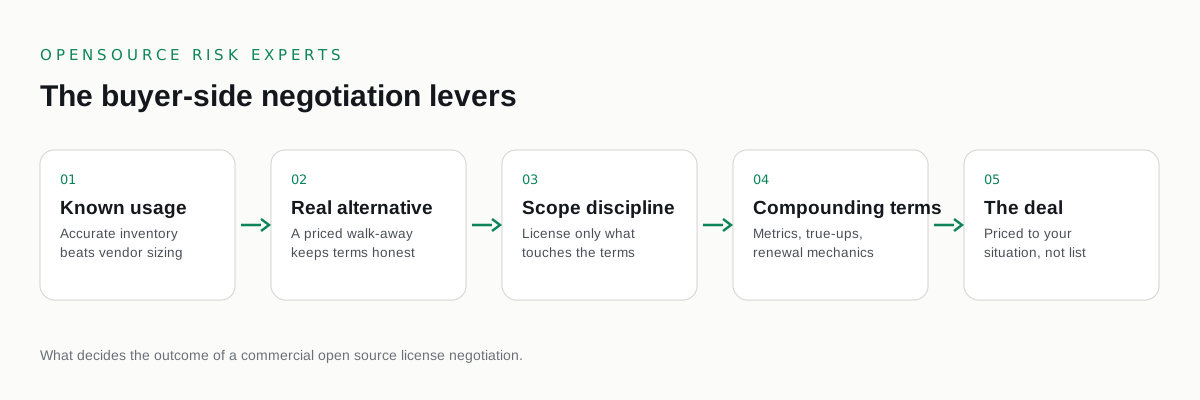
Why a commercial license renewal strategy starts at signing
The best time to protect a renewal is before the first agreement is signed. Renewal terms negotiated into the original contract, such as a cap on price increases, a fixed usage metric, and a clear notice window, are worth more than anything you can win once you are locked in. A buyer who treats the first deal as a one off price tends to inherit a renewal with no protections at all. A buyer who treats it as the opening of a multi year relationship builds the renewal safeguards in from the start, when there is still leverage to spend on them.
This is why renewal strategy and the original negotiation are really one continuous effort. The tradeoffs that shape a multi year commitment, and how they affect the renewal you eventually face, are set out in multi year commercial license tradeoffs.
Refresh your usage and your alternatives before the window opens
Preparation begins well before the notice period, ideally a year out for a large agreement. Two things need refreshing. The first is your actual usage, because a renewal priced on a stale estimate either overpays for capacity you stopped using or walks into a true up surprise for growth the vendor noticed before you did. The second is the set of alternatives. Forks such as Valkey and OpenSearch mature, managed services change their pricing, and the cost of switching moves over time. A renewal strategy that reuses last year's view of the alternatives is negotiating with old information.
The point of refreshing the alternative is not necessarily to switch. It is to know, with a current number, what walking away would cost, because that figure is the floor under everything the vendor can ask. Holding that number ready is the core of keeping leverage, a theme developed in leverage in open source commercial negotiations.
Watch the renewal mechanics that decide the price
A handful of clauses determine whether a renewal is a negotiation or a formality. Auto renewal and notice periods set whether the contract rolls over before you have engaged, so missing a notice date can hand the vendor a year at their number. Price increase caps decide how far the figure can move. The usage metric, and how your usage has shifted against it, drives the base. And any co terminus or bundling that ties this renewal to other spend can be used to make a single line item harder to challenge in isolation. Reading these before the window, not during it, is what keeps the timeline working for you.
The same diligence applies to the audit and true up language, which can turn a routine renewal into a back charge. The clauses worth particular attention are catalogued in commercial license audit clauses to watch.
Run the renewal as a deal, not a payment
The final discipline is to treat the renewal as a fresh negotiation rather than an invoice to approve. Engage early, well inside any notice window, and open the conversation from your prepared position: a current usage baseline, a priced alternative, and a clear view of which terms you intend to hold. Vendors price renewals expecting passive acceptance, so the simple act of arriving prepared and engaged shifts the starting point. The buyer who asks for the renewal proposal a quarter early, with questions ready, is treated differently from the one who responds to the auto renewal notice at the last minute.
A commercial license renewal strategy is mostly preparation: terms set at signing, a usage picture kept current, an alternative kept priced, and a timeline managed rather than missed. The buyers who renew well are the ones who never let the renewal become a surprise. This article is commercial and licensing risk advisory, not legal advice. For interpretation of a specific agreement or renewal clause, your own counsel is the right place to turn.
COMMON QUESTIONS
Questions buyers ask.
Why does a commercial license renewal strategy matter?
A commercial license renewal strategy matters because leverage usually falls between signing and renewal. By the time the renewal arrives you are dependent on the software, the vendor knows it, and without preparation the renewal becomes a price increase you have little room to challenge.
When should we start preparing for renewal?
Start well before the notice window, ideally a year out for a large agreement. Preparation means refreshing your usage picture, repricing the alternatives, and confirming the notice and auto renewal dates so the timeline never works against you.
How do we keep leverage at renewal?
Keep a credible alternative priced and current, know your real usage rather than the vendor's estimate, and protect renewal terms in the original agreement. Leverage at renewal is mostly built at signing and maintained in between.
What renewal terms should we watch?
Watch auto renewal and notice periods, price increase caps, the usage metric and how it has moved, and any co terminus or bundling that ties this renewal to other spend. These decide whether the renewal is a negotiation or a formality.
Is this legal advice?
No. This article is commercial and licensing risk advisory, not legal advice. For interpretation of a specific agreement or renewal clause, we recommend your own counsel.
NEGOTIATE FROM STRENGTH
Hold your leverage through the renewal.
Buyer side commercial license negotiation. Independent, buyer side, paid only by you.
Not ready to talk? Read the free open source license risk guides first.
One email when a major project relicenses. No marketing, unsubscribe any time.
MORE IN THIS CLUSTER