ARTICLE . UPDATED JUNE 2026
Negotiating a Redis Enterprise License
BY MORTEN ANDERSEN · REVIEWED BY FREDRIK FILIPSSON
Negotiating a Redis Enterprise license well starts long before the call with the vendor. Your leverage is a precise picture of how much Redis you actually run and a credible alternative you are ready to use. With both in hand, the conversation moves from a list price built for someone else to a number your real usage justifies.
Many enterprises adopted Redis when it was open source and never expected a commercial conversation about it. As of March 2024, Redis moved from an open source license to a dual model with the Redis Source Available License and the Server Side Public License, later adding an open license option. The community fork is Valkey. For organizations that need features or support that sit behind the commercial product, a Redis Enterprise license is now on the table, and the question is not only whether to pay but how to negotiate the terms from a position of strength rather than surprise.
Know exactly what you run before you negotiate
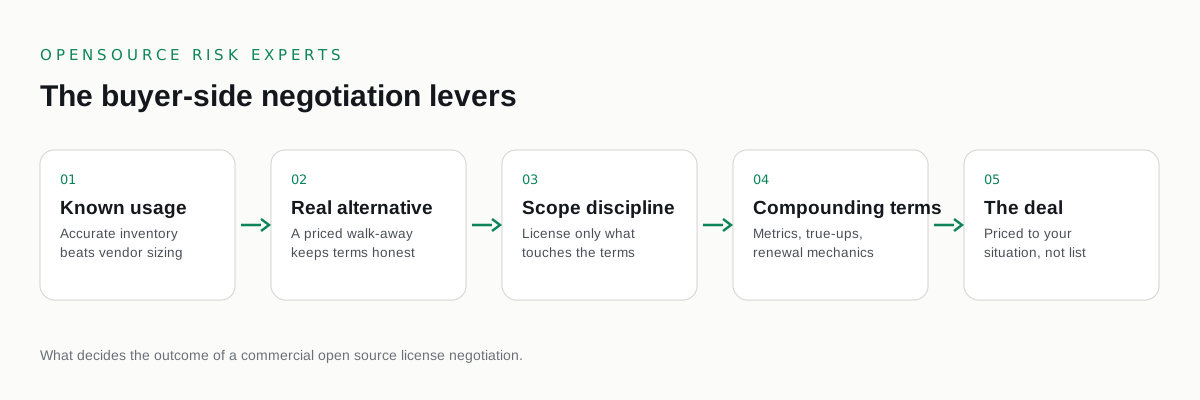
The single biggest source of overpayment is a usage number the buyer cannot defend. Vendors price from tiers and assumptions, and in the absence of your own figures, those assumptions become the baseline. The counter is a precise inventory: how many instances, what scale, which features in real use, and where each deployment sits across your estate. A buyer who can state usage exactly negotiates against reality, while a buyer who cannot is negotiating against the vendor's most generous reading of their footprint. An open source license risk assessment produces the usage baseline that anchors the conversation.
Value the fork alternative honestly
A negotiation has weight only when the buyer has somewhere else to go. Valkey, the community fork of Redis maintained under an open license, is that somewhere for many. Whether it is the right answer depends on the features you depend on, your operational maturity, and the cost of migrating, but the point is to value it honestly before the negotiation, not to wave it as a bluff during one. A buyer who has genuinely scoped the move to Valkey, knows what it would cost, and is prepared to make it, holds a fundamentally stronger position than one who has only threatened to. We compare the trade between forking and paying for databases in forking versus paying, the database decision.
Build the case for your price
With usage measured and alternatives valued, you can construct the price the agreement should reach rather than reacting to the one offered. That case rests on three numbers: what your real usage justifies under the vendor's own model, what the credible alternative would cost you to adopt, and what the relationship is worth keeping. The negotiated figure should sit inside the space those numbers define, not above it. Most opening offers are sized for a buyer who has done none of this work, which is exactly why doing it changes the result. The broader sources of buyer leverage are set out in leverage in open source commercial negotiations.
Avoid the common mistakes
The recurring errors are predictable. Buyers negotiate under time pressure they did not have to accept, accept tiering that does not match their usage, agree terms that auto expand with growth they have not modeled, and treat the fork as a threat rather than a costed option. Each of these hands value to the other side. The discipline is to enter with measured usage, a real alternative, and no artificial deadline, then hold to the price the case supports. We catalogue the pitfalls in commercial open source negotiation mistakes, and the wider discipline sits on the commercial licensing pillar.
Where independent advisory helps
We sit on the buyer side of a Redis Enterprise negotiation and nowhere else. We take no vendor fees and resell no software, so the usage baseline, the valuation of the Valkey alternative, and the target price reflect your economics rather than a commission. Where the honest answer is that the commercial license is fair and worth taking, we say so. Where the better answer is the fork or a smaller commitment, we say that too. This is commercial and licensing risk advisory, not legal advice. For interpretation of specific license terms and your compliance position, engage your own counsel.
COMMON QUESTIONS
Questions buyers ask.
Why are we being asked to license Redis Enterprise now?
Redis moved from an open source license to a dual model with the Redis Source Available License and the Server Side Public License as of March 2024, later adding an open license option. Many users who ran open source Redis now face a commercial conversation that did not exist before.
What gives a buyer leverage in a Redis negotiation?
Leverage comes from a precise picture of your real usage and a credible alternative. Knowing exactly how much Redis you run, and being genuinely ready to move to the Valkey fork or another option, changes the conversation from list price to your price.
Is moving to Valkey a real alternative to paying?
Often yes. Valkey is a community fork of Redis maintained under an open license. Whether it is the right answer depends on your features, your operational maturity, and migration cost, but it is a real option that strengthens any negotiation.
How do we avoid overpaying for Redis Enterprise?
Price the agreement against your measured usage, not the vendor's default tiering, and value the fork and removal alternatives before you sit down. A license sized to someone else's assumptions is almost always larger than the one your usage justifies.
Is this legal advice?
No. This is commercial and licensing risk advisory, not legal advice. For interpretation of license terms and compliance questions, we recommend you engage your own counsel.
CONTAINMENT
Negotiate from usage, not from list price.
Buyer side commercial license negotiation. Independent, paid only by you.
Not ready to talk? Read the free open source license risk guides first.
One email when a major project relicenses. No marketing, unsubscribe any time.
MORE IN THIS CLUSTER