COMMERCIAL LICENSING
When You Must Buy a Commercial Open Source License
BY MORTEN ANDERSEN · REVIEWED BY FREDRIK FILIPSSON
By OpenSource Risk Experts · April 26, 2026
Knowing when you must buy a commercial open source license is the difference between paying for something you genuinely owe and paying for something you do not. A vendor whose project has relicensed will often present a commercial license as the obvious next step, but the obligation is not automatic. It depends entirely on how your organization uses the software under the new terms. Some uses fall inside what the changed license still permits for free. Others cross a line that only a paid agreement removes. This article sets out the triggers that create a real obligation and the discipline a buyer uses to confirm one exists before reaching for a budget.
We write from the buyer side as an independent advisory paid only by the buyer. This is not legal advice. For interpretation of a license and whether your use triggers a commercial obligation, we point you to your own counsel.
What it means to need a commercial open source license
You need a commercial open source license when your actual use of a component falls inside a restriction that the free version of the license does not permit. The phrase commercial open source license describes a paid agreement, sold by the project's commercial sponsor, that grants rights the public license withholds. Those withheld rights vary by license family. A source available license such as the Business Source License permits most use but bars a defined competitive or production scenario. A strong copyleft license such as the Server Side Public License or the GNU AGPL permits use but attaches obligations to distribution or to offering the software as a service. An open core product makes the base free and locks enterprise features behind a paid edition. In each case the commercial license exists to remove a specific barrier, and you need it only if your use hits that barrier.
The key word is use. Two organizations running the same software can have entirely different obligations because they deploy it differently. The one whose deployment crosses the restricted line owes a commercial license. The one whose deployment stays inside the permitted scope owes nothing. This is why the obligation can never be read off the license name alone. It is read off the intersection of the license terms and your specific footprint.
The triggers that create an obligation
Three triggers account for most genuine commercial license obligations. The first is a competitive or production use restriction. The Business Source License, which HashiCorp applied to Terraform, Vault, Consul, Nomad, and Packer as of August 2023, permits broad use but restricts offering the software in a way that competes with the vendor. An organization that simply runs these tools internally is usually fine. One that builds a competing managed service is not, and that organization needs a commercial license or must leave. The second trigger is a copyleft or service obligation. The Server Side Public License, applied to MongoDB in 2018 and to Redis and Elasticsearch in their respective moves, attaches heavy conditions to offering the software as a service to third parties. The GNU AGPL attaches obligations to network use. Where your deployment activates these conditions and you cannot or will not meet them, a commercial license is the route that lifts them. The third trigger is a feature tier. Many open core vendors place the capabilities enterprises actually need, such as advanced security, clustering, or support, behind a paid edition, so the obligation arises the moment you rely on those features.
Recognizing which trigger applies, if any, tells you not only whether you must pay but also what your alternatives are. A competitive use restriction can sometimes be sidestepped by a fork. A feature tier obligation cannot be sidestepped without giving up the feature. Naming the trigger precisely is therefore the first step toward a sensible decision.
Confirming the obligation before you pay
A vendor telling you that you owe a license fee is a starting position, not a settled fact. Before negotiating the price of an obligation, a buyer confirms that the obligation is real. That confirmation has three parts. First, map exactly how and where the component runs, because the obligation lives in the details of your deployment, not in a general impression of it. Second, read the specific clause the vendor relies on and check whether your mapped use actually falls inside it. Vendors sometimes assert a broad reading that the text does not support. Third, have your own counsel confirm the interpretation, since this is a legal question and only your lawyers can settle it for you. Skipping these steps means negotiating the price of something you may not owe, which is the most expensive mistake in this area.
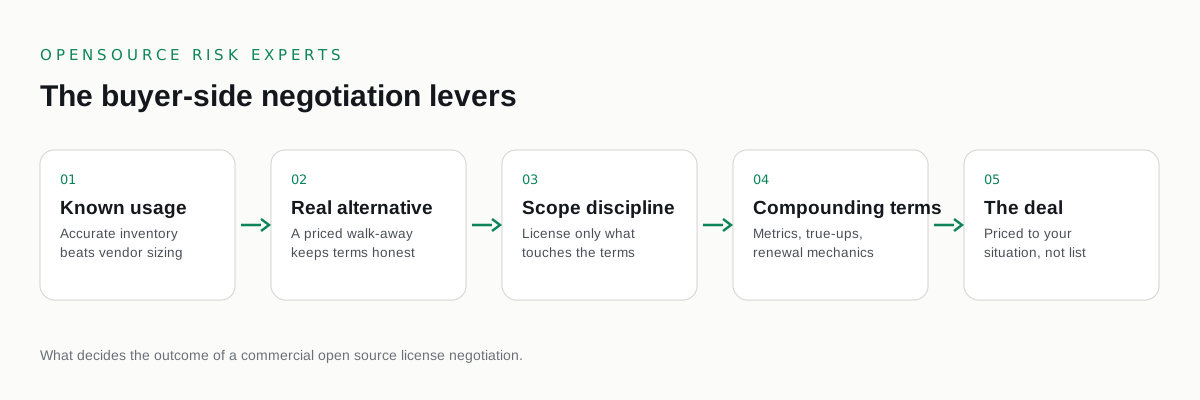
This verification also protects the negotiation that may follow. A buyer who has mapped usage precisely can challenge an inflated footprint and price the license to actual need. We cover that discipline in leverage in open source commercial negotiations, and the most common ways buyers weaken their position in commercial open source negotiation mistakes.
When buying is the right answer and when it is not
Even where an obligation is real, buying is not always the best response. The honest comparison is between the commercial license and the alternatives, chiefly moving to a fork, migrating to a different product, or removing the dependency. Buying is the right answer when the component is deeply embedded, when migration would be costly and risky, and when your usage is narrow enough that a fairly priced license is reasonable. In that situation a commercial license that reflects your true usage can be the cheapest total option, because it avoids a disruptive migration. Buying is the wrong answer when a compatible fork removes the obligation cheaply, when the dependency is shallow enough to remove, or when the vendor's price is so far above your usage that the alternative is clearly better value. The decision is a comparison, and it should be made with the numbers in front of you rather than under the pressure of a vendor deadline.
Running that comparison and, where buying wins, negotiating the agreement from your side of the table is the work of our open source commercial license negotiation service. For the full picture of commercial open source terms and how to handle them, see the commercial open source licensing pillar, and the discipline of not buying more than you need in multi year commercial license tradeoffs.
COMMON QUESTIONS
Questions buyers ask.
When must you buy a commercial open source license?
You must buy a commercial open source license when your actual use of the software falls inside a restriction in its license that only a paid agreement removes. Common triggers are competitive or production use barred by the Business Source License, the copyleft and service obligations of the Server Side Public License or the GNU AGPL, and feature tiers locked behind a commercial edition.
Does a relicense automatically mean I have to pay?
No. A relicense changes the terms, but whether you owe anything depends on how you use the software under the new terms. Many deployments still fall inside what the new license permits for free. The obligation arises only where your specific use hits a restriction, which is why mapping your usage comes before any purchase.
Can I avoid buying by switching to a fork?
Often, yes. A community fork such as OpenTofu, Valkey, or OpenSearch can remove the obligation by returning you to an open license. Whether the fork is cheaper than a commercial license depends on your migration cost and footprint, so the choice is a comparison rather than a default.
How do I confirm the obligation is real before paying?
Map exactly how and where the component runs, read the specific clause that the vendor says applies, and have your own counsel confirm the interpretation. A vendor's claim that you owe a fee is a starting position, not a settled fact, and a buyer should verify the obligation before negotiating its price.
Is this legal advice?
No. We provide commercial and licensing risk advisory, not legal advice. For interpretation of a license and whether your use triggers a commercial obligation, engage your own counsel.
NEGOTIATION
Confirm the obligation before you fund it.
A confidential open source license risk assessment. Independent, buyer side, paid only by you.
Not ready to talk? Read the free open source license risk guides first.
One email when a major project relicenses. No marketing, unsubscribe any time.
MORE IN THIS CLUSTER