COMMERCIAL LICENSING
Commercial open source licensing FAQ.
This commercial open source licensing FAQ answers the questions buyers ask most after a relicense: when you actually need to pay, how open core pricing is built, and how to negotiate the terms from your side of the table. Clear, calm, and on the buyer's side.
This commercial open source licensing FAQ exists because the relicensing wave turned a once rare purchase into a common one. When a project moves from an open license to source available terms, some enterprises find that continued use as before requires a paid agreement. The questions that follow are predictable, and the answers are knowable. Below are the ones we are asked most often, written plainly. None of this is legal advice, and the question of whether your specific use requires a license always belongs with your own counsel.
What is a commercial open source license?
A commercial open source license is a paid agreement that grants rights an open or source available license does not. Vendors of projects such as Elasticsearch, Redis, and the HashiCorp tools offer a commercial edition alongside their free editions. The paid agreement typically combines the right to use the software in ways the free license restricts with commercial support and proprietary features. The phrase can mislead, because the commercial license itself is proprietary. The open part refers to the project's heritage and its free editions, not to the paid contract you are signing.
When does an enterprise actually need one?
The need arises in two situations. The first is when your deployment falls outside what a source available license permits. The Business Source License restricts competitive production use, and the Server Side Public License carries a strong condition aimed at offering the software as a service. If how you run the software touches those restrictions, a commercial license may be required. The second is when you want vendor support and proprietary features that the free editions do not include. The first situation is a compliance question for your counsel. The second is a commercial choice. Keep them separate, because confusing a want with a must is how buyers overpay.
How does open core pricing work?
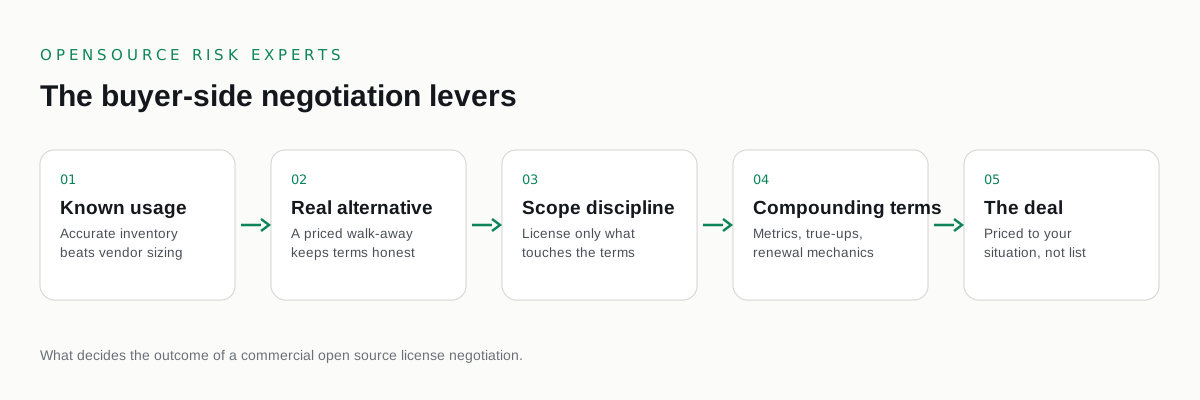
Open core pricing places a free core at the center and charges for an enterprise edition that adds features, scale, or support. The price is usually tied to usage metrics: nodes, cores, clusters, data volume, or seats. This is why an accurate usage baseline matters so much. If you cannot state precisely what you run, the vendor's metric defines the bill, and that metric is chosen to grow. A buyer who measures usage first turns an open ended figure into a bounded one. Understanding the pricing model is the first step to controlling it, and it is the foundation of the leverage discussed in leverage in open source commercial negotiations.
Is a commercial license the same as a support contract?
Not always, and the difference matters. Some agreements bundle the right to use with support and proprietary features into one contract. Others sell support separately from the usage grant. Read the agreement to see exactly what you are buying, because a support contract and a usage license carry different obligations, different audit exposure, and different consequences if you let them lapse. A buyer who assumes the two are the same can find a support renewal quietly carrying usage terms, or a usage license offering no support at all.
How do you reduce the cost?
Four moves do most of the work. Baseline your real usage so you buy only what you use rather than the vendor's default tier. Qualify a community fork such as OpenTofu, Valkey, or OpenSearch so you hold a credible alternative, which caps what the vendor can reasonably charge. Set a walk away number before you negotiate, grounded in the migration cost, and let it govern the conversation. And scrutinize the clauses, not just the headline, because renewal uplift caps and audit terms decide the multiyear cost. A low first year price with an uncapped renewal is not a saving. To avoid the common traps, read the commercial open source negotiation mistakes before you start.
What should we watch in the contract itself?
Beyond price, watch the term length, the renewal uplift caps, the precise definition of licensed usage, the audit clauses, and what happens as your footprint changes. The audit clauses in particular can turn an ordinary agreement into an open ended liability, which is why the audit clauses to watch deserve their own review. The vendor specific guides cover the named projects: negotiating a HashiCorp commercial license and negotiating a Redis Enterprise license. The full set of resources sits in the commercial licensing pillar.
The buyer side view
We answer these questions for your specific estate, not in the abstract. We baseline your usage, confirm with your counsel whether a license is required, qualify the alternatives that give you leverage, and review the contract so the terms reflect what you actually do. We are paid only by you, never by a vendor or reseller, so every answer serves your budget and your risk rather than someone's quota.
COMMON QUESTIONS
Questions buyers ask.
What is a commercial open source license?
A commercial open source license is a paid agreement that lets you use software whose open or source available terms do not cover your intended use. Vendors of projects like Elasticsearch, Redis, and the HashiCorp tools offer commercial licenses alongside their open or source available editions, typically adding support and proprietary features.
When does an enterprise need a commercial license?
You may need one when your deployment falls outside what a source available license such as the Business Source License or the Server Side Public License permits, or when you need commercial support and proprietary features. Whether your specific use requires it is a question of license interpretation for your own counsel.
What is open core pricing?
Open core pricing places a free open or source available core at the center and charges for an enterprise edition that adds features, scale, or support. The pricing is usually built around usage metrics such as nodes, cores, or data volume, which is why an accurate usage baseline is essential before you buy.
How do you reduce the cost of a commercial open source license?
Baseline your real usage so you buy only what you use, qualify a community fork such as OpenTofu, Valkey, or OpenSearch to create leverage, set a walk away number before negotiating, and scrutinize renewal caps and audit clauses rather than only the headline price.
Is a commercial license the same as buying support?
Not always. Some agreements bundle the right to use with support and proprietary features, while others separate them. Read the agreement to see exactly what you are paying for, since a support contract and a usage license carry different obligations and different risks.
Is this article legal advice?
No. It is commercial and licensing risk analysis, not legal advice. For interpretation of license terms and contract drafting, engage your own counsel.
CONTAINMENT
Answer the licensing question for your estate.
Confidential commercial license negotiation support. Independent, buyer side, paid only by you.
Not ready to talk? Read the free open source license risk guides first.
One email when a major project relicenses. No marketing, unsubscribe any time.
MORE IN THIS CLUSTER